Tourist destination

Dray Nur Waterfall and Dray Sap Waterfall
Traveling to Dray Nur Waterfall and Dray Sap is the perfect combination to explore the majestic beauty of the Central Highlands. This place is known as the "jewel eye" of the red basalt land. If you are looking for a trip to explore the nature and culture of the Central Highlands, come to Dray Nur Waterfall and Dray Sap to experience it! Dray Nur waterfall (Wife waterfall) and Dray Sap waterfall (Husband waterfall) are two large waterfalls, located downstream of Krong Ana river, marking the natural boundary between Dak Lak and Lam Dong provinces. Indigenous people believe that Dray Nur with its wide, smooth flow symbolizes the soft beauty of a woman. Dray Sap with many barren, roaring rock layers represents the fierceness and strength of a man. Only separated by a bridge across the Krong Ana River, the two waterfalls are not only famous for their majestic beauty but are also associated with romantic legends of the Ede and M'Nong people. According to legend, this pair of waterfalls was formed from the broken love of a couple. Because they could not get together, they threw themselves into the river and turned into two parallel waterfalls forever, dividing the banks of the Krong Ana river. Coming to Dray Nur, you will have an overwhelming experience before the wall of water falling from a height of more than 25m, spreading hundreds of meters. Don't just stand and watch, walk into the cave area right behind the waterfall in the dry season. The feeling of standing inside, hearing the roar of water and feeling the cool steam on your face will be extremely stimulating. On beautiful sunny days, you can also hunt shimmering rainbows appearing in the mist created by the water. In contrast to its smooth beauty, Dray Sap Waterfall brings the experience of confronting the fierceness of nature. This waterfall has a complex basalt structure, creating many layers of rolling water and white foam. When you get close, you will hear the waterfall roaring like thunder - a real sound of the mountains and forests. Carefully conquer the cliffs to find the most beautiful view, where you can feel the wildness and intensity of the constantly crashing water. Visitors can experience walking on a suspension bridge, admiring the beauty of the Krong Ana river: The historic suspension bridge is not only a walkway but also a memorable challenge. When walking on the bridge, you will clearly feel the slight swaying, creating an exciting feeling of suspense. In return, you will get a unique panoramic view of where two rivers (Krong Ana and Krong No) join. After experiencing the excitement of the waterfall, rent a basket boat or kayak on the peaceful Krong Ana river below to enjoy the feeling of relaxation and admire the peaceful mountain landscape. The most ideal time to travel to Dray Nur and Dray Sap Waterfalls is the dry season, from November to April. At this time, the road is easy, the weather is cool and you can easily participate in activities at the foot of the waterfall. If you want to see the waterfall with the largest amount of water, you can consider going at the end of the rainy season (September, October) but need to be careful because the road can be slippery. Traveling to Dray Nur and Dray Sap Waterfalls is an impressive dual journey, bringing the perfect combination of majestic natural beauty and the depth of Central Highlands culture. Prepare your luggage and explore the beauty of Dak Lak - Lam Dong through these two legendary waterfalls.
Dak Lak
1821 view


Mui Dinh sand dunes
Mui Dinh sand dune is a beautiful wild destination in Thuan Nam commune, Khanh Hoa province. This place stands out with white sand hills stretching along the blue sea, creating a scene like a "little desert" in the middle of the coastal region. With a hundred-year-old lighthouse, clear Trang beach and cool sea breezes, Mui Dinh is an ideal destination for nature-loving tourists who enjoy camping, sandboarding and taking photos of spectacular sunrises and sunsets. Mui Dinh sand dune is now in Khanh Hoa province, but the wild and attractive beauty here remains unchanged - even more attractive thanks to the development of infrastructure and associated tourism. This place is surrounded by rocky mountains, blue sea and white sand dunes stretching like a vivid natural picture, reminiscent of the wild deserts of the Middle East. If you are looking for a destination that has smooth white sand, pristine blue sea, and the majestic beauty of original nature, then Mui Dinh Sand Dunes is an option not to be missed. Mui Dinh sand dunes possess long stretches of golden white sand, curving softly like a giant silk strip on the beach. Each wind blowing creates unique, constantly changing sand patterns - making this place like a mini-desert of the Central region. Located not far from the sand dunes is Mui Dinh Lighthouse - an ancient structure over 100 years old built by the French and still in operation. From here, you can have a panoramic view of the sand dunes, blue sea and rocky mountains, a breathtaking natural picture. Right below the sand dunes is Trang beach, a pristine beach with clear water and gentle waves - ideal for swimming, strolling or simply lying under the shade of coconut trees and enjoying the silence. Fun activities not to miss when coming to Mui Dinh sand dunes: Riding an ATV through the sand: Immerse yourself in the thrill of driving an ATV through rolling sand dunes. This is an extremely "cool" game for young people who like to explore and adventure. Sandboarding - the feeling of "free fall" full of excitement: With just a simple board, you can slide from the top of the hill down - both thrilling and exciting, allowing you to laugh freely with friends. Camp overnight - sleep under the stars: Mui Dinh Sand Dunes is an ideal destination to set up a tent, organize a BBQ party, watch the sunset, catch the sunrise and admire the starry night sky - a rare experience in the era of urbanization. Virtual live check-in with "million likes": From the corner of the sand dune overlooking the sea, from the path leading up to the lighthouse to every streak of sunlight shining through the sand... everything here becomes the perfect background for unique and poetic photos. Each season, Mui Dinh has a different beauty, but the ideal time to visit this place is in the summer (April to June) or late autumn and early winter (October to December). At this time, the climate here is cool, in the evening it is chilly and windy (due to being close to the sea), visitors can experience many interesting outdoor activities. Mui Dinh Sand Dunes is not only a tourist destination, but also an experience living in the midst of majestic and pristine nature. Every sand, every wave, every sunlight here brings a sense of peace that is hard to find anywhere else.
Khanh Hoa
1711 view


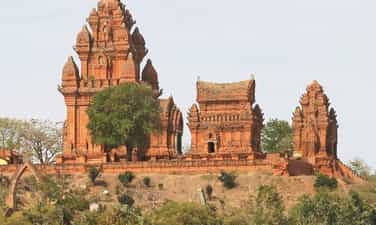
Poshanu Cham Tower
Po Sah Inu Tower is a place that preserves special historical and cultural values, with ancient Hoa Lai architectural style. This is one of the famous Phan Thiet tourist destinations that any tourist wants to visit when coming to Lam Dong. When you come here, you will be surprised by the ancient relic complex, the towers are made entirely from time-stained burnt bricks. Thanks to its special mysterious beauty, Po Sah Inu tower is known as a symbol of ancient Champa architecture and culture. Po Sah Inu Cham Tower is associated with a legend known to many Binh Thuan people. In the past, this land was inhabited by the people of the Champa kingdom. Po Sah Inu, the king's beautiful and gentle princess, was deeply in love with Po Sahaniempar, a Muslim lord from the Gia Lam region. Despite facing religious obstacles, their true love prevailed. To commemorate the gratitude and talent of Princess Po Sah Inu, people built a temple to commemorate her. Every year during the Kate season, people hold a festival at Po Sah Inu temple to celebrate and honor the beautiful princess with kindness. Po Sah Inu Tower has Hoa Lai architecture - one of the ancient art styles of Champa. This complex currently has 3 towers, but only the largest tower is still quite intact, the remaining 2 towers are somewhat damaged. The main raw material is red bricks bonded together with a special adhesive that until now we still cannot confirm what it is. The assumption that many people make is that it is some kind of plant resin. The main tower consists of 3 floors, about 15m high if counted from the inside of the tower to the top. Each bottom edge of each side of the tower is about 20m wide. Above the main tower there is a large door and a long, fixed main door facing the East where the Cham people's gods reside. The decorative shapes on the body and top of the Poshanu Cham tower all show symmetry and uniformity. With the remaining 3 directions West, South and North, 3 additional decorative fake doors were also built. In particular, you can observe that on the rolling arch of the West door, there will be carved strips of flowers and other strange images that no one has been able to answer until now. Besides, the Poshanu Cham tower is also built with a fairly tight space structure, with only large holes for ventilation under the windows. Inside the main tower is the stone Linga-Yoni altar, which is also the most sacred object in Hindu temples. The side tower worships the cow god Nandin, the mount of Shiva. This tower is only about 12m high and has the same architecture as the main tower but is somewhat simpler. The remaining sub-tower worships the Fire God, but now only a few details remain and is over 4 meters high, with only one door facing the East. Because of the heavy destruction, the decorative sculptures on the outside of the tower were also eroded, and the original lines were not intact. Every year, many festivals are held at the Poshanu Cham tower relic to welcome visitors. Furthermore, the Cham community in neighboring areas also often come here to pay their respects, hold ceremonies to pray for rain, pray for peace... to show their worship to the gods. The main festivals that often take place at the tower are: Rija Núga Festival, Poh Mbang Yang Festival: Held around the first lunar month. Kate Festival: Takes place around the 7th month of the Cham calendar (ie around September - October of the solar calendar) with many special performances. On this occasion, we will enjoy rhythmic dances to the sounds of traditional musical instruments such as Ginang drums, Paranung drums, Xaranai trumpets, Grong (six tams), Kanhi instruments... Besides, we can also freely pose and take photos in many styles from mysterious, traditional to modern. In addition, you can walk around the campus and there are other beautiful green areas. In the tower area, many Cham people live, so you can interact and learn about culture and people from them. Here you can learn about Cham folk culture through folk art performances, such as watching native people weave fabrics by hand. A trip to Phan Thiet cannot be complete without a journey to explore Poshanu Cham Tower!
Lam Dong
1767 view


Bao Dai Palace
Famous as one of the most beautiful palaces of King Bao Dai, Bao Dai III Dalat Palace with its beautiful space, modern European architecture and unique values of Art history is an attractive destination for tourists on their journey to Da Lat city. Bao Dai Palace III Dalat, also known as Palace III, "Summer Palace" is the most lavish and luxurious mansion in Dalat during the French colonial period. With typical French architecture located in the middle of a green pine forest, the artistic beauty of Palace III is associated with a part of the life of the last king of the Vietnamese feudal dynasty Bao Dai. Not only is it a historical destination, it also has its own unique imprint of the era, architecture and a beautiful natural space. Bao Dai III Dalat Palace is located at 1 Trieu Viet Vuong Street, Ward 4, 2.3 km from Da Lat city center, Lam Dong province. This mansion has a very special location, located in the middle of a vast green pine forest on Ai An hill with an altitude of 1,540 m above sea level, and is also the highest mansion compared to the other two palaces of King Bao Dai in Da Lat. Palace III was built in 1933 and was not officially completed until 1938. This architectural work was designed by architect Huynh Tuan Phat and French architect Paul Veysseyre. Bao Dai III Palace in Da Lat has a very luxurious architectural style compared to other palaces of King Bao Dai in Vietnam. Accordingly, the campus of Palace III has an area of about 1,000 square meters built into two floors. Both the front and back of Palace III are arranged with beautiful flower gardens in the style of palace gardens in France. In the poetic space of the mountains and forests with cool atmosphere and green pine trees, Palace III of Dalat is a very massive architectural work with bold European-style construction. The ground floor of Bao Dai III Dalat Palace is a place often used for meetings and banquets to entertain foreign guests. The entrance area has a reception room combined with many other function rooms. On the right side of the hall is King Bao Dai's room and library, on the left is the king's meeting room, office and entertainment room. King Bao Dai's office is designed with an architecture that combines interior and exterior landscapes, giving people living inside the feeling of being fully immersed in nature. In King Bao Dai's reception room, there are still a pair of wild buffalo horns hunted by King Bao Dai himself at K'rong Pha, and two pianos that Queen Nam Phuong and her princesses used. Inside King Bao Dai's office, there are also many important historical artifacts such as the emperor's sister's jade, military seals, statues of King Khai Dinh and King Bao Dai, or national flags of countries. The second floor area of Bao Dai III Dalat palace is the private living space of King Bao Dai's family, including the bedrooms of the king, Queen Nam Phuong and the princes and princesses. In particular, King Bao Dai's bedroom is designed with a modern style, the main color is yellow, the artifacts displayed in the room are still kept almost intact, especially outside the king's bedroom, a Vong Nguyet Lau is also built as a place for the king to watch the moon. At Bao Dai III Palace in Dalat, a special space that visitors can hardly miss when visiting is the wine cellar. This used to be a place to store rare wines, but still retains its ancient beauty, making visitors feel like they are returning to the past. Here visitors can admire old objects in an impressive space. Coming to Bao Dai III Dalat Palace, visitors will have the opportunity to fully immerse themselves in a space filled with impressive cultural and historical colors, and at the same time admire the most massive architectural work in Da Lat city from the French colonial period to today. Here, visitors will have a clearer sense of the life of King Bao Dai and his royal family members through the spaces and items still on display, from the office, reception room to private spaces such as the dining room, bedroom, the furniture is arranged harmoniously, without any fuss or extravagance. In addition to admiring the beauty of the architecture and interior of Dalat's Bao Dai III Palace, visitors also have the opportunity to enjoy an extremely poetic space with beautiful grounds including the royal garden, Ai An forest, lake... From this location, visitors can also see far away to see the valley and wonderful landscape of Dalat. Experiential activities at Bao Dai III Palace are also very attractive to tourists. Here, in addition to walking to admire the scenery, visitors can also rent a horse-drawn carriage to walk around Palace III to visit and explore. In particular, if you like royal culture, visitors can experience dressing up as kings to take check-in photos with impressive backgrounds, carrying luxurious and splendid royal colors. The climate in Da Lat is cool and temperate all year round, however the weather is not always favorable to make a trip to visit Bao Dai Palace III in Dalat. The best time to visit Palace III is from November to April, because at this time in Da Lat there is little rain and the weather is cool and dry. Bao Dai Palace III Dalat will be a great destination for tourists who are looking for a tourist destination that has both beautiful space and many historical and cultural values to explore. Coming to Palace III and admiring the ancient architecture in a poetic campus, breathing the fresh air and feeling a bit nostalgic about the royal life of the famous king will be a gentle, enjoyable experience for your journey to explore Da Lat city.
Lam Dong
1946 view


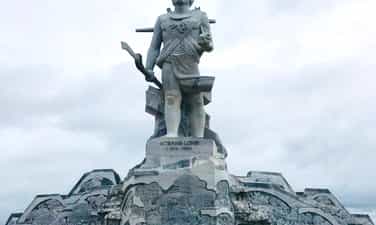
N'Trang Long relic site
N'Trang Long relic area is a complex of memorial works, honoring national hero N'Trang Long, leader of the uprising against the French in the Southern Central Highlands. The project is located in Lam Dong province, including the 18.5 m high monument of national hero N'Trang Long, along with other items to educate history, promote culture and be a place for spiritual and cultural activities for the people. The struggle against the French colonialists of the M'nong people led by N'Trang Long lasted from 1912 - 1935. For more than a quarter of a century (25 years), N'Trang Long gathered most of the M'nong people in the Lam Dong highland area today to join the fight against the French. The locations of the M'nong people's anti-French colonial movement led by the hero N'Trang Long are places that mark glorious and heroic victories against foreign invaders, demonstrating the resilient will to fight, the indomitable spirit, solidarity, and love of the Central Highlands people in the national liberation movement. After the war passed, this place still has traces of tunnels, trenches, ramparts, fortifications... with historical and cultural value in educating generations about the tradition of love for the homeland. To remember the merits and victories of fighting against the invaders, the authorities have ranked, invested, renovated and restored a number of places of the struggle movement led by N'Trang Long in Tuy Duc commune and built a monument in Gia Nghia city, visitors can visit, learn and check-in. Currently, to remember the merits and victories of fighting against invaders, the authorities have ranked, invested in, renovated and restored a number of locations of the struggle movement led by N'Trang Long in Tuy Duc commune and built monuments in Gia Nghia City specifically, such as: The remains of Bu Méra post have a total area of 1 hectare (100m x 100m). The former post was arranged quite scientifically, including a main door in the West - North, 2.5m wide and 2 side doors (escape doors) in the West - South and East - North connecting along the trench running down the Dak Buk So tributary. With an overall area of only 1 hectare, Bu Méra station contains an ecological sub-population with echoes of the Central Highlands mountains and forests; There are many types of large wood, aged from 70 to 90 years (regenerated wood, almost intact), along with many species of birds, squirrels, reptiles, etc. Currently, the relic has been restored and embellished with items such as moats, ramparts, gates, etc. to serve tourists. Bu Nor bon vestiges with an area of about 7 hectares, currently located in the protective forest of Quang Tan Forestry Enterprise with many types of wood of quite large size, still intact. Remains of "Henri Maitre Beer". Currently, Henri Maitre's grave remains intact. The grave has an area of about 3m2, the highest point is 40cm (above the ground), traces reflect the crimes of the French colonialists against the people of the Central Highlands ethnic groups; reflects the resilient and indomitable will to fight of the people of Lam Dong ethnic groups under the brave strategic leadership of national hero N'Trang Long. Monument to Hero N'Trang Long and the national liberation struggle movement of 1912 - 1935 at Dak Nur hill, Bac Gia Nghia ward, Lam Dong province. If you have the opportunity to visit the Central Highlands, don't forget to stop by the N'Trang Long relic site to learn more about the patriotism, love, and pride of the heroes of the Central Highlands ethnic groups!
Lam Dong
1818 view


UNESCO Global Geopark
When coming to Lam Dong Global Geopark, you will have the opportunity to explore the unique and longest volcanic cave system in Southeast Asia, as well as immerse yourself in the majestic and beautiful nature and indigenous people's culture among the vast Central Highlands. Geoparks are models for connecting and learning about Earth science through geotourism, where you can learn about the origins and tectonic processes of the Earth's surface. This model focuses on educating and raising awareness of residents and tourists, encouraging a green lifestyle and harmony with nature. Therefore, Geopark tourism is very suitable for the criteria of a green destination in the current context. Amidst the majestic Central Highlands, Lam Dong tourism not only has vast forests and unique gong culture, but also owns a global geological park, home to the longest volcanic cave system in Southeast Asia. Lam Dong Geopark has an area of 4,760 km². Dak Nong Global Geopark includes five communes: Krong No, Cu Jut, Dak Mil, Dak Song, Dak Glong and Gia Nghia city. This place has 65 geological and geomorphological heritage sites, including about 50 caves with a total length of more than 10,000m, along with craters and waterfalls. With international and national heritage values, Lam Dong Geopark was officially recognized by UNESCO as a Global Geopark in July 2020. Lam Dong Global Geopark has five dormant volcanoes. This is where much evidence of tectonic activities of the earth's crust is preserved more than 140 million years ago. In this area, scientists have discovered many fossil bones of prehistoric people, along with bronze arrows and ancient Vietnamese objects from nearly 7,000 years ago, made from stone, ceramics, bones and shells. The most prominent feature of the Global Geopark in Lam Dong is the longest volcanic cave system in Southeast Asia, formed from the eruption of Nam Blang volcano (Buon Choah). With about 65 geological and geomorphological heritage sites, the highlight is a system of nearly 50 caves, craters and waterfalls. Nam Blang volcano, Krong No commune, is the highest peak in a complex of five extinct volcanoes in Dak Nong Global Geopark. Nam Blang volcano is 601m high, of which the underground part is 59m deep. Inside these volcanoes lies the largest and most unique cave system in Southeast Asia, with many undiscovered secrets. Nam Blang volcano, Krong No commune, is the highest peak in a complex of five extinct volcanoes in Lam Dong Global Geopark. Nam Blang volcano is 601m high, of which the underground part is 59m deep. Inside these volcanoes lies the largest and most unique cave system in Southeast Asia, with many undiscovered secrets. Chu Bluk volcanic cave is a site of great geological and cultural heritage value, bringing unique experiences to visitors. Chu Bluk Cave, also known as Bat Cave, is about 25km long, located in Buon Choah commune, Lam Dong province. Located about 20km from the center of Krong No district, from Dray Sap waterfall to Buon Choah cave, this cave system includes more than 100 large and small caves formed from lava flows millions of years ago, hidden in basalt rock. The Global Geopark with its pristine tropical forest ecosystem has preserved biodiversity values, unique cultural, geological, and natural features, along with traces of prehistoric activities dating back tens of thousands of years found in caves. Most of the heritage sites of the Global Geopark have not been affected by humans, so these are ideal tourist destinations for those who like to explore the wild beauty of nature. Over millions of years of creation, Mother Nature has bestowed this Central Highlands region with a huge treasure. The Global Geopark is a place rich in tropical forest ecosystems and preserves many unique cultural, geological and natural features. All blend into a wonderful giant picture, creating a captivating beauty for this red basalt land.
Lam Dong
1887 view


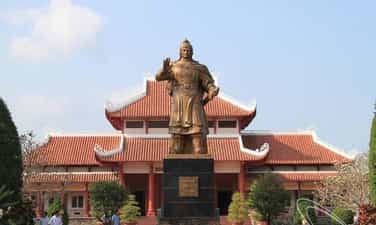
Quang Trung Museum
Quang Trung Museum is a place to preserve images and artifacts of cloth hero Nguyen Hue and the glorious victory of the Tay Son insurgent army. Quang Trung Museum is a tourist destination that in recent years has attracted many tourists when they have the opportunity to travel to Quy Nhon. As one of the most famous historical museums in Gia Lai province, this place preserves valuable artifacts associated with the Tay Son uprising. Besides, the museum is also where the bodies of the three Nguyen brothers, Nguyen Nhac, Nguyen Hue, and Nguyen Lu (known to local people as Tay Son Tam Kiet), are kept. The museum was built in 1978, in Tay Son commune, about 45km from Quy Nhon city center. The road is quite far so you can combine visiting other tourist destinations such as Ham Ho Tourist Area, Twin Towers, Banh It Tower, Thien Hung Pagoda, Heaven and Earth Altar. Quang Trung museum campus is more than 150,000 square meters wide, the architecture intertwines classic and modern lines, harmonious natural landscape, and many trees. This is also the largest celebrity museum today, ranked as a National Monument in 1979. Not only does it have historical significance, but Quang Trung museum also has long-standing cultural and political value. The special thing is that this project was built on the old house, where the three Nguyen brothers were born and raised: Nguyen Lu, Nguyen Nhac and Nguyen Hue. The museum is also considered a historical witness, it stores important artifacts, depicting the life of national hero Quang Trung - Nguyen Hue. Besides, this museum is also considered a cultural and educational center to research the nation's history. Having the opportunity to visit the museum, you will have a lot more knowledge about history and be more proud of the sacrifices of previous generations. The museum helps inspire and educate the young generation about patriotism and the spirit of solidarity and unanimity for the country and people. Entering the museum grounds, you will be surprised because this place is meticulously cared for. The design layout is harmonious and balanced, the center is where the Quang Trung monument is located, from here radiating out in other directions are other items. The museum has a curved, red tile roof with extremely meticulous and sophisticated carvings. The main items here include: Quang Trung Monument; Tay Son Tam Kiet Temple; Tay Son music and martial arts performance house; Tay Nguyen communal house; The house displays conservation items; Natural landscape area; Ben Truong Trau. The museum's display area alone includes 9 rooms, storing about 11,000 artifacts. History is a rather distant category because we mostly only learn it from books. Therefore, if you have the opportunity to come to Quang Trung museum, you will be able to directly see items associated with the Tay Son insurgent army such as elephant skin bronze drums, ordinations, seals, genealogies of martial generals, civil servants... to better understand the fighting journey and resounding victory of the insurgent army. Besides, countless simple and simple items are also preserved here, depicting the marches, battles, and arduous days of the insurgents at that time. These realistic, intimate images will certainly help you better understand an important historical period of the nation. The old garden of King Quang Trung's family still retains two precious relics: an ancient tamarind tree and a well. The well mouth has a diameter of 0.9m, located on the right side of Tay Son palace. The well was built of honeycomb stone slabs, originally a private well for the family but later restored to become a village well. You can sit under the tamarind tree in the shade, enjoying the quiet, calm and antiquity of Quang Trung Museum. When coming to the museum, don't forget to enjoy Tay Son martial arts performances. In addition, you can also watch a short film recreating the entire process of the Tay Son insurgents fighting and winning. If you have the opportunity to set foot in Tay Son, visit the Museum to listen to the still echoing sounds of ancient war drums and feel the eternal spirit of the Vietnamese people.
Gia Lai
1801 view


Banh It Tower
Banh It Tower is a structure built during the ancient Champa period that exists in the heart of Gia Lai today. Coming here, you will definitely be impressed by the almost intact beauty of the tower. Located on a high hill in Dai Loc village, Banh It Tower leans down, reflecting on the Con river flowing through Ba Di bridge. Also known as Silver Tower, Banh It Tower was built in the late 11th and early 12th centuries, belonging to the ancient Champa dynasty. Located on a high hill in Dai Loc village, Banh It Tower leans down, reflecting on the Con river flowing through Ba Di bridge. Also known as Silver Tower, Banh It Tower was built in the late 11th and early 12th centuries, belonging to the ancient Champa dynasty. From the first moment you set foot here, you will be impressed by the historical traces of the Champa period that still exist on the top of the tower, stone statues, dancing girls with curvy bodies and vivid, meticulous sculptures. Banh It Tower is a complex with four towers radiating out in four directions and clustered in the middle. When viewed from a distance, it resembles banh it, a specialty of the martial arts land of Gia Lai. Therefore, local people called this place Banh It tower for that reason. The most prominent part of the Banh It Tower complex is the gate tower in the East. The tower is 13 meters high, finished from laterite bricks with two connecting doors in the East - West direction. The gate tower at Banh It Tower was built according to Gopura architecture with spear-shaped arches, many layers stacked vertically. The tower's body has concave vertical grooves, forming a towering, elegant-shaped column, towering between the heaven and earth of Gia Lai. The Main Tower is located on the top of the hill, and has the largest structure at Banh It Tower with a height of 29.6 meters. The main tower has a square plan with each height of 12 meters. The majestic part of the tower is very majestic, meticulous in every smallest detail. The main tower at Banh It Tower has only one main door located in the East and three fake doors radiating out in all directions according to Kalan architecture. The main door is built to protrude from the wall with an impressive height of 2 meters. The door arch is built in the shape of a spear, in the middle is a relief sculpture of Kala's face, and the border of the arch is a relief of the dancing monkey god HaNuMan. The southern tower of the Banh It Tower complex has similar architecture to the East tower with special features in Nau culture and architecture, especially the Posah style: square plan, spear-shaped door, tower body made from cladding columns. In addition, the roof of the South Tower has a unique design with gradually smaller floors moving upwards. The floors of the tower have rows of columns in the middle, bulging at both ends similar to the shape of a gourd. From the main tower, go a little further and you will see the last tower in the Banh It Tower complex. This is a tower with unique architecture with a height of 10 meters, a rectangular plan, 12 meters long, 5 meters wide. The main door of the tower faces East, opening in both North and South directions. The tower's roof is concave in the middle, similar to the shape of a saddle. Therefore, this place is also called by people another name: Yen Ngua tower. Meanwhile, the base of the tower protrudes slightly from the body, built in a square step shape to form a pedestal for the entire project. The body of the tower is shaped like a relief of a magical bird with an interesting and evocative wingspan posture. The appropriate time to go to Banh It Tower is from January to August. At this time, the weather in Quy Nhon is very beautiful, clear and no rain, suitable for people to visit outdoors. Banh It Tower is one of the few works associated with the rare Champa Dynasty that still exists today. With its unique architectural beauty, it is certain that your journey back to Quy Nhon will become much more complete if you have the opportunity to visit and enjoy the scenery at Banh It Tower.
Gia Lai
2119 view


Quy Nhon Twin Towers
Twin Towers is not only a destination for history lovers but also a place for tourists to find tranquility, contemplate ancient cultural beauty, and is one of the most beautiful Cham architectural relics left in Vietnam. Quy Nhon Twin Towers - also known as Hung Thanh Tower - is one of the most ancient and impressive Cham architectural works remaining in Binh Dinh. Located on Tran Hung Dao street, Dong Da ward, right in the center of Quy Nhon city, the tower appears as a historical witness, preserving the cultural essence of the ancient Champa kingdom. Quy Nhon Twin Towers are not like traditional Cham towers. The project consists of two towers standing side by side, creating an impressive layout. The big tower is about 25m high, the small tower is 23m high, both have the main door facing south - a symbol of the connection between humans and gods according to the concept of the Cham people. The most special feature of Quy Nhon Twin Towers is the mysterious construction technique: red bricks are stacked on top of each other without any visible mortar marks, tightly bonded with a type of adhesive that scientists have not yet been able to decipher. The three main parts of the tower clearly show the Champa architectural style: Tower base: Solid with large stone blocks (big tower) and baked bricks (small tower). Tower body: Solid square structure, decorated with vivid motifs such as the divine bird Garuda, hybrids with elephant heads and lion bodies, and human figures with 6 or 8 arms. Top of the tower: Not scaled down like traditional Cham towers, but has a soft curved dome shape, symbolizing the connection between earth and sky. Through many ups and downs of history, war and time, Quy Nhon Twin Towers were severely damaged. But with constant efforts, from 1990 - 1997, Polish and Vietnamese experts coordinated the restoration, helping the project revive almost intact. This is considered a destination rich in historical, cultural and architectural values. Today, Quy Nhon Twin Towers are located in the middle of a green campus of more than 6,000 square meters, looming under the canopy of coconut trees, areca palms and frangipani flowers - plants associated with Cham culture, creating a quiet and mysterious space. The unique feature of the Twin Towers is the combination of red bricks and elaborately carved sandstone panels. The images of linga - yoni, Shiva, elephant, Naga, or dancing Apsara dancers all show the unique artistic imprint of the Cham people. Not only do they have aesthetic value, these motifs also contain spiritual meaning, expressing beliefs about prosperity, fertility and the power of divine protection. Take a leisurely walk around the two towers, feel the quiet space, admire each delicate architectural line and imagine a prosperous period of the Champa kingdom. Discover the Linga - Yoni symbol made of sandstone inside the large tower, expressing the prosperous beliefs of the Cham people. Listen to the story of a lost dynasty, feel the harshness of time and the golden vestiges of the past. Live slowly in the ancient space, take photos with mossy walls, where the past and present intersect. On festive occasions, you may be lucky enough to encounter dancers in traditional Cham Pa costumes performing the mysterious Apsara dance - a dance that honors the beauty and soul of women. With its ancient features and unique symmetry, Quy Nhon Twin Towers are the ideal backdrop to create photos imbued with heritage. Although most of the artifacts inside have been lost over time, the Twin Towers still preserve a number of precious antiques, vividly reflecting the cultural and spiritual life of the ancient Cham people. Among them, the most prominent are reliefs of dancing girls, Nandin bull heads and inscriptions engraved with ancient Champa script. A number of artifacts are currently displayed at the Binh Dinh Museum, helping visitors better understand the once brilliant civilization. Not only is it a historical relic, Twin Towers is also a place where many interesting cultural activities take place. During festivals, visitors can enjoy traditional Cham dances and admire unique artistic performances. Or even have the opportunity to explore the unique features of the religious life of the ancient Champa community. Don't hesitate any longer without visiting the Twin Towers to once touch the ancient bricks, listen to the hundreds of years of stories of the Cham people and feel the breath of the past still creeping into every corner of the coastal city of Quy Nhon.
Gia Lai
1928 view


Vinh Moc Tunnels
When we mention Quang Tri, we will immediately remember the painful land with many bombs and bullets, especially the pain of national division. Even though the wars have been over for half a century, the pain is still there, the clearest evidence being the historical relics that remind us of Vietnam's glorious period. One of the prominent places among them is the Vinh Moc tunnels of Quang Tri province, a magnificent underground architectural work, where the people of Vinh Linh live and fight hard to wait for the day of national unification. Vinh Moc Tunnels is located in Vinh Moc village, Vinh Thach commune, Quang Tri province. With the motto "not an inch away, not an inch away", the army and people of Vinh Moc dug more than 2,000 meters of tunnels, creating an "underground village" to live, fight and support Con Co island. Coming to Vinh Moc, you not only visit a relic but also touch the breath of history, feel the patriotism and extraordinary creativity of your ancestors. The weather in Quang Tri is typical of the Central region, with two distinct seasons: dry season (April - August) and rainy season (September - March). According to experience, the most ideal time to visit Vinh Moc Tunnels is: Dry season (April - August): The weather is sunny, warm, dry, convenient for moving and exploring outdoor attractions such as Cua Tung beach or Vinh Moc museum. Winter (December - March): Cool air, little rain, suitable for experiencing the cool space inside the tunnels. As soon as we stepped into the Vinh Moc tunnels, we could feel an unexpected cool feeling. The airy and cool wind system inside has surprised many Quang Tri tourists. That is also understandable because ventilation and ventilation factors to ensure the safety of hundreds of people living and fighting must be given top priority. The deeper you go inside the Vinh Moc tunnels, under the light you can clearly see the legendary red soil color here as well as the precise and scientific distribution of each area inside. In addition to being a simple fighting tunnel village, the tunnels also serve as an underground living space for local militia. It was their tenacious and indomitable spirit that gave them the ability to turn the underground into sturdy fortresses with three interconnected floors. According to travel experience, this tourist destination is considered a typical project of the Vinh Linh tunnel village system. The tunnels start from the well and radiate out into the tunnel, running zigzag in a Z shape to create solid bends, using earth walls to block the path of bombs and bullets if they accidentally fall. Not far from the tunnel area, the museum is a place to store war artifacts and recreate the lives of Vinh Moc people. The highlight is the famous painting To Be Or Not To Be, depicting the resilience of the people and soldiers here. In addition, you will see: Remaining bomb casings and bullets, testament to the severity of war. Documents and images about the tunnel construction process and the suicide boats supporting Con Co island. Located inside the tunnels, the cinema room offers a vivid experience with precious footage from the wartime period. The images of bombs, underground life and fighting spirit will make you emotional. First vent well: This is where the first pickaxe was placed to start the tunnel in 1965. The well does not contain water but plays the role of providing air, ensuring life for hundreds of people in the tunnel. Standing here, you will feel the magic of natural ventilation design, keeping the space always cool. The outdoor area displays remaining bomb casings and bullets, along with deep bomb craters, traces of a time of fire and smoke. This is the ideal place to take photos and reflect on the value of peace. To make your trip more enriching, you can combine visiting famous places near Vinh Moc Tunnels: Cua Tung Beach; La Vang Holy Land; Quang Tri Ancient Citadel... Vinh Moc Tunnels is not just a tourist attraction, but a place that touches the heart, arouses national pride and the sacred value of peace. When you step out of the dark tunnels, which were once a place of refuge amid the storm of bombs and bullets, and catch the bright sunlight shining down on the blue Cua Tung beach, you will feel more deeply the silent sacrifice of your ancestors to protect every inch of their homeland.
Quang Tri
1767 view


