
 vn
vn en
en ja
ja ko
ko zh
zhExplore Vietnam like a local | AI Audio Guide & Online Local Guides
Your digital travel assistant, Travelviet: AI-powered heritage guides & online local support. Book green hotels, immersive local experiences, and attractions in Vietnam.


Travelviet - Vietnam travel app | Voiceover & OTA Vietnam


Da Nang
Sun Festival 2026
Since 10/04 31/08/2026
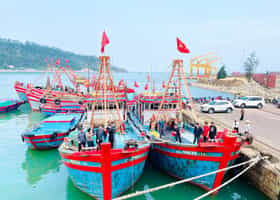
Nghe An
Cua Lo Festival 2026
Since 25/04 30/08/2026

Quang Ngai
Quang Ngai Tourism Festival 2026
Since 30/04 28/06/2026

Quang Tri
Festival for Peace 2026
Since 30/04 31/12/2026
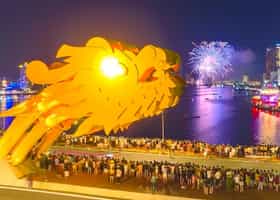
Da Nang
DIFF 2026 International Fireworks Festival
Since 30/05 11/07/2026
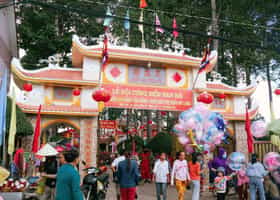
Vinh Long
My Long beach worship festival
Since 24/06 26/06/2026
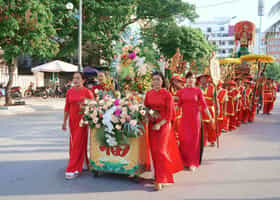
Thanh Hoa
Banh chung and banh day festival
Since 25/06 27/06/2026
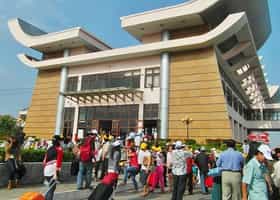
Moc Bai border gate
Tay Ninh 12268 view
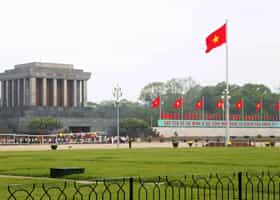
Ba Dinh Square - Uncle Ho's Mausoleum
Hanoi 12117 view
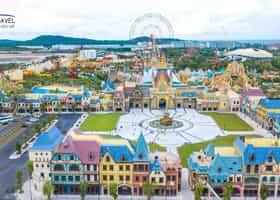
VinWonders Phu Quoc
An Giang 11488 view
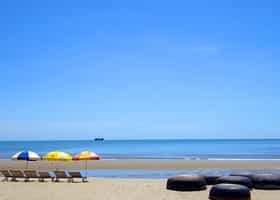
Cua Lo Beach
Nghe An 11354 view
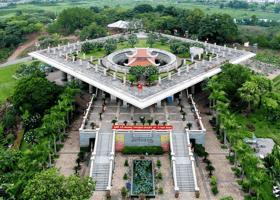
Hung Temple relic area
Phu Tho 11213 view
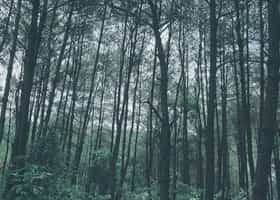
Noong Cop pine forest.
Son La 11074 view
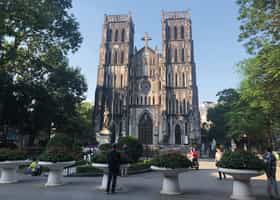
Hanoi Cathedral
Hanoi 10371 view
Vietnam travel guide
See all


Tourist destination
See all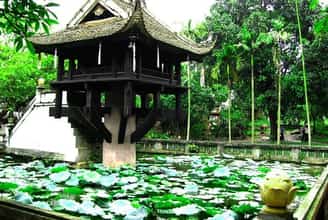
One Pillar Pagoda
One Pillar Pagoda was started construction in the year Ky Suu 1049, under the reign of King Ly Thai Tong. According to folk legend, in a dream, King Ly Thai Tong dreamed of Guan Yin Buddha sitting on a lotus, radiating light and inviting the king to come with him. When the king woke up from his dream, he immediately told his servant. Monk Thien Tue advised the king to build a pagoda on a stone pillar just like in his dream, making a lotus throne for the Buddha to sit on. In history books, it is recorded that at the current location of the One Pillar Pagoda, there is a stone pillar above which there is a jade pagoda. In the jade pavilion, there is a statue of Guan Yin Buddha that was built in a square lake. The king often came here to chant Buddhist scriptures and pray. Later, the next prince repaired the pagoda and built a pagoda next to it 10 meters to the southwest. This cluster of relics was named Dien Huu Tu with the hope of "long-lasting blessings". In 1105, King Ly Nhan Tong repaired the pagoda and built two white porcelain-roofed towers in front of the yard. In 1108, Nguyen Phi Y Lan ordered someone to cast a large bell and named it "General Enlightenment" with the meaning of awakening the hearts of the world. During the war against the French, the One Pillar Pagoda was mined and destroyed by the French expeditionary force. After taking over the capital, the Ministry of Culture of the Democratic Republic of Vietnam researched and established a major restoration project to rebuild the One Pillar Pagoda exactly like the original architecture. In 1955, Hanoi's One Pillar Pagoda was restored and preserved until now. Next to it, there is still a pagoda with a three-entrance gate with a horizontal panel inscribed with the three words "Dien Huu Tu". In 1962, the One Pillar Pagoda complex in Hanoi was recognized as a National Historical Architectural and Artistic Monument. By 2012, the One Pillar Pagoda was honored by the Asian Records Organization to set the record for "The temple with the most unique architecture in Asia". The original structure of the One Pillar Pagoda is supported by wooden beams holding firmly to the stone pillars. The structure of the One Pillar Pagoda currently includes: Pillars, Lotus pedestal, and pagoda roof. The pillars of the one-pillar pagoda are built with two stone pillars overlapping each other, forming a vertical pillar with a height of 4 m, not including the sunken part below the base. The diameter of the stone column is 1.2 m wide, making the viewer feel "as solid as stone". The Lotus Palace has a square shape of 3 m on each side, blocking the surrounding balcony, supported by a system of solid military columns, underneath are large wooden beams securely attached directly to the stone pillars. The tenon joints are precisely chiseled to each inch and the joints fit tightly together, creating an extremely sturdy structure. Inside the Lien Hoa station is luxuriously decorated, with an altar above which is placed a gilded statue of Guan Yin Buddha with a thousand eyes and a thousand hands. Surrounded by many worship objects: a pair of ceramic water vases, a lotus flower vase, a set of altar tea and bowls, and a bronze incense burner. The altar is painted with gilded vermilion and decorated with many yellow cloud motifs. On the innermost ceiling, there is a small horizontal panel with three golden words "Lien Hoa Dai" written on it, painted red. The pagoda's roof is covered with traditional brick-red scale tiles covered with moss over time. Each tile is a manifestation of the skill and meticulousness of the craftsman. When roofing tiles, the most difficult step is to match the tiles at the corner of the gutter so that there are no gaps, because this is the junction between the four edges of the pagoda roof, which often have gaps. If you want to roof tiles in this location conveniently, right from the stage of making and joining the joints, the joints must be really tight and match each other. One Pillar Pagoda has four curved roofs with knife heads soaring into the sky, also known as "blade ships". The pagoda's roof is supported by a system of levers extending close to the bottom. On the top of the pagoda's roof is the image of "two dragons flanking the moon", this is a typical architectural feature in pagodas, temples, communal houses and shrines. The two dragons bend their bodies and turn their tails toward each other, but their heads are facing the moon. This architectural feature symbolizes fertility and harmony of yin and yang. The pair of dragons symbolizes positive energy, and the moon shape represents negative energy. The sum total is the number three of fertility, that's why when people go to temples, they often light 3 incense sticks to symbolize the 3 objects in "two dragons flanking the moon". This is an image imbued with humanity in the nation's spiritual artistic architecture. The lotus flower is considered a symbol in Buddhist culture, reminding people of the virtues of honesty, patience, innocence, direct action... Lotus Flower Dai is crafted in the image of a lotus placed on a high stone pillar. In the middle of Linh Chieu lake, it seems as if it is reaching up to escape the worldly world. An extremely elegant, pure and unique image. Linh Chieu Lake has a surrounding flower wall decorated with cubic motifs. Outside, another large lake is dug, called Bich Tri lake. Bich Tri Lake is located within the grounds of Dien Huu Pagoda, located to the right of One Pillar Pagoda. In front of the yard of Dien Huu pagoda is the Bach Tuynh stone tower. From the stone tower there is a small bridge leading to the One Pillar Pagoda. On the full moon day or the first day of every month, the administrators organize a cleaning ceremony and perform worshiping ceremonies in the temple. People also often come to visit and worship from afar. In the summer, the temple is open to welcome visitors every day of the week, in the winter it is closed every Monday and Friday of the week. There is no charge to visit the temple. Coming to One Pillar Pagoda, people often pray for perfect wisdom and full vitality. Through extremely beautiful artistic and humanistic architectural features such as the purity and serenity of lotus petals symbolizing perfect wisdom. Cylindrical pillar - positive energy located in the middle of Linh Chieu lake - negative energy combined to bring about continued longevity.
Hanoi
9892 view
From January to December
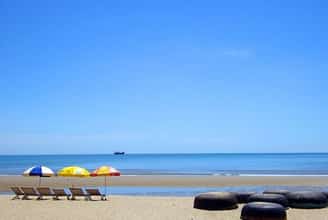
Cua Lo Beach
Cua Lo Beach belongs to Cua Lo town, Nghe An province. This place is about 16km east of Vinh city, and 340km from Hanoi capital. In the past, Cua Xa - Lach Lo was known as a dangerous area with a strategic military position. Through ups and downs, Cua Lo beach was officially designated and became a prominent highlight in the tourism industry in the North Central Coast. Cua Lo has many small mountains and peninsulas, but also has flat plain terrain. Surrounded by the beautiful Cam River and Lam River, creating a beautiful landscape painting. Traveling to Cua Lo beach is the ideal choice for every family to relax and cool off on hot summer days. Beach travel is always more attractive on hot days, because now you can enjoy the refreshment of immersing yourself in cool water. The most ideal time to come to Cua Lo beach is from May to the end of October. Because this is the time when Cua Lo enjoys full sunshine, the weather is warm, suitable for outdoor activities. If you want your trip to be comfortable and not too crowded, avoid going on major holidays or weekends. But no matter what time you come, Cua Lo beach is still worth experiencing thanks to its wonderful beauty and many interesting activities. Cua Lo Beach is known as one of the most beautiful places in the North Central region. This place attracts many tourists not only because of its poetic natural scenery with blue sea, white sand, and golden sunshine. But also impressed by many unique folk cultural activities and eye-catching fireworks displays at the end of the tourist season (around the end of September). Coming to Cua Lo, you can enjoy the following delicious dishes. Crab sprouts: This dish not only awakens the sense of smell and taste of all diners but also contains high nutritional content. Crab sprouts are meticulously prepared from crab meat and many accompanying spices, guaranteed to be unforgettable once eaten. Steamed crab with tamarind: Although it is a popular seafood dish, steamed crab with tamarind in Cua Lo attracts everyone because of its unique flavor. The viscous tamarind juice fragrant with spices and the fried and then steamed crab create an attractive flavor, ready to please all diners. Clam porridge: Although it is a quite simple dish, to cook a delicious pot of porridge, it is necessary to go through many complicated steps. When eaten, clam porridge is mixed with herbs to stimulate the taste buds. Jumping squid: This is a specialty dish of Cua Lo because of the freshness of the squid when it has just been caught and processed right on the spot. Squid can be steamed, grilled... served with extremely attractive dipping sauce.
Nghe An
11354 view
May to October
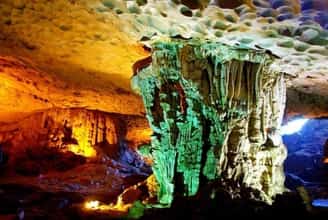
Tham Om Cave
Tham Om Cave is located at an altitude of 15m above sea level, the cave entrance is in the Northeast direction. This place is magnificent with fossils and mysteries that need to be discovered. Tham Om Cave is located in Quy Chau district, Nghe An province, about 7km from Road 48. This place is considered to contain many precious artifacts of ancient Vietnamese people, preserving a long-standing culture. Visiting Tham Om Cave is not only an opportunity to learn about history but also experience ancient culture. The cave is free and operates all day, so take the time to explore the interesting things at this location. In 1975, Tham Om Cave was discovered and excavated. Archaeologists have found many precious artifacts, from bronze, stone, to fossil animal bones and teeth, reflecting the life of ancient Vietnamese people. The Tham Om people are considered the first modern people in Vietnam. Transliterated in Thai, “Tham Om” means big cave. This place often attracts many tourists to visit every year. Tham Om Cave is considered a unique natural masterpiece of Nghe An. Take the time to come to this place to explore, experience and feel for yourself one day soon. When you arrive at Tham Om Cave, Quy Chau, Nghe An, you will immediately feel the wild and majestic beauty of mountain nature. The bustling sound of birds singing and the cool air will make your trip more attractive. Inside the cave is a special phenomenon of weathering due to water erosion on limestone mountains. With every step you take, you will encounter stalactites, large cliffs, along with diverse and unique shapes. All create the feeling of a special gift from the Creator. Coming to this cave, you will enjoy rustic culinary dishes such as banana flowers, yam fruit, green vegetables, bamboo shoots, wild bee pupae, and delicious grasshoppers. Don't forget to bring Nghe An specialty products as gifts for your loved ones after the trip.
Nghe An
8937 view
From January to December
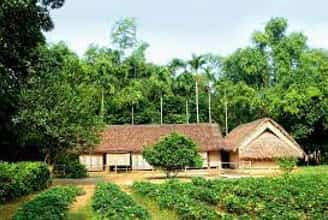
Hoang Tru Village
Hoang Tru village is about 2km from Kim Lien village, in Kim Lien commune (Nam Dan district, Nghe An province), about 15km from Vinh city. There is a 3,500m2 Hoang Tru relic cluster here, including: The house of Mr. Hoang Duong - Uncle Ho's grandfather, the Hoang Xuan family branch church, the house of Mr. Nguyen Sinh Sac and Ms. Hoang Thi Loan - relatives giving birth to Uncle Ho. On the occasion of the Year of the Tiger in 1878, Mr. Hoang Duong, on his way to celebrate the New Year, met a little boy sitting on a buffalo's back, engrossed in reading a book. That boy's name is Nguyen Sinh Sac, he was orphaned when he was 4 years old. Feeling sorry for the situation and appreciating the virtue of studiousness, Mr. Hoang Duong asked the Nguyen Sinh family for permission to take Nguyen Sinh Sac home to raise and educate him. At that time, Nguyen Sinh Sac was 15 years old. Under the guidance of Mr. Hoang Duong, the more Nguyen Sinh Sac studied, the smarter he became, becoming famous throughout the region. When Nguyen Sinh Sac turned 18 years old, the couple chose him to be the son-in-law for their first daughter, Hoang Thi Loan. In 1883, the two got married and lived separately in a newly built small 3-room house. The house is the place to witness student Nguyen Sinh Sac diligently reading, witnessing the diligence and loyalty of his wife and the birth of his children. At the Huong exam in the year of Giap Ngo 1894, Mr. Nguyen Sinh Sac passed his bachelor's degree from Nghe An school. In 1895, he went to Hue capital to study and took his wife and children with him. After giving birth to her fourth child (in 1900), Ms. Hoang Thi Loan died in Hue at the age of 33 (February 1901). Mr. Nguyen Sinh Sac's father and son sadly left the imperial capital to return to Hoang Tru village to live. At the Tan Suu Faculty exam (1901), Mr. Nguyen Sinh Sac went to Hue to take the exam and passed the exam. King Thanh Thai gave him the plaque "An tu ninh gia" (Thanks to the king for his good family). According to tradition, Mr. Nguyen Sinh Sac and his children said goodbye to Hoang Tru village and returned to their paternal hometown - Kim Lien village to honor their ancestors. Hoang Tru relic area with a small three-room house is the place where President Ho Chi Minh was born, where the beautiful and difficult childhood years of him and his grandparents were attached. parents, brothers and sisters. It was also here that he received the love of his relatives and his homeland, and witnessed the devoted teaching of his grandfather and father. Those spiritual values are the source of a great aspiration for young Nguyen Sinh Cung to become the great President Ho Chi Minh, a Hero of national liberation, a cultural celebrity of Vietnam and of Vietnam. mankind.
Nghe An
8231 view
From January to December
Relics
See all
Lang Le Bau Co relic site
Lang Le Bau Co relic site is located in Tan Nhut commune, Binh Chanh district, Ho Chi Minh City. Lang Le Bau Co is associated with the resistance war against the French invasion in 1948 with major battles that went down in history. Lang Le Bau Co relic was recognized as a city-level historical relic in 2003. The reason it is called Lang Le Bau Co relic area is because the name of Lang Le Bau Co relic area was given by local people. The hamlet was established next to the interlaced canals and rivers. Lang Le Bau Co is located inside a large field with many shrimp, crabs, and fish. Along with many species of birds such as mallards, storks, teal, nuthatches, gongs, partridges, herons, and red armpits come to feed here. Therefore, Tan Nhut people call it by the familiar and rustic name Lang Le Bau Co. Lang Le Bau Co relic is considered the gateway to move to the center of Vuon Thom base and attack the enemy headquarters in Saigon. Previously, Lang Le Bau Co relic area was originally a field of overgrown reeds. On April 15, 1948, the French colonialists sent 3 thousand soldiers and many modern weapons to simultaneously attack the Lang Le Bau Co area to destroy the Vuon Thom base. At that time, the revolutionary armed forces in Lang Le - Bau, because of their small force and rudimentary weapons, had the help of local people along with the advantage of terrain. After just over half a day of fighting, it turned to attack, causing the French army to suffer a large number of casualties. The victory at Lang Le Bau Co killed 300 enemies, captured 30 mercenaries, and destroyed many machines, military vehicles, and guns of all kinds of the enemy. However, on our side, there are many officers and soldiers who heroically sacrificed their lives at a very young age. On October 14, 1966, in Lang Le, the Republic of Vietnam Army Ranger Battalion was destroyed by tourist militia. Lang Le Bau Co relic site has great historical significance for the people of Saigon in particular and the whole country in general. Faced with hatred for the French colonialists, Lang Le Bau Co's army and people fought a war of great historical significance that opened the door for our side and the enemy. For our side, the battle opened the door to heroism in a strong resistance position. As for the enemy, they had to retreat into a strategic position and were destroyed. The French colonialists could no longer form a strategy to defeat the Viet Minh. Moreover, at Vuon Thom base, Lang Le Bau Co also took place a determined battle to protect our base and destroy all sabotage plans of the enemy. Lang Le Bau Co relic area, after the Dong Khoi movement in 1960, was also a logistics and springboard for the armed forces to liberate Long An - Saigon - Gia Dinh. To commemorate the sacrifices of our compatriots and soldiers, in 1988 Binh Chanh district built a historical building in Lang Le Bau Co land with an area of 1000m2. Source: Ho Chi Minh City Electronic Information Newspaper
Ho Chi Minh City
16988 view
Rating : City-level relics

Tan Hiep Prison Historical Relic
Tan Hiep Prison, also known as "Tan Hiep Correctional Center", is located in Quarter 6, Tan Tien Ward, Bien Hoa City. Tan Hiep Prison Relic was ranked as a national relic by the Ministry of Culture and Sports on January 15, 1994. Tan Hiep Prison is one of the six largest prisons in South Vietnam and the largest prison in the Southeast region, built in an important military position, northeast of Bien Hoa town. Ahead is National Highway 1; Behind is the North - South railway line. This is an isolated location, convenient for transportation, easy for protecting, guarding, receiving prisoners from other places and transferring prisoners to Con Dao, Phu Quoc... Tan Hiep Prison has an area of 46,520 square meters with 8 prisons, including 5 prisons for communist prisoners and patriots. The prison is surrounded by 4 layers of barbed wire with 9 bunkers, 3 watchtowers with a team of guards and a modern alarm system. It's called "Correctional Center" but inside is actually a gun warehouse, an interrogation and torture room with the most modern tools. Each prison only has an area of nearly 200 square meters but holds 300-400 people, sometimes up to a thousand people. In particular, there are "repentance" rooms and "tiger cages" that are very small and narrow and living conditions are extremely harsh, prisoners live like in a crematorium. The diet was extremely unhygienic. The prison guards bought rotten rice and rotten fish to fertilize the fields, and fried them in oil to feed the prisoners, leading to many people being poisoned. With the determination to escape the imperial prison, return to the Party and the people to continue fighting and liberating the nation, on December 2, 1956, with the agreement of the Eastern Inter-Provincial Party Committee, the soldiers Communists were "detained" in Tan Hiep prison under the direct direction of comrade Nguyen Trong Tam (Bat Tam) - in charge of the prison Party Committee and a number of other comrades who suddenly broke the shackles. was able to free nearly 500 comrades and patriots. This event caused a stir in the Pentagon. America - Diem hastily mobilized both main forces and security forces, civil guards defending the three provinces of Bien Hoa, Ba Ria, Thu Dau Mot and two special forces to encircle and capture the prisoners, but all were defeated. failure. Our comrades and compatriots who escaped from Tan Hiep prison received help and protection from local facilities and returned safely to base. Among the escaped prisoners were comrades: Bay Tam, Hai Thong, Ly Van Sam... who became the core nucleus of the Dong Khoi movement later. In 2001, to partly recreate the crimes of the US - Diem against our comrades and compatriots imprisoned at Tan Hiep prison and describe the entire Tan Hiep uprising on December 2, 1956. , Dong Nai Museum has collected images, documents, and artifacts displayed at the relic and made a model to serve the research and sightseeing needs of all classes of people. Every day, the monument is open to visitors. Source: Dong Nai Electronic Newspaper
Dong Nai
15527 view
Rating : National monument

Nguyen Huu Canh Temple
Nguyen Huu Canh temple, also known as Binh Kinh communal house, is located on the left bank of Dong Nai river, formerly belonging to Binh Kinh hamlet, Binh Hoanh village, Tran Bien canton, now Nhi Hoa hamlet, Hiep Hoa commune, Bien Hoa city. It was ranked as a national historical relic by the Ministry of Culture, Information, Sports and Tourism on March 25, 1991. Nguyen Huu Canh Temple was built around the end of the 18th century. Initially, the temple was small in scale, with walls made of boards and a yin-yang tile roof, about 400m south of the current temple. Documents say: the temple was first rebuilt in the fourth year of Tu Duc (1851); By 1923, the temple was rebuilt at its current location. Nguyen Huu Canh was born in 1650 in Gia Mieu, Tong Son district, Thanh Hoa province in a family with many famous generals in the dynasty. He was a man of both literature and martial arts, accomplished many great victories and was trusted, loved and respected by Lord Nguyen. In the spring of the year Mau Dan (1698), he obeyed Lord Nguyen's order to invade Dang Trong while it was still very desolate. Arriving in Dong Nai, he set up his headquarters at Cu Lao Pho (now Hiep Hoa commune); took Dong Nai land as Phuoc Long district, built Tran Bien palace, took Saigon land as Tan Binh district, built Phien Tran palace, the land expanded thousands of miles. He recruited immigrants to settle down, organized the administrative apparatus gradually and systematically, encouraged land reclamation, and promoted Cu Lao Pho to develop into one of the busiest and most dynamic port towns throughout the century. 18 and officially annexed the new land of the South into the Dai Viet map. After returning from the invasion of the South, the following year he again served Lord Nguyen Phuc Chu's command to lead an army to suppress King Chan Lap and maintain the southern border region. In April of the year Canh Thin (1700), after completing his mission, on the way back to Rach Gam (Tien Giang), he fell ill and passed away on the 16th day of the 5th lunar month, at the age of 51 years old. On the way to his hometown for burial, his coffin was stopped at the land where he once had his headquarters on Cu Lao Pho so that local people could have the opportunity to say goodbye to him one last time. At the mandarin's communal house, local people built a tomb to remember this event. When hearing the news of Nguyen Huu Canh's death, Lord Nguyen was extremely sorry and conferred on him the title of High-ranking official of the Town Chancellor with the title: Thanh Marquis Ceremony and had his tablet enshrined at the Thai temple. Source: Dong Nai Electronic Newspaper
Dong Nai
13399 view
Rating : National monument

La Nga victory relic
La Nga Victory Relic (at km 104-112 on Highway 20 to Da Lat, in Phu Ngoc commune, Dinh Quan district) was ranked a national historical relic by the Ministry of Culture on December 12, 1986. To cheer for the Viet Bac victory in the fall-winter of 1947 and also to deal a fatal blow to the enemy, the command board of squad 10 decided to organize a big battle, to show the enemy that the Vietnamese people were , Vietnamese people do not easily submit to any enemy; With a spirit of courage and ingenuity after nearly half a year of preparation, studying the terrain, and choosing a location: at 15:12 on March 1, 1948, the La Nga ambush battle began and ended at 15:12 on March 1, 1948. 15:57 on the same day, in just 45 minutes. The victory of La Nga delighted the people of Dinh Quan in particular and the people of Dong Nai in general. This is a victory that demonstrates the cunning and courage of our army and people, causing the enemy to be stunned and defeated. From this victory, our force grew stronger and stronger, contributing to defeating the enemy's plan to attack quickly and win quickly, forcing them into a passive position. The scenic complex of Chong Rock, Mai Waterfall, La Nga River and La Nga Victory Monument is an interesting tourist complex of Dinh Quan. The amazing beauty of Hon Ba Chong, Da Voi Mountain, Hon Dia, along with the natural pagoda at the foot of the rocky mountain are typical clusters that create a harmonious beauty for the Da Chong scenic area. Dinh Quan Da Chong Complex is also a place that retains traces of prehistoric life. Here, under the stone roofs, along the streams and on the slopes along the valley, many production and daily life tools of the ancients made of stone, bronze and terracotta were discovered. During the 30-year resistance war. Dinh Quan is an important part of War Zone D. Da Chong witnessed the formation, development, stationing, and combat deployment of revolutionary forces. Today, a part of the land of Da Chong Dinh Quan scenic area has been used and built into the Dinh Quan District Cultural and Sports Center. In the near future, Da Chong Dinh Quan scenic area will be invested in and renovated, contributing to making the natural landscape more beautiful and becoming an attractive eco-tourism destination. Source: Dinh Quan District People's Committee
Dong Nai
13256 view
Rating : National monument
Reasons to book hotels and restaurants at Travelviet

Booking, booking
Booking and booking desks receive discounts compared to the listed price at the hotel and restaurant.

Safety payment
Pay online or directly for hotels and restaurants. No intermediaries.

Quality service
Unfortunately will reflect directly to the provincial Tourism Association.