
 vn
vn en
en ja
ja ko
ko zh
zh










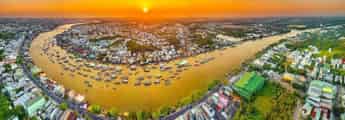

List of tourist attractions (1417)

RD Wine Castle
Wine Castle Phan Thiet is a "virtual living" address you cannot miss when coming to Binh Thuan. This place possesses ancient beauty, perfectly recreating the space of a magnificent European castle, along with thousands of delicious bottles of wine, attracting tourists when they have the opportunity to travel to Phan Thiet.Wine Castle Phan Thiet is built in the luxury Sea Links City resort complex of 5-star quality with many large-scale projects. The resort is located in Quarter 1, Ham Tien Ward, Phan Thiet City, Binh Thuan Province, near Mui Ne beach. Wine Castle Phan Thiet was built with full conditions to store, preserve and distribute the highest quality wines. The entire castle area is up to 12,000 square meters, one of the two largest wine cellars in Vietnam, with more than 200,000 bottles of wine produced by Rang Dong Group. Rang Dong Group, headed by Mr. Nguyen Van Dong , is a pioneer in the field of wine in Vietnam. The group's biggest step is the decision to invest 15 million dollars to buy a wine processing factory, located in the Napa wine valley, California, USA. This factory was also built like a castle, named RD Winery USA. Here, Rang Dong Group produces wines that meet American Viticultural Areas standards. With the desire to bring Vietnamese people the world's premium wines at reasonable prices, Rang Dong Group built Phan Thiet Wine Castle to simultaneously promote the brand. RD Winery USA wine, has just created a proud project of Binh Thuan in particular and Vietnam in general. Wine Castle (Wine Castle) Phan Thiet was built with inspiration from European architecture. in the Middle Ages, lines Both ancient and magnificent, it looks like it came out of a fairy tale. The closer you get, the more overwhelmed you will be by its magnificence and magnificence, with its curved and cascading arches, its quiet windows, its campus filled with trees, etc. In front of the castle is a large square with many potted plants, which is also where ancient aristocrats often enjoyed wine together. Standing from here, you can see down the hill, the beach in the distance, the cool breezes, the fresh air, you will feel like you are transforming into a noble princess and going for a walk. in his castle. Surrounding Wine Castle in Phan Thiet are lush green vineyards. There are many famous grape varieties here such as Cabernet Saugvinon, Syrah, Chardonnay, etc. These are also grapes commonly used to produce wine, and are a source of premium raw materials used by Rang Dong Group in its products. On top of the hill, towering watchtowers with images of farmers diligently grinding grapes are also built, symbolizing the history of grape growing and wine making in the Napa Valley region. Phan Thiet Wine Castle was built to promote high-end wine products of the Rang Dong brand in particular and help visitors better understand the characteristics, production process as well as the quintessence of the wine industry in general. . The castle tour will take you into two giant wine cellars in the basement. Here, the tour guide will introduce Napa Valley - one of the world's famous wine producing places, allowing visitors to observe firsthand the closed wine production process and share information. Interesting about the origin and inspiration of famous wine lines in the world. However, to best preserve wine, the temperature in the cellar is always maintained at 11 - 14 degrees Celsius. You should bring a jacket to keep warm and if your health is not good, you should not visit the cellar too much. Step up to the first floor of Phan Thiet Wine Castle, this is a spacious space with a capacity of up to 150 people, an area displaying huge wine collections, with different types of wine. premium and long-standing most, making the name of Napa Valley, California wine valley. Here, you can choose to enjoy rare wines such as Napa 55, Napa 66, Napa 77, Napa 88 or Napa 99...After enjoying the wine, we will continue our journey to the 2nd floor to drink. Visit the museum area and Vietnamese historical relics. You can also choose to buy wine or cute souvenirs such as keychains, model wine bottles, dried grapes, grape honey... at the mini shopping area to bring back as gifts for friends. relatives.
Lam Dong
5159 view


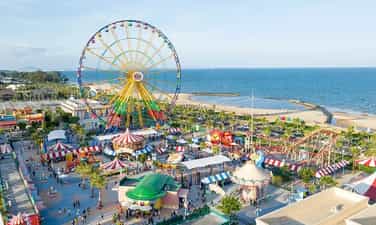
Circus Land NovaWorld
Circus Land Phan Thiet has long become an "international-class" American-style amusement park, combined with thrilling games that bring wonderful, "yomost" experiences every moment. This entertainment area is located on Lac Long Quan street, Tien Thanh beach, Binh Thuan, between Phan Thiet city and Ke Ga Lighthouse. Circus Land amusement park providing high-end games to serve tourists was put into operation on July 1, 2022. The park is open from Monday to Sunday every week from 14:00 - 20:00. Particularly for Friday, Saturday and Sunday, the park will operate in the morning from 9:00 a.m. to 12:00 p.m. The first game to mention is Dream Carousel - Floating Dream, this is a game that you must definitely try among all the thrilling games of this amusement park. This is a 2-story carousel carousel ride that is ornately decorated and brightly colored. This is the lowest level of challenge at the park, only level 1 out of 5. You can experience this game like your childhood when your parents took you on a horse swing. The next challenging level is 2 out of 5 - Happy Wheel. Because the rotation speed of this carousel is quite slow, when sitting here you can fully see the beautiful coastal city of Phan Thiet from above. The cabin of this carousel is always vertical, so no matter how high you go, you will not feel scared and always feel safe. At Circus Land, Happy Wheel is one of the most played games because of its safety level. Besides, you can also check in by viewing angles from above to see the whole city. Kraken - Conquering demons, also known as Flying Octopus. This game is shaped like an octopus with 5 tentacles attached to the central axis that rotate and move up and down randomly, each tentacle end will fix 2 chairs for 2 people to sit on. This thrilling game with a challenge level of 3 out of 5 will take you to a truly fun experience. Let's Fly - Let's fly is a quite interesting game and very suitable for those who love thrilling games. When participating in the game, you will sit on a swing-like chair with a seat belt. These chairs will fly up and down in the air and rotate around the sky. The refreshing feeling of flying in mid-air will help you relieve stress on the weekend, however this game is only suitable for those who love adventure and is not suitable for children. At Circus Land, in addition to participating in interesting entertainment games, you also have the opportunity to experience American culinary culture at Novaworld Phan Thiet. You can discover wonderful culinary experiences from famous and modern brands such as Au Lac do Brazil NovaWorld Phan Thiet, Marina Club, Lotteria Vietnam, Gloria Jean's Coffees, PhinDeli Cafe, Saigon Casa Cafe, Xing milk tea Fu Tang, delicious Baskin Robbins ice cream,... These dishes will bring you an enjoyable experience and no need to think about what to eat during your trip. Circus Land Phan Thiet is the right place. to you and family, friends, and relatives have moments of relaxation and unforgettable experiences in life.
Lam Dong
4562 view


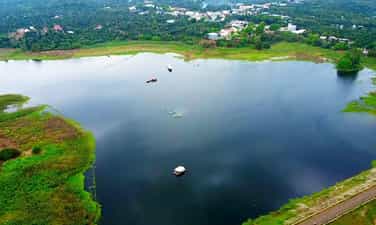
Suoi Vong Lake
Dong Nai is a short-term tourist destination quite familiar to enthusiasts in Saigon. This place is only about 30km from Saigon, taking less than 1 hour to travel, so it has become a familiar name for tourists for a change of pace on weekends. This is home to many famous tourist attractions and many attractive historical and cultural relics. In addition to familiar names such as Da Han waterfall, Buu Long tourist area, Chua Chan mountain,... Suoi Vong Lake is also a place chosen by many tourists on fun trips to find a peaceful place. Suoi Vong Lake, also known as Bao Binh 3 lake, mainly serves the agricultural production system. This place has a simple, wild beauty with a calm blue lake, next to lush green grass that makes many tourists fascinated. If you are looking for a peaceful place to recharge your energy after days of studying and working hard. Suoi Vong reservoir is located in a valley between two communes, Bao Binh and Xuan Bao, in Cam My district, Dong Nai province. The reservoir was built in the 90s of last century, its design capacity is more than 4 million m3. The lake stretches from Cam My district to Lang Minh field, Xuan Loc district, not only providing and regulating irrigation water for a large agricultural production area. This is also an ideal tourist destination for tourists who want to find a peaceful place. The weather in the Dong Nai area is quite stable, not too harsh, so you can visit the lake at any time. any time of the year. However, with experience traveling to Suoi Vong Lake in Dong Nai, the most ideal time to come have fun and take photos at the lake is around June and July every year. This is the time when the water in the lake is slightly shallower but quite green, the weather is dry, especially when the green grass on the lakeside is showing off its lush green color. The best time of day to enjoy the fresh and poetic space at the lake is at dawn. At this time, the sun had just come out, the sunlight covering the lake surface created vivid colors. Kite flying in the sky at sunset, blending with the color of the sky and shimmering water, creates an extremely impressive ink painting. Therefore, please arrange your time to witness the two most beautiful moments of the day at Suoi Vong lake: sunrise and sunset! The first impression when visitors arrive at Suoi Vong reservoir is a beautiful area. blue sky. It is a combination of the blue of the lake, the reflection of the blue of the clouds and the coolest of all, the lush green of a steppe full of green grass. Surrounding the lake is a green belt of vast corn and maize. Under the lake are beautiful little raft houses, floating on the winding water. Further away are lush green fruit gardens, all creating a picture of wild, fresh and extremely seductive natural beauty. Visitors coming here can breathe fresh air, and preserve moments with photos amidst green nature. After taking photos, you can walk around the lake and visit the fruit gardens. separately, avocado, rambutan, mangosteen, star apple, etc. to enjoy the sweetness of heaven and earth. Surely, everyone who comes to this land will feel the simplicity, freshness and love this land.
Dong Nai
5466 view


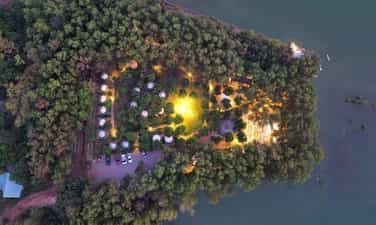
Emma Glamping
Surely all of us have days when we wake up in a depressed mood, seeing how suffocating life is with layers upon layers of responsibilities, tasks, and deadlines, wanting to "leave the crowded, bustling city." , where even breathing makes us work hard" to mingle with nature as a peaceful place, a "shelter" of our own. Although it has only appeared recently, The Emma Glamping attracts many young people with its lovely space, watching the romantic sunset by Tri An Lake. Coming here, you will feel like you are immersed in nature, enjoying peaceful, unhurried moments. The Emma Glamping hopes to add soft notes to the music of each customer's life, adding positive energy to the friends of the shared house named Emma. Emma is a peaceful house that always welcomes welcomes the return to nature, is "the stormy house that stops behind the door", leaving behind all the hustle and bustle, leaving only the most rustic, most authentic feelings and emotions in each person's heart. . With an extremely luxurious - elegant - smooth appearance, with the advantage of being located next to the lake bed, visitors can stay in a tent overlooking the sunset and sunrise on the lake bed, with each separate high-class tent, including air conditioning inside. tent. Rowing is an exercise experience that many young people love when traveling to Tri An Lake. You can choose to row alone or row as a team and this is an extremely interesting sports experience, helping us increase endurance, flexibility, and is also a way to increase team spirit. This is a sport that blends sports and natural enjoyment at Tri An Lake, which will definitely make all your adventures unforgettable. At The Emma Glamping, cycling activities usually take place in the early morning and afternoon. You can cycle on the beautiful winding roads along Tri An Lake, stop to take souvenir photos or simply relax. Exploring nature in Ma Da forest is completely free for guests staying at the campsite. Campfire activities at the campsites at The Emma Glamping have become a familiar thing every night, everyone gathers around the fire to chat, play, and sing until it's time to sleep. Coming to The Emma Glamping, you will enjoy a campfire night with fun and exciting acoustic music activities. Guests coming to The Emma will be immersed in nature, with many beautiful photos to freely check in and live virtually. In addition, guests can also experience accompanying services such as rowing on the lake, cycling to explore the Ma Da primeval forest, fishing, and canoeing to visit the islands in the island complex of Tri An lake. In the evening, visitors can enjoy a BBQ party, light a campfire or enjoy fish specialties of the lake.
Dong Nai
5194 view


Ti Top Island
Ti Top Island, also known as Titop, is one of the brightest pearls located inside the world's natural wonder Ha Long Bay. This place is always an extremely ideal stopover every summer, and many tourists check-in every time they visit the bay. Location: located in Ha Long Bay, Ha Long city, Quang Ninh province, Vietnam. Ha Long city has long become a precious gem and symbol of Vietnamese tourism. With thousands of large and small islands floating in the middle of the blue water bay, beautiful beaches, and famous landscapes, such as Dragon Eye Island, Tuan Chau Island, Hon Gai, Quan Lan Island... this land is a destination. of many domestic and foreign tourists. Among them, the highlight is Ti Top Island, a small but quite impressive island! If it is a "new mat", hearing the name Ti Top Island for the first time may seem quite strange, but in fact it is just an island located right in the natural wonder of the world of Ha Long Bay. This island is located 12km from Tuan Chau port and about 7 to 8km southeast of Bai Chay port, behind is Cua Luc bay, in front is Sung Sot cave with Bo Hon island, and on the right is Dam Nam island. Ti Top Island will make visitors ecstatic with its wild, romantic, peaceful beauty, and is an ideal stopover on the journey to visit Ha Long Bay. With a cool climate all year round, visitors can visit Ti Top island at any time of the year. However, according to the experience of the association who has traveled here many times, there are still two "peak" seasons, the number of tourists flocking to this island is very large, which are: From June to July: This is In the summer, white sand, golden sunshine, very suitable for vacation trips and fun on the beach. From December to February of the following year: In winter, the weather on Ti Top Island is quite cold, so it is chosen by tourists from Europe, America and temperate countries as the time to visit. In particular, at the end of April or early May, in Ha Long city, the Ha Long Carnaval festival takes place. This is a unique street festival for foot fanatics. If you are lucky enough to visit Ti Top at this time, you can stop by the city center to immerse yourself in the "fire pan" of Carnaval! When the boat docks at Ti Top island, fanatics will have about 60 minutes to explore and explore this location. You will have two options: go up the mountain to see the panoramic view of Ha Long Bay or go down to the sea to take a dip. One of the indispensable experiences when checking-in to Ti Top island is swimming. This island has a beautiful beach called Ti Top or Vang Trang beach. The reason for that unique name is because looking down from above, this beach curves like the moon, embracing the entire island. Besides, for those who love thrills, they can participate in some other exciting activities, such as kayaking, skydiving, buoy pulling... very interesting. If you are a mountain climbing fan, you should take some time to conquer the 400 steps to reach the top of Ti Top island, because the scenery here will certainly not disappoint you. You can admire the vast scenery, surrounded by undulating mountains of all shapes, and fishermen's fishing boats floating on the water. With the above advantages, Ti Top Island is gradually becoming an indispensable destination in the journey to visit Ha Long. If you have the opportunity to come here, don't forget to visit and feel what nature has bestowed on this beautiful island!
Quang Ninh
5888 view


Sung Sot Cave
Sung Sot Cave, imbued with the majestic beauty of nature, is one of the most beautiful caves in Ha Long Bay. This is considered a masterpiece carved by the hands of the creator with beautiful lines that make anyone who comes here for the first time be amazed and amazed. Sung Sot Cave located on Bo Hon Island along with Luon Cave and Trinh Nu Cave is one of the most beautiful caves in Ha Long Bay. With its majestic and unique beauty, this famous cave has been recognized by UNESCO as a world cultural heritage. This is considered one of the extremely attractive places for tourists to visit because of the beautiful scenery inside the cave. From Bai Chay pier, visitors only need to travel by boat south about 14km to reach Sung Sot Cave. After setting foot on Bo Hon island, climb up 50 high stone steps through the dense forest foliage to reach the cave entrance. Along the 800m long stone road, visitors will see an extremely different world inside the 12,200m2 cave. The scene is both magical and enchanting with countless stalactites of various shapes and sizes. Beautiful like a work of art carved by the hands of nature. It certainly won't disappoint you as you've traveled quite a distance to arrive. Located in the central area of the World Heritage Site of Ha Long Bay, Sung Sot Cave is the most beautiful and spacious cave in Ha Long Bay. With a total area of more than 10,000 square meters, this place is like an Opera House in the middle of the sea with thousands of stalactites and stalagmites with unique shapes that cannot be found anywhere else. One of the special features of Sung Sot Cave is its contrasting beauty. Just step through the small and narrow cave entrance and you will reach the large cave with countless beautiful shimmering stalactites. This contrast makes many tourists surprised, far beyond human imagination. Just passing through a small gap in the rock makes you feel like you have entered a beautiful, mysterious and magical world. At an altitude of about 25 meters above sea level, the cave consists of two main compartments with their own magnificent and attractive beauty. The first compartment is about 30 meters high and is considered a waiting room before entering the second compartment. Visitors will follow a narrow stone road with light support from low street lamp posts that serve as both road markers and decorative and lighting objects. The cave is divided into two compartments, creating spacious auditoriums. Both sides of the path are decorated with lighting columns, enhancing the magical beauty of this landscape. The second compartment opens up a completely different scene. The cave is vast and can accommodate thousands of people at the same time. Going deep inside, rocks with many unique shapes such as Thanh Giong, swords, stone statues of elephants, seals... gradually appear along the path, bringing excitement. Not only possessing natural beauty, Sung Sot Cave also attracts tourists with mysterious legends and many stories between the realm of dreams and reality. Legend has it that after defeating the An enemy and successfully completing his noble mission, Thanh Giong rode a cloud to the sky, leaving the villagers a sword and precious horse to reassure and ward off evil spirits. devil. This is also the place where traces of last year's battle are kept with many small ponds and lakes around the cave that look like horse footprints. Following the trail inside the cave up to the exit, visitors are even more surprised when they get lost in the picturesque "Royal Garden". From the small clear lake, the charming hydrodynamic scenery and lush green plants seem to make this place full of vitality. From time to time, I can hear the sound of monkeys coming down here to search for fruit, making a noise in the vast space. The majestic scenery of Sung Sot Cave is one of the reasons why people in Ha Long Bay can confidently affirm that this land is not only beautiful because of its majestic nature but also because of its legendary caves. Mysterious and magical, blessed by nature. Surely this is a place you cannot miss if you visit Ha Long Bay. Coming to Sung Sot Cave, you will be immersed in a colorful, magical space, admiring stone flowers and stalactites formed over millions of years. Walking around and exploring the cave from every angle, the magnificent scenery here will definitely make you amazed and amazed. Come here once in your life to fully admire the unique masterpiece of nature and heaven bestowed on Ha Long Bay.
Quang Ninh
5219 view


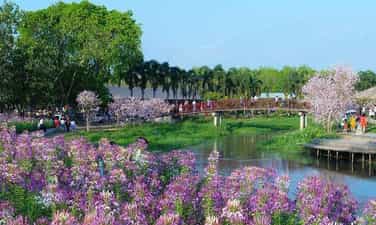
Thuy Hoa Vien
Tay Ninh Water Park is an emerging tourist area, scoring points with young people because of its beautiful landscape and many "virtual living" corners. Besides, the tourist area also possesses fresh air and colorful beauty, it will definitely be one of the ideal destinations on your Tay Ninh travel journey. Tay Ninh Water Garden is The tourist area was built on the campus of Tay Phap Pagoda. Although it is a recently emerging check-in location, Thuy Hoa Vien has received a lot of love, especially from young people. The scene here is designed to be gentle and romantic, bringing you countless interesting experiences. For young people who are passionate about "virtual living", this place will be even more of a paradise because of its 1,001 beautiful corners, enough to captivate people's hearts. To be able to visit and take many beautiful photos at Tay Ninh Water Park, you should choose to come here on a sunny day. Especially in the early spring, when the leaves are budding and fresh flowers are blooming, it will bring you more beautiful check-in corners. Besides, this is also the Spring Festival season of Ba Den Mountain in Tay Ninh, very suitable for those who love spiritual tourism. If you have ever been captivated by the scenery of the blooming peach blossom garden of the land of kimchi, coming to Tay Ninh Water Park will be a very wise choice. Right from the entrance gate to the inside of the campus, you will see rows of brilliant cherry blossoms. Objectively, if you observe from the outside, you will easily discover that these are fake trees and flowers. However, when used as a photography background, these rows of blooming cherries will be extremely sparkling, giving you thousands of million-like photos as if you were traveling in Korea. Besides, Tay Ninh Water Park also rents traditional Korean costumes for people to visit and "live virtually". Hanbok sets for both men and women with outstanding colors and affordable rental prices make you feel like you are truly on a trip to the distant land of Kimchi. The water garden is located within the grounds. The most famous temple in Tay Ninh should have its space taken care of very carefully. Vegetable garden area with familiar plants such as spinach, water spinach, spinach, eggplant, gourd, etc. All vegetables here are used for daily food by the monks of Tay Phap pagoda, and also to invite visitors from all over to visit and worship at the pagoda. Next is the brilliant flower garden of Tay Ninh Aquarium. This area is designed very beautifully, with colorful flowers and grass, shimmering in the sweet sunlight of the Southeast region. If you have rented a Hanbok costume to take photos with cherry blossoms, don't forget to visit the flower garden and take a few more lovely photos. Not only are the rows of beautiful cherries touching people's hearts, the vegetable garden is fresh and cool to the eye, The flowers flutter in the sunlight, Thuy Hoa Garden is also decorated with countless other "virtual living" corners. To bring back a lot of photos to post on Facebook and Instagram, you should prepare a few outfits and have a dedicated photographer. If you have the opportunity to go to Thuy Hoa Vien, don't forget to visit the wishing tree to sincerely hang it up. your wishes. There are wooden cards available here, you can buy them and write down good prayers, hang them on the shelf with sincerity. Because it belongs to the campus of Tay Phap Pagoda, many people believe that Tay Ninh Water Park also carries magical spiritual powers. Therefore, if you live kindly and do many good deeds, MIA.vn believes that what you pray for will soon come true. Besides the experience of sightseeing, playing, and taking photos at Tay Ninh Water Park, You can also participate in spiritual activities at Tay Phap Pagoda. The pagoda often holds a flower-releasing ceremony every Saturday night. On the full moon days, the first day, Vu Lan festival, Lunar New Year... there are also many attractive activities here. Besides, Tay Phap Pagoda also organizes religious retreats, Dharma lectures, tea meditation... which are loved by many people. If you want to find peace and serenity in your soul after a long period of tiring work or study, these will be extremely ideal activities. It is known that the annual summer retreat of Tay Phap Pagoda attracts thousands of people to register to participate. So, you can learn to experience it if you are a person who loves Buddhism.
Tay Ninh
4744 view


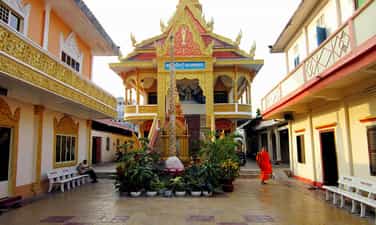
Munir Ansay Temple
Can Tho has a large number of Khmer people living. That's why this place is famous for Khmer temples with unique architecture. Among them is Munir Ansay Pagoda - the most beautiful and sacred Khmer pagoda in Can Tho. Munir Ansay Pagoda (also known as Munirensay) is located at 36 Hoa Binh Avenue, Tan An, Ninh Kieu District, Can Tho City. The pagoda was started to be built in 1948 with only simple bamboo. 6 years later, the temple gate began to be built according to the famous Angkovat architecture. In 1964, the Main Hall began to be built. It took 40 years, until 1988, for Munirensay Pagoda to be officially completed after many rounds of restoration and construction. Munir Ansay Temple also has very outstanding architecture. The pagoda was built based on the unique architecture of the legendary Angkorvat temple. Inside the pagoda is built with main areas including: pagoda gate, main hall, reception hall, Xa Loi tower, ashes tower, monk houses and auxiliary buildings. All are decorated with elaborate, meticulous motifs with the main color tone of orange and yellow, combined with unique blue. The temple gate was built according to typical Khmer architecture. The lower part is two pillars painted blue and decorated with eye-catching golden patterns. In the middle are two iron doors also painted gold. The most impressive point is that the top is built according to the unique Tam Bao tower architecture. With the tallest tower in the middle and two lower towers located close to both sides. From a distance, this gate is especially similar to the three Angkorwat temples of Cambodia. This architecture reminds me somewhat of the pagoda gates and three-door communal house gates of Vietnam with a bit of similarity. The two sides of the temple walls are also decorated with green-yellow tones and unique sculptures. Stepping from the entrance gate, in the middle of the temple yard, you will immediately see a splendid yellow stupa decorated uniquely. Right at the foot of the tower is the statue of Shiva and surrounding trees. Behind the tower is the 2-storey main hall area, on the left is a row of monks' houses, on the right is a hall to receive guests and have meals. The main hall is the center of the entire temple, built higher than the surrounding areas. In front of the main hall is a tower containing Buddha relics and stairs leading up. The pillars and arches of the main hall are decorated with embossed reliefs and delicate carvings. Popular patterns are the images of Reahu (Tiger), Fairy, god bird Kayno, Chan Yeak... These are all sacred images in the Brahmin religious culture of the Khmer people. Munir Ansay Pagoda follows the Theravada school of Buddhism, carrying Theravada ideology. This is a typical Southern school of Buddhism, worshiping only one Buddha Shakyamuni. Inside the main hall, only Buddha statues are worshiped in many standing, lying, and sitting positions. In particular, the main worship statue is placed at the highest position, sitting solemnly on a 3-storey lotus throne. In addition to worship, the temple also organizes teaching and spreading Buddhism to people in the area. In addition, the pagoda also does a lot of volunteer work, providing free accommodation for ethnic Khmer students in particularly difficult circumstances. Munir Ansay Pagoda is the spiritual and cultural center of Tay Do region. Therefore, this place is an indispensable destination when traveling to Can Tho. Exploring Munir Ansay will help you take beautiful check-in photos and gain more knowledge about the Buddhist culture of the Khmer ethnic people here.
Can Tho
6047 view


Thien Cung Cave
Located in the southwest of Ha Long Bay, Thien Cung Cave is definitely one of the destinations you should not miss. Not only possessing the most unique landscape with an impressive stalactite system, the cave is also a place to preserve many cultural and historical values of Ha Long land. Located in the southwest of Ha Long Bay, Thien Cung Cave is located peacefully in the north of Dau Go Island, close to Dau Go Cave, and about 4km south of the cruise ship port. The cave is one of the attractions in Ha Long that is loved by many people. Currently, Thien Cung Cave is one of the most beautiful caves in the land of Mining, possessing an impressively spacious area of up to 10,000 square meters. In addition, the cave also possesses a hierarchical structure with many levels and compartments with high and wide ceilings and walls and a system of limestone stalactites and stalagmites of many interesting shapes. The path to the cave is located on a steep cliff with luxuriant tree cover on both sides. To get to the cave, you have to squeeze through a narrow opening and then the cave door will suddenly open with space above a quadrilateral with a length of 130m. Because of its impressively spacious area and impressive limestone stalactite system, although Ha Long Bay still has countless other famous caves such as Sung Sot Cave, Ngac Nhien Cave, Trong Cave and Trinh Nu Cave, Dau Go Cave, Luon Cave, Tam Cung Cave, etc. Thien Cung Cave still has the honor of being the most beautiful cave in this bay. People even favor it to the point of comparing Thien Cung cave as the palace of heaven on earth. If you have the opportunity to explore Thien Cung Cave - one of the most beautiful caves in the land of Mining, you will hear about legends related to the palace of heaven on earth. Legend has it that, in the past, after the Dragon King helped his people fight the enemy, he returned to his cave. That year, when there was a severe drought, people fell into a situation of crop failure and constant hunger. At this time, they asked for help from the Dragon King, hoping that he would act as rain to save the people from the disaster. At that time, many people went to the king's cave but unfortunately had no chance to return. Seeing that, there was a young couple who, regardless of hardship and danger, determined to set out to find the Dragon King. Luckily after returning from the trip, the couple gave birth to a daughter, and they named her May. When Miss May grew up, it was her beauty that made the Dragon Prince flutter. Their love blossomed and the perfect ending was a lavish wedding held for 7 days and 7 nights in the center of the cave. To celebrate the young couple's wedding, dragons flew around the cave, sometimes hiding and appearing among the stalactite forest, and together with baby elephants and two lions, they danced merrily. In addition, the wedding also had the presence of a large python slithering around the ancient banyan tree, while an eagle spread its wings high in the sky. More specifically, the wedding also had the participation of Nam Tao and Bac Dau, so it was even more fun and bustling. Nowadays, when you come to Thien Cung Cave, you will easily see images of a grand wedding in the past carved on the cliffs of this cave. After reaching the first compartment of Thien Cung Cave, you will easily see a giant painting on the cave wall. The sculptures in Thien Cung cave, whether they are massive or small, are all meticulously and meticulously crafted by the hands of the creator. If you look to the East, it is a giant painting with vivid images of characters in ancient stories. The fairies and animals in folk beliefs now appear vividly with soft, delicate depictions down to the smallest detail. Meanwhile, on the northern wall of the cave is the image of fairies singing and dancing gracefully, celebrating the wedding of the Dragon Prince and the beautiful Cloud Lady. Above the domed ceiling is a system of stalactites hanging down like a unique crystal chandelier. After finishing the tour of the first compartment of the cave, continue moving a bit and you will reach the second compartment, which is also the central area of the cave with stunningly gorgeous scenery. Coming here, you will admire the four pillars with huge sizes, diverse shapes and mysterious carvings from the base to the top. At this time, you will be able to see somewhere the scene of people's daily activities, flowers, birds, etc. Meanwhile, below the cave's dome is a system of stalactites drooping down like a splendid curtain woven by Mother Nature. In addition, on the top of the cave wall are still images of fairies dancing and singing bustlingly in the past. In particular, during the trip to explore the central compartment of the cave, it seems that you will hear the bustling sounds of the drums of the wedding ceremony. Actually, it was just the sound of the wind blowing through the rocks, yet it was still strangely melodious and melodious. The second compartment is also one of the most popular places to take photos to check-in to Ha Long. The third compartment in Thien Cung cave is a fairyland on earth with a dim space, reflecting the beautiful stone caves. In addition, in this compartment there are clear ponds with gurgling water flowing all year round without stopping. Legend has it that in the past, the ponds were where Miss May bathed her 100 children. At the end of the journey to explore Thien Cung Cave, surely what remains in everyone's mind is the majestic beauty mixed with a bit of mystery and also extremely poetic. It is the magnificent stalactite system here that makes many people so captivated that they cannot bear to leave.
Quang Ninh
4871 view


Cua Van fishing village
Cua Van fishing village is currently an attractive destination for tourists from all over the country and foreign tourists. Always present in travel addicts' Ha Long exploration schedules, it would be a mistake if you missed this unique and new floating village. Location is in Hung Thang commune, Ha Long city, Quang Ninh province, about 20 km from the tourist boat wharf. Cua Van fishing village is located in the peaceful Paradise Bay surrounded by majestic mountains. This village currently has more than 300 households living on pristine but spacious and clean floating houses, and is also the largest "richest" fishing village in the bay. With this unique geographical location, fishermen in Cua Van fishing village can anchor their boats and it is an ideal place to avoid storms. Besides the world-class caves, there are still villages, people continuing their daily lives with constant joy and optimism. Cua Van fishing village is just such a place! When viewed from a distance, Cua Van fishing village brings a realistic and extremely beautiful view because the colors are in harmony with the spectacular "background" of mountains and forests. Even the simplest objects are strangely "photogenic". Even the people of fishing villages are now more involved in Ha Long Bay tourism with the opening of boarding houses, fishing services and campaigns to raise environmental awareness. Visiting Cua Van fishing village, you will admire the breathtaking natural scenery of the island and the sharp beautiful "4K" limestone mountains of Ha Long Bay, don't forget to check-in with the colorful floating houses as well as a demonstration of traditional fishing techniques of local fishermen in Cua Van fishing village. Moreover, Cua Van fishing village also makes many fanatics admire its cobblestone streets, making them miss the quiet, charming, peaceful space everywhere, or choked up by the perfect natural scenery. America, enjoy charming folk songs or experience fishing village life with friendly local people. From this village, you can also easily access Ba Ham Lake, Tien Ong Cave and some other landscapes of Ha Long Bay. The unique "taxis" here are willing to take you on a tour around Cua Van fishing village as well as Ha Long Bay. The most ideal time to explore Cua Van fishing village is from April to June, it is sunny but not at all "grumpy", suitable for exploring fishing villages and sea tourism in Ha Long - Quang Ninh. Specialties in Cua Van fishing village are also quite attractive and delicious, caught and sold on the same day, so take advantage of them to enjoy. Cua Van fishing village is a place that should be included in your itinerary to explore Ha Long. Don't let your youth go to waste without exciting trips and missing out on the most special coordinates in Vietnam. Wishing you and your family a journey full of joy and memories.
Quang Ninh
4778 view


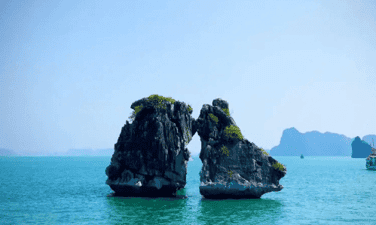
Ha Long Roofed Drum Island
The unique and magnificent Hon Trong Mai, associated with mysterious stories, is a famous destination in Ha Long that attracts many people to visit. Hon Trong Mai, also known as Ga Choi Islet, is one of the famous islands of Ha Long Bay. Hon Trong Mai is located near two other islands, Dinh Huong and Cho Da, only about 5km from Bai Chay beach. The island has a strange appearance with two large rocks standing facing each other on the sea surface like two cocks fighting. These two rocks have remained stable over time, not eroding or drifting away. This is a symbol of faithful love between two people, despite all difficulties and challenges. Hon Trong Roof Ha Long not only has beautiful scenery but is also associated with a romantic love story. According to legend, this is the pair of chickens sent by the Jade Emperor to call the Dragon back to Heaven after successfully repelling foreign invaders. But when they saw the beautiful sea, the couple forgot their mission and fell passionately in love. They were petrified to be together forever at sea. Since then, Trong Mai island has become a famous tourist destination of Ha Long. Come here once to see with your own eyes the symbol of eternal love. Hon Trong Mai is a typical image of Ha Long Bay - a place recognized by UNESCO as a World Natural Heritage. This place is also the pride of Vietnam when appearing on logos and travel guidebooks. Furthermore, Hon Trong Mai is also an endless source of inspiration for poets and writers. The words and phrases praising Trong Mai Island have been deeply imprinted in the soul of every Vietnamese person, making us feel more loving and proud of the place where we were born and raised. Hon Trong Mai is 12m high but the rock base is only 4m wide, making many people worry that it will collapse at any time. However, Hon Trong Mai has existed for hundreds of years, proving the resilience and loyalty of an eternal love. This place is considered a favorite destination of many people. Every year, there are countless pairs of explorers ready to pack their suitcases and set out here to visit, check-in with Hon Trong Mai to preserve memories of a beautiful, dreamlike place. Hon Trong Mai Quang Ninh is an ideal destination for those who want to enjoy classy dining, playing, sleeping and resting services. You can choose from many types of accommodation to suit your needs and budget. You should choose the time to travel to Trong Mai island from October to April when the weather is cool, little rain, and the sea is calm. Avoid going in the summer when the weather is hot, crowded or stormy. The majestic and unique beauty of Trong Mai island is a unique gift that this land has been given by Mother Nature. Today, Trong Mai Islet has become a unique place that many people come to visit every time they travel to Ha Long. If you are a nature lover and wish to admire more of the beauty of many famous destinations, you definitely should not miss this place. Don't forget to bring a camera to "hunt" for beautiful pictures here.
Quang Ninh
1906 view


Yellow Card Island
You are looking for a new and beautiful tourist destination in Quang Ninh. You want to experience a peaceful space, close to nature. Vang Card Island is the ideal place for you. When talking about traveling to Cam Pha, you definitely cannot miss Vang Island. This place is known as a beautiful island in Van Don, Quang Ninh. The Vang Island attracts many tourists with its clean, beautiful beaches, fresh air, and many spiritual works and mysterious, unique fairy wells... If you are still wondering what to do in Quang Ninh, you should immediately visit Vang Card Island. This is a large island located in a complex of islands in Thang Loi commune, Van Don district, Quang Ninh province and located on Bai Tu Long Bay. If you go from Cai Rong wharf to The Vang island, it will be a bit far, but if you go from Vung Duc wharf, it is only about 13km by sea. The Vang Island is one of 7 land islands of Thang Loi commune and is an ecological and spiritual tourist destination, attracting a large number of tourists to visit every year. This place possesses a cool green natural space, a clean and beautiful beach with clear blue sea water and fine white sand. In addition, on the island there are many spiritual works such as Toa Son temple, Duyen Phuc pagoda, Tien well... bearing bold local culture and history. One of the attractions for tourists when traveling to The Vang Island is the beautiful clean beach and fresh air. The beach on the island is small but very clean and beautiful with fine white sand and clear blue sea water. Coming here, you can comfortably swim in the sea, lie down and relax on the sand, and admire the wonderful, green natural scenery. Besides, the island is surrounded by many green trees so the air here is also extremely fresh, cool and pleasant. Therefore, visitors can come here, relax and breathe the fresh air, forgetting all the troubles and worries of hustle and bustle life. In addition to the beach, Quang Ninh Golden Card Island also has many famous spiritual works such as Toa Son temple, Duyen Phuc pagoda... These are all tangible and intangible cultures in the treasure trove of historical and cultural relics in Vietnam. Van Don district. Another interesting spot on The Vang Island that you can visit to explore is Tien Well. This well is located on the top of a high mountain, also known as the water hole or dragon eye fairy well. The water in the well is extremely clear and cool. In addition, you can also climb to the top of the island, watch and enjoy the beautiful natural landscape from above, extremely wonderful. Vang Island is also known as a care and conservation area for many rare tree species with high economic and medical value. Visiting the island, you can admire the precious perennial tree varieties such as: square almond tree, maple tree, sandalwood tree... In addition, this island region also has many very strange and unusual species of woody mangrove trees. Common tree species such as cork, mangrove, tiger parrot... that we often encounter. Besides, on the island there are many trees that bear fruit all year round, such as the Thai toad tree... This diversity has created a unique, attractive and beautiful natural landscape on The Vang Island. After visiting Card Vang Island, you can consider combining your trip to Ha Long for a more interesting experience. Your vacation at Wonder Bay will be even more complete when you choose to stay at Vinpearl Resort and Spa Ha Long. Separately located on the romantic Reu Island, Vinpearl Resort and Spa Ha Long offers a wonderful, private resort space. This magnificent resort castle will dazzle visitors with its 3 private beaches, large outdoor swimming pool and lush green campus. In addition, Vinpearl Resort and Spa Ha Long also owns a system of luxurious and comfortable rooms, with large balconies overlooking the city and beautiful Ha Long Bay. This place also provides many professional services and diverse amenities such as spa, restaurant, bar... promising to bring visitors the most impressive and comfortable vacation. Vang Card Island is a wonderful tourist destination in Quang Ninh. With beautiful clean beaches, fresh air and unique spiritual works, this place will definitely bring you interesting and memorable experiences.
Quang Ninh
4325 view


Bidoup Nui Ba National Park
In Lam Vien plateau, where two high peaks are located, Nui Ba and Bidoup mountain, combined to form the name of Bidoup national park - Nui Ba Lam Dong. The garden was established in 2004, located in Lac Duong district and part of Dam Rong district, Lam Dong province, about 50km from Da Lat city along Highway 27C. Bidoup is recognized as one of 27 National Parks in Vietnam that are classified as special-use forests. In 2015, this place was also recognized by UNESCO as a World Biosphere Reserve in Vietnam, the first in the Central Highlands. Bidoup National Park - Ba Mountain Lam Dong possesses hundreds of species of animals and plants with fresh, cool air. Visiting Bidoup National Park - Ba Mountain Lam Dong, you will not only explore the wild nature but also conquer the 2287m high mountain peak, pass through towering pine forests, cross rivers, and meet Po trees. Mu tree is 1300 years old. The period from December to April next year is the ideal time for you to explore Bidoup - Ba Mountain Lam Dong national park. This is the time of late winter - early spring, the weather is dry, cool, cool, without much rain, which is favorable for trekking. Moreover, this time is also the time when the mountains and forests revive, full of life more than ever. At this time, the trees become greener, hundreds of flowers bloom, creating a beautiful natural picture. On the way to Bidoup National Park - Ba Mountain Lam Dong, you will see a bridge stretching across across the river. This is a "virtual living" spot that many young people love on this journey. From the bridge, you can admire the beauty of the mountains and rooftops of Lam Dong. One of the attractions at Bidoup - Ba Mountain Lam Dong National Park is the Po Mu tree. This tree has existed for more than 1300 years and is a rare plant that needs to be preserved. The tree is large in size with a height of more than 30m and a base diameter of up to 2.2m. Bidoup National Park - Ba Mountain Lam Dong is also considered an ideal stop for those who love to explore nature. When trekking on this mountain, you will encounter countless species of animals and plants. Thanks to the fertile soil, wild flowers here grow very well. Coming to Bidoup - Ba Mountain Lam Dong National Park, you must definitely check-in with the beautiful orchids. Not only that, Bidoup National Park also has many animals that roam freely to survive freely. When traveling on Highway 27, you can see the gray-headed red-tailed bird with light blue plumage and a striking chestnut tail. Following the stream, you can also observe the white-fronted water warbler with its prominent feathers and black and white stripes across its wings. Moreover, you will also experience observing reptiles, amphibians, and small animals with the ability to fly skillfully. In addition, you can also take photos to your heart's content with the red-headed and rufous-throated partridge. Bidoup National Park - Ba Mountain Lam Dong is a trekking destination that has been and is most loved by many young people today. Not only does it possess majestic natural landscapes, this place also has many unique flora and fauna species waiting for you to explore.
Lam Dong
4426 view


Yen Trung Lake
If when mentioning Quang Ninh, you only immediately think of a coastal tourist city, there will be some shortcomings. Besides the blue color of the sea, somewhere in the heart of this beautiful city there is also a Yen Trung lake decorated with the green color of green pine trees along the clear jade green surface of the lake. If Da Lat is too far, you can just come here because the space is not much different. With fresh and cool scenery created from the green of green pine trees running around a large lake, when traveling to Yen Trung Lake, you will suddenly see a somewhat familiar scene like you are in Da Nang. Lat. And the highlight of this lake are two small islands, also known as Turtle islands, undulating in the middle of the lake. This is the largest freshwater lake in Quang Ninh province with a total area of up to 100 hectares. As a water-powered air conditioner, Yen Trung Lake not only provides a fresh space suitable for you to heal your soul on the weekend, but you can also check-in with a super cool background. Yen Trung Lake has quite deep, clear water and is surrounded by undulating hills and green pine trees. This location is located right on Highway 18A connecting Hanoi and Ha Long, only about 30km from Hai Phong, so it is very convenient to travel to many other prominent attractions. The first impression that strikes the eye when coming here is the clear jade green color and the joyful sound of pine trees. Because the ticket price is free, you only need to pay a few additional service costs such as boat rental, hammock, and hut. The carefully maintained flower garden area costs 50,000 VND. The camping rental cost will range from 150,000 VND - 300,000 VND/camp. Coming to Yen Trung Lake, it is not difficult to see images of rows of pine trees growing majestically on both sides of the road. Visitors will be able to walk around, lean their backs against the sturdy tree trunks and enjoy the sunlight shining through the leaves. Although it seems simple and wild, the towering pine slopes are the special highlight that brings irresistible poetry to this place. Therefore, a small note for you if you want to visit Yen Trung Lake is to fully charge your phone battery if you want to "work" comfortably in the pine forest here. The most irresistible feature of Yen Trung Lake is probably the calm freshwater lake space of more than 100 hectares reflecting the blue color of the sky. Near the lake, there are also many pine trees that shine on the water, creating a very peaceful scene. Looking into the distance, you can see the endless mountain ranges and surrounding vegetation, making the scenery of Yen Trung Lake more poetic. If you like, you can rent a boat trip around the lake for only 30,000 VND/hour or from 80,000 VND - 100,000 VND/hour (for kayaks). extremely affordable. The feeling of walking around the lake will be a unique experience that is hard to get anywhere else. Camping is an extremely interesting activity and is enjoyed by many people, especially young people, at Yen Trung Lake. In the midst of that fresh, cool and somewhat poetic space, we will have an ideal weekend camping and picnic. You don't need to prepare too much, just bring a tent and some snacks like potatoes and corn to grill, and chat under the fresh air and poetic scenery. Eden Garden is a popular tourist attraction for young people and couples at Yen Trung Lake. When visiting here, you will be able to admire the panoramic view of the blue lake and take souvenir photos in meticulously decorated places. Moreover, Yen Trung Lake is also the place where extremely eye-catching wedding photos are born. For example, the Love Bridge is a witness to many couples before becoming husband and wife. The bridge has a romantic architecture, painted bright red and decorated with many garlands, locks, and bright sparkling LED lights... If you visit Yen Trung Lake, you must definitely enjoy the delicious dishes at the nearby restaurant. there. The period from April to September is the best time for us to enjoy Yen Trung Lake. Leaving the smoky and dusty space of the city, you will find a green, windy place. If you plan to camp overnight, don't miss the two most beautiful moments of the day: sunrise and sunset. Located not too far from the capital Hanoi, the green space at Yen Trung Lake gives us the opportunity to relax our minds and recharge with our loved ones.
Quang Ninh
4365 view


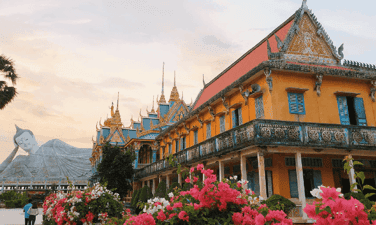
Som Rong Pagoda
Khmer pagodas in the South are something very unique to the Mekong Delta. Every time a pagoda is built, it is the effort of many generations and people living on the land, because the pagoda is a solid fulcrum for the people of this place, a place to practice the most sacred beliefs they have. never forget. Currently, Soc Trang is a land densely populated by Khmer people with massive, elaborate Khmer pagodas and century-old Buddhist works. Among hundreds of Khmer pagodas in the city, Som Rong Pagoda is the most impressive name, most known to many tourists because this is the greatest pride of the people here. Som Rong Pagoda's full name in Khmer is Wat Pătum Wongsa Som Rong. I heard people say that the pagoda has been around for a long time. It used to be a small pagoda with a simple thatched roof that was passed down through many different generations. During the reign of Venerable Ly Duc, he rebuilt a new, more spacious pagoda on a large plot of land. In 2000, the pagoda began to rebuild the new main hall, and in 2013, the Sala assembly house was built, along with the stupa and the largest statue of Buddha entering Nirvana in Vietnam. With more than 20 years of construction, Som Rong pagoda Now the pagoda has become the most proud spiritual fulcrum of the people here. For Soc Trang tourism, this pagoda is a proud point to promote the image of Southern Khmer pagodas and the beauty of Vietnamese pagodas to the world with top-notch works. The building is located right at the entrance. The four-sided stupa, four paths up, is impressive with its gray-white color. The tower has seven floors gradually decreasing in height from large to small and the base of the tower has three floors. The center of the tower is the image of Shakyamuni Buddha sitting on a lotus. The stupa impresses visitors with its unique sculpting and shaping, each detail is very vivid with stylized lotus flowers, vines running along each edge, fire and angel patterns. In addition to being prominent in the stupa sculpture, it is also decorated with five-colored flags on major holidays. The impression outside the main hall is the brilliant decoration, curved walkways, pillars covered with classical patterns, and murals about Buddha and life. On the top of the front of the main hall is the image of Buddha's birthday walking on a lotus throne. On both sides of the main hall are two hallways, the right hallway is to look out to the stupa, look at the Sala house and the Buddha's nirvana statue. table; This is an extremely beautiful photo angle that many of you may miss. In the near future, the main hall and the temple library will also be restored. The impressive Sala Assembly Hall took more than four years to build (2013-2017) and is extremely spacious and is used to practice the traditional rituals of the temple, as a lecture hall and a monastery. The architecture of Sala Assembly Hall is also extremely impressive in the eyes of visitors because of its grandeur, scale and color. But few people know that this project is completely based on traditional architecture, combined with creating an interior space with a modern structure with many uses. The Sala Assembly House has two floors, many layers of roof, and combines many outstanding colors to create distinction. Take full advantage of all the traditional decorative arts of Khmer pagodas to adorn the Sala assembly house. Entering from the stairs is decorated with the dragon god, the first floor attic is decorated with the snake god Naga. The second floor's attic is embossed with a dancer, on each part of the attic is the god Krud, running along the edge of the tiled roof are the dragon god and bird god. Each roof fringe is pointed in the shape of Xome mountain. The statue of Shakyamuni Buddha entering nirvana at Som Rong Pagoda is the most special work of the pagoda. The statue is 63m long and 18m high and is considered the largest reclining statue in Vietnam. Thanks to this project, the pagoda is known to many tourists from near and far, attracting tourists as well as followers of professional photography who come here to hunt for moments. Som Rong Pagoda is an interesting stop on the journey to explore Soc Trang tourism with ancient, sacred pagodas and unique architecture.
Can Tho
5020 view


Jade Buddha Relics Temple
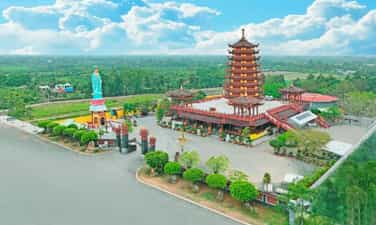
When mentioning Vinh Long, some of you only think of large eco-tourism areas, vast fruit gardens or some places associated with the nation's studious tradition. However, from ancient times until now, Vinh Long is proud to be the most mentioned land with many national cultural relics such as: Van Thanh Temple, Ong That Phu Mieu Pagoda, Tien Chau Pagoda, Long Thanh Communal House. .. That's why many people want to go to Vinh Long to rest and take a break from the difficult life out there. Jade Buddha Pagoda Vinh Long is considered by many people to be a miniature ancient town in the Southwest region. This is considered one of the sacred pagodas, possessing the most majestic beauty in the land of Vinh Long. Every year, the temple always welcomes thousands of Buddhists to visit and admire the beautiful scenery. Not only that, on every full moon day, holiday or New Year, many visitors from all over gather here to visit and sightsee. The temple owns an area of more than 1.7 hectares, built in 1970 by the late Venerable Thich Thien Hoa. However, in April 1975, for various reasons, construction was halted. By 2015, the construction competition at the Jade Buddha Relics Pagoda in Vinh Long was continued. There are many items that will be gradually completed by 2015 such as: main hall, stupa, open-air Bodhisattva Avalokiteśvara station, three-entrance gate... Vinh Long Jade Buddha Pagoda is compared to a miniature ancient town because of its architectural style imbued with the Buddhist cultural identity of Vietnamese people. With scientific design, the temple uses a lot of empty space to create a gentle, peaceful space. The sophisticated and harmonious artistic architecture of Vinh Long Temple of the Jade Buddha Relics makes many people extremely excited when checking-in here. Not only that, most of the items from the outside to the inside of the temple are imbued with the spiritual culture typical of traditional Vietnamese architecture, so they have extremely attracted visitors from all over. Temple of the Emerald Buddha and Relics Vinh Long There are many attractive and extremely beautiful corners, creating conditions for many young people to come here to live virtually. From the curved pagoda roof, majestic steps to the tall stupa, every corner at Vinh Long Jade Buddha Pagoda can become a great place for you to pose for photos. According to the experience of many young people visiting this temple, everyone should stop at the three-entrance gate to check-in. With its extremely majestic beauty, this is definitely a shooting angle that anyone who comes to the Jade Buddha Relics Temple in Vinh Long for the first time should not miss. Stepping into the inner campus, the large square appears extremely tall and extremely airy. You can completely feel the purity and peace when listening to the sound of temple bells echoing from all directions. The most special highlight at the Temple of the Emerald Buddha and Relics in Vinh Long is the famous 9-storey stupa up to 49m high. The stupa possesses an ancient, solemn and majestic beauty thanks to its hexagonal design, combining dragon-shaped carvings on the unique tile roof. The Jade Buddha Pagoda Vinh Long brings extremely splendid beauty when it possesses many impressive items that resonate with the typical architecture of traditional Vietnamese Buddhist culture. This place is definitely one of the interesting places you should take note of
Vinh Long
5600 view


Ngoc Vung Island
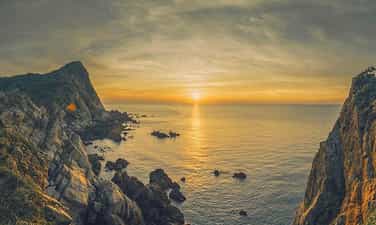
Ngoc Vung Island is famous for its wild and idyllic beauty and is one of the beautiful islands located next to Ha Long that is very popular with tourists from near and far. True to its name, this place used to be a true "Pearl Island" when there were many rare pearls and pearls around. The charming beauty of this place will definitely capture your heart from the first time. Ngoc Vung Island is located in Van Don district, Quang Ninh province with an area of about 45km, possessing wild beauty like a precious gem in the heart of Bai Tu Long Bay. The population on the island is quite sparse, only about 1,000 people. The name of Ngoc Vung Island also comes from the rare pearl oyster species here. When night falls, they will glow, making the entire sky shimmer. In addition to the beautiful natural landscape, it has inherent wild features. Ngoc Vung Island also takes tourists to explore many historical vestiges. Say goodbye to the bustling destinations in the city center, Ngoc Vung Island is the ideal destination if you are looking for a change of scenery and explore a new horizon that not too many people know about. Nature favors cool weather all year round, so visitors can choose to visit and explore Ngoc Vung Island at any reasonable time. Just in the summer, the sea is quite calm, the waves are calm, there is little rain, which is extremely convenient for fun activities and exploring the wonderful nature, so visitors can consider coming here to visit in the summer from May to May. August. Seafood in this season is also caught more than in other months of the year. Therefore, this will be an opportunity for you to enjoy coastal cuisine with a variety of seafood caught and processed fresh on the spot. Depending on the specific time, you and your family have suitable activities, especially night entertainment activities. September, October and winter are the times when locals advise against coming here to explore. At this time, it rains a lot and there are frequent storms, so it will affect most of your plans and mood throughout the trip. With its majestic and poetic beauty, Ngoc Vung Island is an extremely ideal check-in location. Many tourists have chosen to visit this island to take virtual photos of the sea and sky here. On beautiful sunny days, Ngoc Vung Island wears an even more captivating, heart-touching beauty. Add a shimmering effect to your photos. Coming to Ngoc Vung Island, visitors also have the opportunity to visit the memorial house, visit Uncle Ho's memorial area on the island, where Uncle Ho visited and talked with the islanders or view the island from the 12.7 mm cannon hill. In addition, conquering the National Flagpole and viewing the entire island at an altitude of about 100m above sea level is also a wonderful experience that you must definitely try. Here, you can also rent motorbikes or tandem bicycles for tourists to explore and admire the wild and majestic natural scenery of Ngoc Vung Island. At the same time, immerse yourself in the rhythm of local people's life in the slowest, most honest and lively way. One of the interesting experiences that must be experienced here is going with the fishing village people to rake clams on the sand or scoop shrimps on the sea. Clams on Ngoc Vung Island are white, each one is very large and has a unique sweet taste, very suitable for making hot pot or grilling. Shrimp can be used to make a salad to eat with mustard the way the islanders do or to dry. There are also Homestays in people's houses and stilt houses for tourists who want to stay overnight. Because the Homestays are quite close to the sea, they are loved and chosen by many people. Revealing that the Homestay is also a great "seafood restaurant" for those who love to enjoy coastal cuisine. Enjoying many unique dishes with typical coastal flavors is definitely something anyone who comes to the beach looks forward to. When you visit Ngoc Vung Island, the seafood paradise that opens before your eyes will definitely make you ecstatic and immersed in the flavor of every dish here. Usually in late fall and early winter, grouper hotpot is a specialty of Ngoc Vung Island's waters. According to local people, during that time, grouper meat is the fattest and tastiest of the year thanks to nutrient-rich sea water and lots of good food for their growth. In addition, visitors can also enjoy clams on Ngoc Vung Island that are 5-6 times larger, guaranteed to be naturally clean, not farmed, so the quantity is not much. Clams are very sweet to eat and can be processed into many dishes such as soup, porridge, hot pot... Although not strange to all sea regions, grilled prawns and squid on the island are very different because of the typical marinated spices that can only be found on the island. People on the island can process it. There is also a species of blue crab with high nutritional value and sweet and fragrant meat that promises to bring diners irresistible stimulation after being processed. If you are looking for a peaceful, relaxing place, Ngoc Vung Island is a great choice not to be missed. Besides walking on the beach and having fun with the cool blue water waves, visitors can also organize campfires, barbecue parties and sing very interestingly right on the island. So don't hesitate to pack your backpack and come here to explore now!
Quang Ninh
4226 view


Phap Hoa Pagoda
It is a spiritual destination with a long history and peaceful, ancient beauty; Dak Nong Phap Hoa Pagoda is an attractive spiritual tourist destination for tourists from all over. Dak Nong is not only famous for beautiful natural landscapes such as Ta Dung Lake, beautiful waterfalls and vast forests, but this place also has attractive spiritual destinations. The most prominent of the spiritual destinations in this Central Highlands mountain town is Phap Hoa Pagoda in Dak Nong. This beautiful temple is a peaceful place for wandering souls who want to find a spiritual destination to temporarily escape the hustle and bustle of city life. Phap Hoa Pagoda in Dak Nong is located on Hung Vuong Street, Quang Thanh commune, Gia Nghia city. The pagoda belongs to the Northern Buddhism sect. Not only is this a place of religious activities that plays an important role in the spiritual life of the people of the mountain town of Dak Nong, but this place is becoming an attractive check-in point that increasingly attracts young people to come and worship. and visit the temple. Phap Hoa Pagoda Dak Nong was first built in 1959 with the then name of Buddha Recitation Pagoda. However, not long after its construction, in the same year, on the occasion of the Vu Lan festival, the pagoda was severely damaged by the Ngo Dinh Diem government during the persecution of Buddhists who were going to worship at the pagoda, causing this place to be devastated. very heavy. In 1960, Phap Hoa Pagoda was rebuilt by Master Tri Huy with a very primitive architecture, roofed with corrugated iron and still named Quang Duc Buddhist Recitation Hall, which was the name of Quang Duc province at that time. In 1969, Venerable Hoa Nghiem became the abbot at the pagoda and changed its name to Phap Hoa Pagoda until today. After 1975, when Venerable Hoa Nghiem returned to his hometown, the temple did not have an abbot. However, people around the area still often come back to watch, chant and worship. In 2000, the pagoda had a new abbot, Venerable Thich Quang Hien. The new abbot, along with local Buddhists, rebuilt the pagoda to have its present spacious appearance. Phap Hoa Pagoda Dak Nong has the majestic appearance of traditional Vietnamese pagodas with a curved red roof with dragon motifs. The pagoda is located on a high hill, with the main gate facing Southeast, in front of a view of a valley. This pagoda has areas such as the 160m2 main hall, a 5-storey circular tower, and a monk. The temple, the Avalokiteśvara, the three-entrance gate, the Lumbini garden, the large hall... This pagoda in Dak Nong is specifically designed according to the architectural style of Hue garden houses combined with the architecture of stilt houses in the West. Original. That's why the space here creates a nostalgic and peaceful feeling. In the temple grounds, right next to the row of ancient phoenix trees, there is a large statue of Avalokiteśvara Bodhisattva, in addition there are statues of Sakyamuni Buddha, statues of Maitreya Bodhisattva, Chuan De Bodhisattva, Ksitigarbha Bodhisattva, Dharma Protector and Tieu Dien. , miniature landscapes and decorative plants are arranged very harmoniously and beautifully. Traveling to Dak Nong and visiting Phap Hoa Pagoda, besides enjoying the fresh air and feeling of peace and quiet, visitors can also visit the pagoda and take check-in photos. In particular, looking down from the temple grounds, visitors will see a beautiful landscape with undulating hills and green trees, very typical of the nature of the mountain town. Having the opportunity to come to Phap Hoa Pagoda in Dak Nong, visitors will certainly be fascinated by the extremely peaceful space and impressive nostalgic beauty of this place. Don't forget to immediately note this attractive destination in your mountain town travel diary.
Lam Dong
5073 view


