
 vn
vn en
en ja
ja ko
ko zh
zh


A truly special ancient village in Vietnam is home to three UNESCO Memory of the World documentary heritages.

Nestled in Can Loc District, Hà Tĩnh Province, you'll discover Trường Lưu Village, a truly ancient settlement with a history spanning over 600 years. This remarkable village boasts a distinctive cultural heritage that's incredibly rich. What truly sets Trường Lưu apart is its impressive collection of three heritage items, all recognized by UNESCO as Documentary Heritage of the Asia-Pacific region under their prestigious Memory of the World Programme. These include the invaluable Woodblocks of Phuc Giang School, the historically significant Hoàng hoa sứ trình đồ, and an extensive system of ancient Sino-Nôm texts.
Truong Luu Ancient Village – A Magnificent Land of Scholarship by the Phuc Giang River, Home to 3 Luminous World Documentary Heritage Sites
Truong Luu Village (in Can Loc District, Ha Tinh Province) is an ancient village over 600 years old, boasting a distinctive cultural heritage system. Notably, it is home to three UNESCO-recognized Memory of the World Documentary Heritage sites for the Asia-Pacific region: the Woodblocks of Phuc Giang School, the Hoang Hoa Su Trinh Do (Map of Envoys' Journey), and the collection of Han-Nom texts.
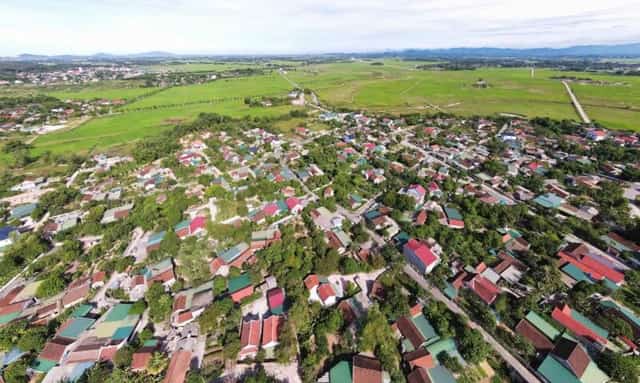
Truong Luu Village (formerly part of Lai Thach Commune, La Son District, Duc Quang Prefecture, now Kim Song Truong Commune, Can Loc District, Ha Tinh Province) is an ancient settlement over 600 years old. It is particularly known for the prestigious Nguyen Huy clan, famous nationwide for its many members who excelled in major imperial examinations and forged celebrated careers in poetry and literature.
Local residents recount that in the past, the entrance to Truong Luu ancient village began at Cau Quan Bridge (marked in red), which spans the Phuc Giang River. This river flows into the Nghen River and then out to sea via the Sot Estuary (in present-day Loc Ha District). The Phuc Giang River is also linked to the legend of King Ho Quy Ly, who once brought his navy here for military exercises. The river's name was also adopted by Thám hoa (third-ranked laureate) Nguyen Huy Oanh for the library he founded: Phuc Giang Library.
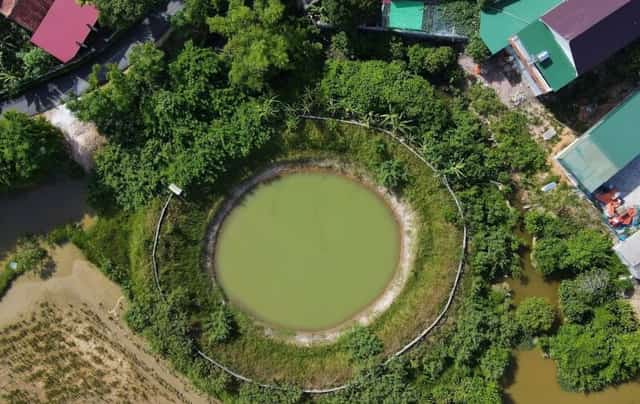
Beside the Phuc Giang River stands Ngoc Well, which has been supplying water to the villagers for centuries. In the past, this well provided water for drinking and daily life to the local community.
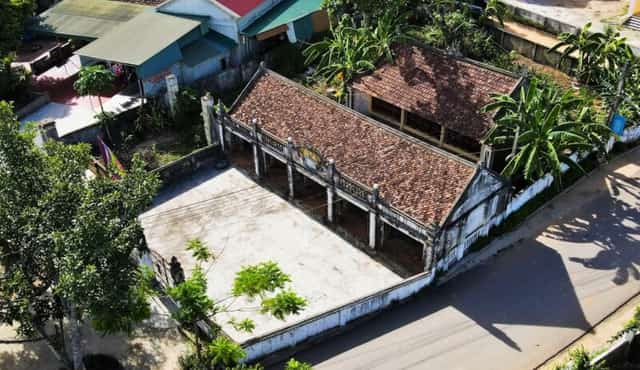
Truong Luu Village Communal House, built in the 17th century, consists of two main parts: the Thượng Điện (Upper Sanctuary), where deities are worshipped, and the Hạ Điện (Lower Sanctuary), a space for the community's cultural and spiritual life. The entire architectural style of the communal house reflects the design principles of the Later Le Dynasty.
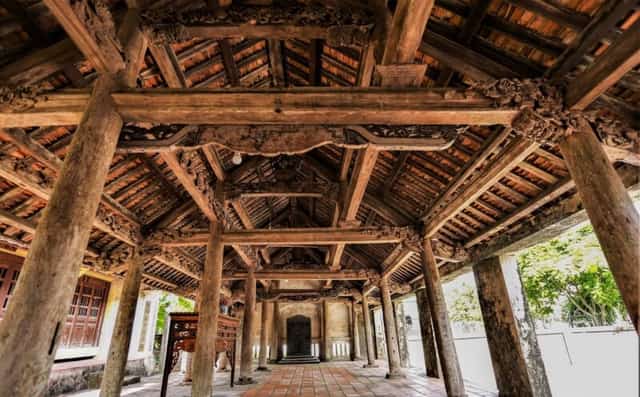
The communal house's architecture is crafted from jackfruit wood, adorned with exquisite patterns. Annually on the 12th day of the 6th lunar month, locals hold a Kỳ Phục ceremony, praying for national peace and prosperity, and for abundance for the villagers. In 2008, the communal house was recognized as a Provincial-level Historical Relic.
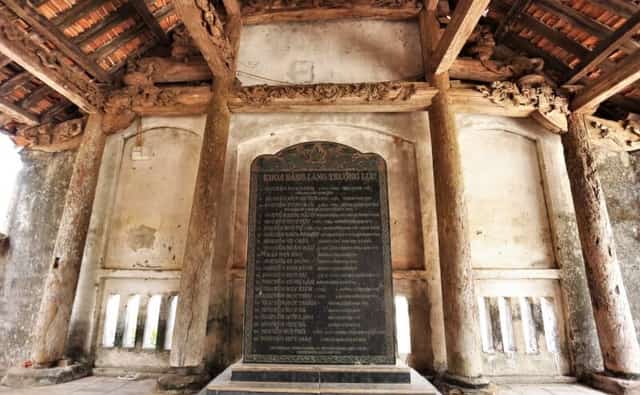
Inside the communal house, there is still a stele bearing the names of 22 villagers (primarily from the Nguyen Huy family) who achieved doctorate degrees during the Later Le and Nguyen dynasties.
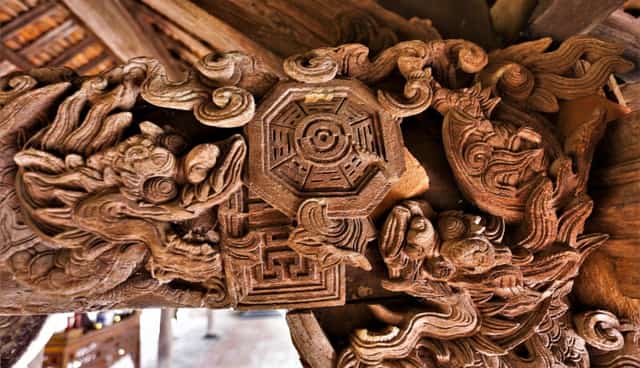
The intricate, elaborate, and highly artistic carvings on jackfruit wood are arranged with harmonious symmetry. Decorative themes reflect traditional folk culture, featuring motifs like dragons, phoenixes, and tigers.
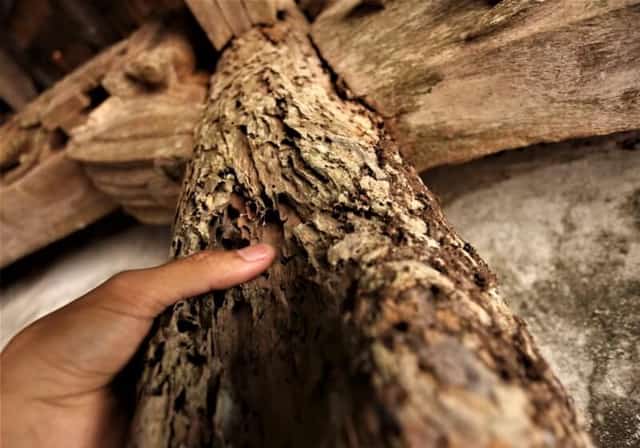
Over time, many sections of the structure have deteriorated and are in need of timely restoration.
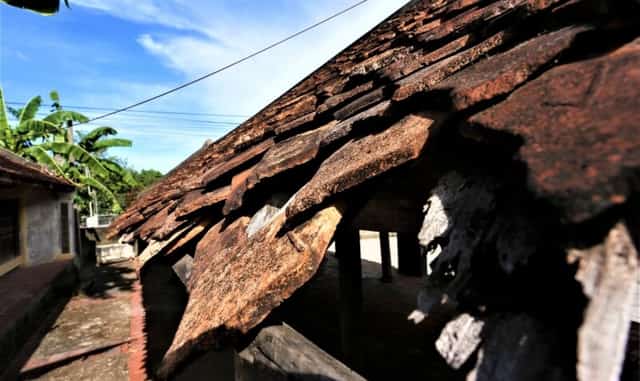
The fish-scale tiles on the communal house roof are falling off and showing signs of damage over time.
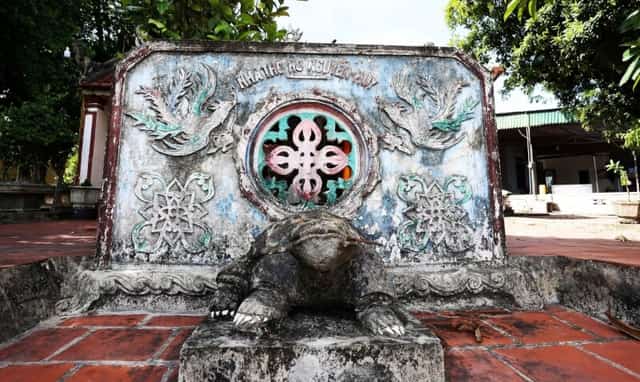
Throughout its history of formation and development, Truong Luu Village has cultivated a distinctive system of cultural heritage. Pictured here is the Nguyen Huy family ancestral temple in Truong Luu Village.
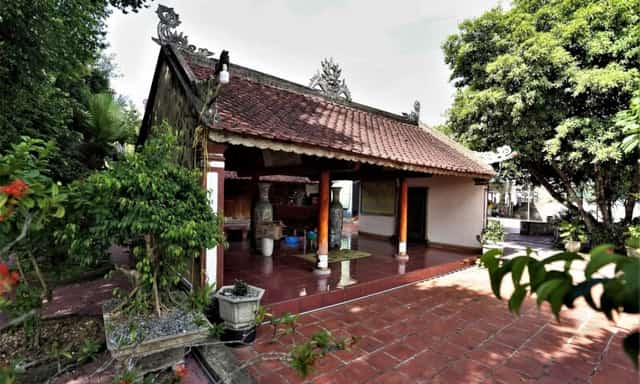
Regarding tangible cultural heritage, the village still preserves over 15 relics of various sizes, including 4 national-level ranked sites, 9 provincial-level sites, and a system of ancestral temples belonging to other families.
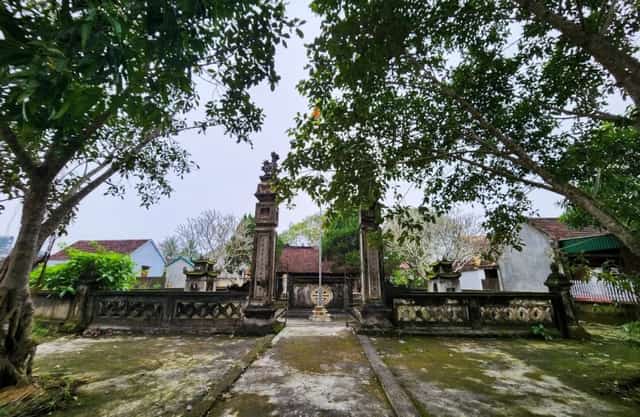
A national-level historical-cultural relic, the Ancestral Temple of Nguyen Huy Oanh and Nguyen Huy Tu, also known as Luc Chi Temple. This temple was built in 1752 by Thám hoa (third-ranked laureate) Nguyen Huy Oanh to worship his father, Mr. Nguyen Huy Tuu (1690-1750).
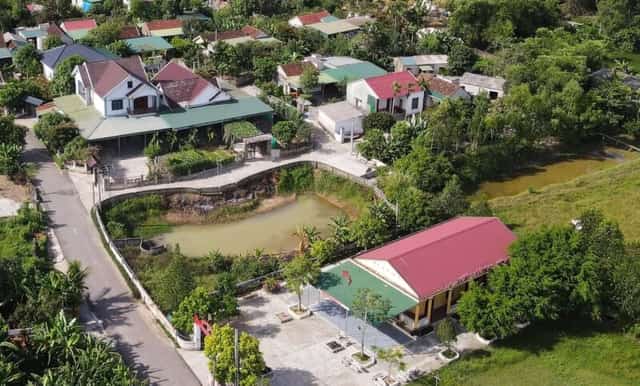
Phuc Giang Library and Truong Luu Learning Institution are two relics intrinsically linked to the Woodblocks of Phuc Giang School, which has been recognized by UNESCO as a Memory of the World Documentary Heritage for the Asia-Pacific region. The image shows the area where Phuc Giang School once stood.
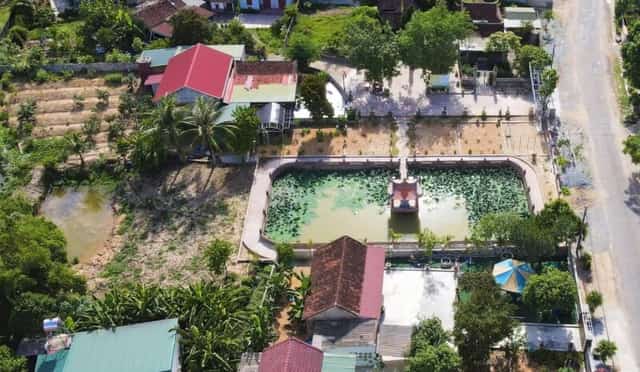
The lotus pond in Truong Luu Village, next to the temple dedicated to the renowned scholar Nguyen Huy Tu (1743-1790), has now been restored.
Late last June, Ha Tinh Province received official recognition for the Han-Nom Texts of Truong Luu Village as a Memory of the World Documentary Heritage for the Asia-Pacific region.
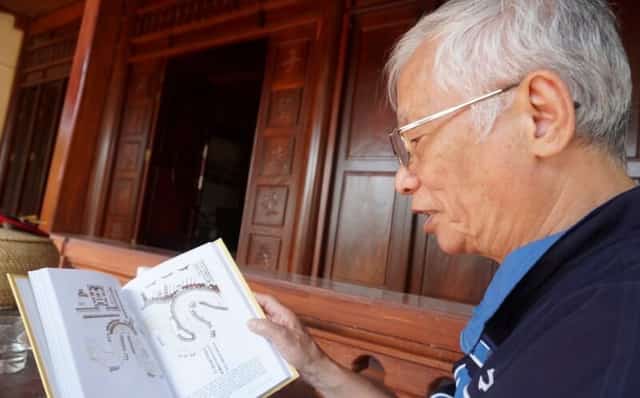
Professor, Doctor of Science, and Academician Nguyen Huy My is the 16th-generation descendant of the Nguyen Huy family in Truong Luu Village. He spearheaded the effort to collect, appraise, finalize the dossier, and introduce the ancient village's heritage to the world.
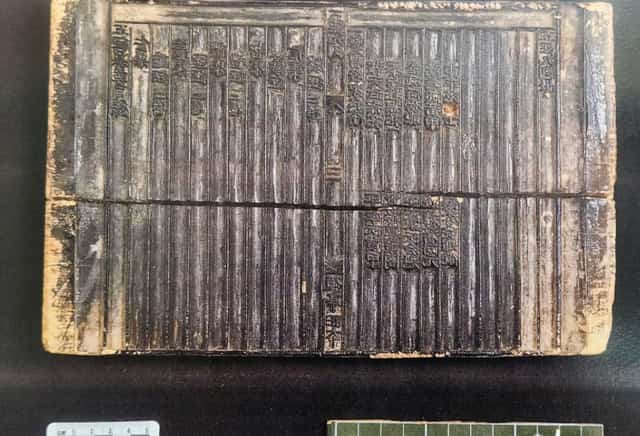
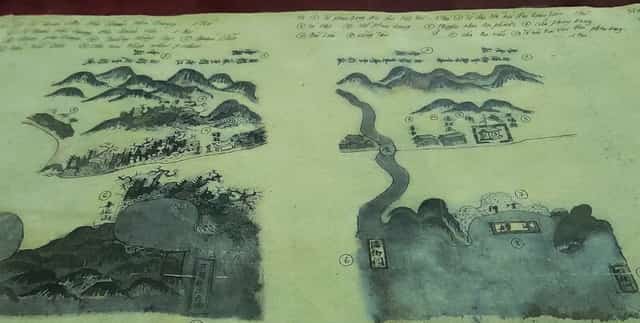
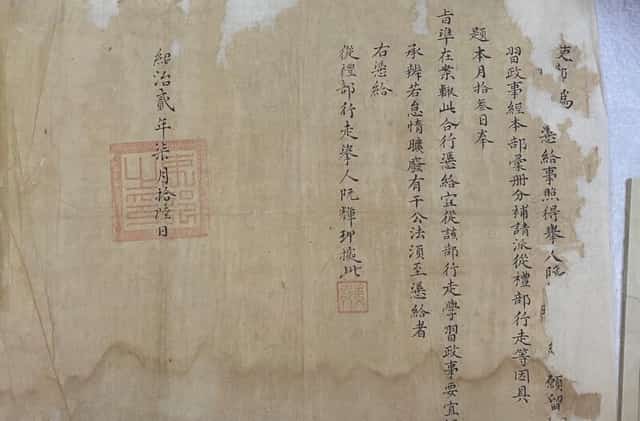
The three heritage items from Truong Luu Village include: the Woodblocks of Phuc Giang School, a set of carved wooden blocks used for printing books for the Nguyen Huy family's teaching and learning from the 18th to the 20th century at Phuc Giang School; the Hoang Hoa Su Trinh Do (Map of Envoys' Journey), recognized as the sole surviving copy of a book primarily consisting of maps; and the Collection of Han-Nom Texts, comprising 173 documents found in 14 family ancestral temples, the communal house, and 8 private homes within Truong Luu Village (dating from the late 17th to mid-20th century).
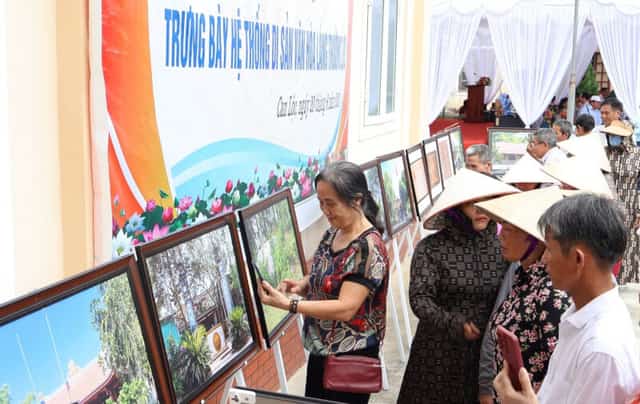
All three of these documentary heritage items are currently displayed at the office of the Truong Luu Cultural Heritage Preservation Management Board (the former headquarters of Truong Loc Commune People's Committee). These exhibitions consistently draw large numbers of visitors eager to admire and learn about the heritage.
Ha Tinh 6608 view
Update day : 31/07/2023
Source : Tiền Phong Affiliate links



Monuments close by
See all
Dinh Le Temple
Dinh Le Temple is also known as Linh Cam Dai Vuong Temple, formerly belonging to Viet Yen Ha commune, Viet Yen district, now Tung Anh commune, Duc Tho district, Ha Tinh, worshiping the founding god of the Later Le dynasty, Linh Cam Dai Vuong. Dinh Le. Dinh Le is from Lam Son, Tho Xuan, Thanh Hoa, and is Le Loi's nephew. From 1418 to 1427, Dinh Le participated in many important battles of the Lam Son Insurgent Army, achieved many victories, and contributed significantly to the final victory against the invading Ming invaders. Winning the battle, Dinh Le was awarded the title of Private Commander by Le Loi. In April 1425, the Ming army followed the Ngan Pho river to attack the Do Gia base of the Lam Son insurgent army, but was counterattacked and had to flee through Tung Linh mountain to enter the La river and return to Nghe An citadel; Dinh Le's army intercepted and attacked here, killing more than 1,000 people. In March 1427, Dinh Le and Nguyen Xi were ordered to bring 500 Thiet troops to reinforce General Le Nguyen in Tay Phu Liet, expelling the Ming army to Mi Dong. Two generals riding elephants fell into the swamp and were captured by the Ming army. Dinh Le refused to submit and was killed. In 1428, after ascending the throne, Le Thai To posthumously awarded Dinh Le the title of Entering Internal Control with the title of Tu Do, the title Dinh Thuong Marquis, and the title Linh Cam Dai Vuong. In 1484, Le Thanh Tong family appointed him Grand Master of Ban Quoc Cong, and later promoted him to Hien Khanh Vuong. Remembering his contributions in this land, the people built a temple to worship Dinh Le at the place where he was previously stationed on Tung Linh mountain, on the banks of Tam Soa. Previously, Dinh Le temple was located about 400m from the current location. After this place was taken by the French as a military post, the temple was moved to a new location. The temple is currently located on a low, relatively flat hill. The Northwest and Southwest sides border the residential area, the Southeast side borders strategic road 28. The relic still has the upper palace, gazebo, gate and temple yard surrounded by a system of walls and entrance gates. The wall is built of bricks and mortar, in the middle there is a hole shaped like a lemon flower, the four corners are built with pillars, and lotus buds are placed on top. Tac Mon is like a screen blocking the entrance, the outside surface creates a yellow tiger relief, standing majestically with head and tail raised high. Go through the gate to the gazebo, built in 1937 in a double-match style with two floors, eight roofs, and four-sided doors. The date of the gazebo's restoration reads "Bao Dai Dinh Suu (1937). The upper palace is a four-pillar house with three compartments, two gables, four jackfruit wooden rafters in the four-pillar-stack-dau style (also known as the Ruong house). At the top are engraved four Chinese characters "Long live the Holy Palace". The middle hallway has a kneeling-style wooden incense burner carved with flowers and vines on both sides, and a dragon flanking the moon and face in front. The door is constructed in the "upper but lower" style, consisting of many doors joined together with wooden pegs on top. The remaining three sides are surrounded by brick walls. The middle space worships the tutelary god Dinh Le with a sacred throne, a royal tablet engraved with the title Linh Cam Dai Vuong, a wooden sword placed in lacquered wood inlaid with gilded wood, and a system of incense burners and gilded wooden offerings. On January 17, 2006, Dinh Le Temple was classified as a National Monument. Source: Duc Tho District Electronic Information Portal
Ha Tinh
7621 view
Rating : National monument
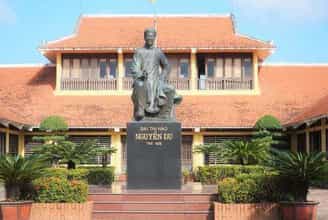
Memorial relic area of great poet Nguyen Du
Nguyen Du memorial area is located in Tien Dien commune, Nghi Xuan, Ha Tinh. Coming here, visitors will have the opportunity to learn more about the life and career of Nguyen Du and also have the opportunity to understand more about the Nguyen Tien Dien family. Nguyen Du (1765 - 1820), full name To Nhu, nickname Thanh Hien, originally from Tien Dien village, Nghi Xuan district, Duc Quang district, Nghe An town (now Ha Tinh province) but was born and raised in Thang Long (Hanoi today). His father is Hoang Giap Nguyen Nghiem and his mother is Tran Thi Tan from Hoa Thien village, Dong Ngan district, Kinh Bac region (now Bac Ninh province). Since childhood, Nguyen Du has deeply absorbed the cultural essence of all three regions: Nghe An - Thang Long and Kinh Bac. That's why Nguyen Du grew up to become a well-educated, highly talented person, proficient in both Buddhism and connoisseurs of exams and drawing. The work The Tale of Kieu is a clear testament to Nguyen Du. This is a great contribution to Vietnam's literary treasure. Historical relic Nguyen Du's memorial area was built so that scholars, writers and domestic and foreign tourists who love The Tale of Kieu can come and burn incense at the grave of Nguyen Du - a great national poet, a great poet. Cultural world-honored Great people. This is a cultural relic site located in the Nguyen Tien Dien family relic complex. This relic complex is a complex including many relics: the temple of the Great King Dr. Nguyen Hue; temples of Nguyen Nghiem and Nguyen Trong; Nguyen Quynh altar; 2 Tu Van houses; Great poet Nguyen Du's tomb, Nguyen Du museum and Nguyen Du church. Nguyen Du church was built in 1825, right on the garden of his house in Tien Giap hamlet. Inside there is an altar built of sand lime, above which hangs a horizontal panel with the four words "The Red Mountain's Pedigree" given by Hoang Phu Phai, a filial grandmaster of the Qing Dynasty, in the 55th year of the Qianlong Dynasty (1790). along with a stone tablet engraved with the words "Thanh Hien Nguyen Tien Sinh". Next to Nguyen Du church is Nguyen Du museum - a place to display many precious original documents and artifacts directly related to the life and career of the great poet Nguyen Du. Currently, this is an area displaying nearly 1,000 documents and artifacts, typically the pen of Nguyen Du, the Kieu version printed from an engraving in 1866, the book The Tale of Kieu written in calligraphy style (unique), calligraphy The longest Tale of Kieu in Vietnam (unique), collection of Tales of Kieu published in many languages, collection of books about Nguyen Du... Coming to Mr. Nguyen Du's Memorial Area, visitors will not only have the opportunity to admire the scenery here but also have the opportunity to learn more about the historical and cultural value and humanity of the Nguyen Tien Dien relic complex. In particular, if you come here in the early days of spring, you will enjoy Nguyen Du's poetry nights at the Literature House in the Nguyen Du Memorial Area. The Great Poet Nguyen Du relic site is a complex of architectural works to worship and commemorate Nguyen Du and the outstanding talents of the Nguyen family in Tien Dien, such as Duke Nguyen Hue and Xuan Nguyen Nghiem. , Lam Khe Hau Nguyen Trong, Dich Hien Cong Nguyen Dieu, Que Hien Cong Nguyen Ne... The cultural heritages in the Relic Area are still preserved and have special historical, cultural, and scientific value.. . helps us learn about the origin, formation, development, cultural traditions, academics... of the Nguyen family in Tien Dien as well as a look at the life, career, and contributions of the great poet Nguyen Du and the Nguyen family in Tien Dien for Vietnamese literature. This is also a reliable source of information to learn about the beliefs, customs, cultural and spiritual life of Tien Dien village in particular, and Vietnamese village culture in general in the development of history. nation. Source: Vietnam National Tourism Administration
Ha Tinh
7492 view
Rating : Special national monument

Nguyen Loi Tomb and Temple Relics
Nguyen Loi Temple is hidden at the foot of Bach Ma Mountain in Bao Thinh village, Duong Trai commune, Huong Son district, now Son Binh commune, Ha Tinh province. Nguyen Loi, a general who participated in many major battles in Do Gia - Huong Son district, established a base to fight the Ming invaders in Nghe Tinh region, was one of 18 comrades-in-arms of Le Loi present at the Lung Nhai oath ceremony. Nguyen Loi is the first son of General Nguyen Nhu Lam, a fourth-generation descendant named Le Loi, now the head of the lineage in Tho Xuan Thanh Hoa. During the reign of King Thieu Binh Phong: scholar and scholar, middle-ranking scholar and public servant, special golden prince, honorary physician, lawyer of the country's military, entered the country from the concubine, captain of the district's capital city. , Nguyen Tuong Cong, Four Thuy Simplified Stars; Died on February 25. Nguyen Loi's wife was the first child of King Le Thai Tong, her name was Yen Quoc, the head of state was a princess, her first name was Minh Tu, she died on January 6. After the victory over the invading Ming army, on March 5, 1428, Le Loi bestowed merit badges on 93 people. Nguyen Loi was ranked 17th among the 93 founders of the Le dynasty, and was given the national name Le. On November 7, 1434, the Marquis of the Royal Palace, Senior General Nguyen Loi, passed away while he was holding the position of Western Path Controller - Left Radiation. Considering his contributions to the cause of helping people save the country, King Le Thanh Tong posthumously awarded him to the ranks of righteous heroes. Nguyen Loi Temple is structured in Nhi style, including 2 main parts: lower palace and upper palace. The lower palace has the most typical horizontal architectural structure, consisting of 3 compartments and 2 gables built with closed walls. The roof is covered with yin and yang tiles, and on the top of the roof there is a decoration of two dragons flanking the moon. The house's interior structure is designed in a four-pillar style "inner is a bridge, outer is a roof" which is very popular in Nghe Tinh villages. The structure of the upper palace consists of 3 compartments and 2 gables, surrounded by walls built with bricks, the roof is covered with yin and yang tiles, on the top of the roof in the middle is embossed with the image of a tiger holding the sun, the 2 ends are the image of a dragon's head embossed with mortar and pieces of porcelain trying to piece together. The interior has altars to Nguyen Loi and his descendants, complete with traditional worship objects. This is a famous historical relic, dating back to the 15th Century, and was ranked as a national historical relic on December 28, 2001. Source: Son Binh Commune Electronic Information Page
Ha Tinh
7365 view
Rating : National monument

Dong Loc Junction Memorial Area
On December 9, 2013, Dong Loc Junction Relic Area was recognized as a Special National Historical Site. Dong Loc Junction relic area is a relic complex with many meaningful works, typically the following 12 items: 1. Dong Loc junction relic area has 3 entrance gates arranged on 3 routes towards the relic area, arranged according to the traditional three-entrance architecture including: Main door and 2 side gates. 2. Dong Loc Junction Victory Monument is an immortal symbol of the strength, determination to win, and the spirit of overcoming all hardships and dangers of the youth volunteer force, soldiers, and traffic workers. , police, militia... 3. The memorial stele of the National Youth Volunteer Martyrs. Registered nearly 4,000 heroic martyrs. The names of the heroic martyrs and young volunteers who sacrificed their lives at Dong Loc Junction will be remembered forever, for generations of children and grandchildren to admire, respect, and be proud of. 4. The grave site of 10 female heroic martyrs and young volunteers at Dong Loc intersection is 10 white graves register 10 young female volunteers of Platoon 4, Company 552. 5. The stele memorial for the heroic martyrs of the Transport sector who sacrificed their lives in Ha Tinh. Register and commemorate 842 Heroes and martyrs of the Transport sector who sacrificed their lives in the resistance war against the US to save the country in Ha Tinh area; 6. Transport industry symbol column. Located right in the middle of the three-way intersection: Lac Thien - Dong Loc, Khe Giao - Dong Loc, Ba Giang - Dong Loc. To honor the heroic victories of soldiers on the Transportation front; 7. Dong Loc Junction Bell Tower has majestic architecture, shimmering light, located on Mui Mac hill, and is considered one of the most beautiful bell towers in Vietnam today. 8. Dong Loc Junction Temple is located on Mui Mac Mountain (next to Dong Loc Junction Bell Tower). It is a place to worship the Gods and Spirits of the Heroic Martyrs and young volunteers who sacrificed their lives in the two national resistance wars, the Heroic Martyrs who sacrificed at Dong Loc Junction, 10 girls and officers. and people died at Dong Loc battlefield. 9. The statue of 10 girls at Dong Loc Junction recreates a realistic moment of 10 young volunteer girls on duty to level bomb craters and lead the way to the front line. They are arranged in different positions. 10. La Thi Tam Hill (Moi Mountain) is the place to witness the fierceness of the Dong Loc battlefield, witness the footprints, associated with the name of the daughter of Song La, Hero of the La People's Armed Forces Thi Tam. 11. Traditional house of the Vietnam Youth Volunteer Force, where the history of the Youth Volunteer Force appears most vividly and clearly. 12. Dong Loc Junction Traditional House There is a simulation table programmed with an electronic system, recreating the fierce and devastated battlefield scene of Dong Loc Junction during the war years, as well as the intention. the determination to open roads and traffic, the brave and courageous spirit of our army and people at this "death coordinate". Source: Ha Tinh province electronic information portal
Ha Tinh
7299 view
Rating : Special national monument

Thai Yen Temple
Thai Yen Temple was recognized as a National Monument on July 20, 1994. Thai Yen Temple is located in Thai Yen commune, Duc Tho district, Ha Tinh province, worshiping the Tutelary God Tam Lang Linh Ung (Snake God) and Chinh Dong Ngoc Nu (Mother). The temple was built in the 18th century (sometime before 1741). The temple is located on a land area of about 5,000 square meters at the beginning of the village, with a three-court structure: upper palace, middle palace, lower palace. In front of the temple is a semicircular lake with clear blue water - considered the dragon's eye, located in the village's dragon land. Passing through the large yard of the three-entrance gate, the middle gate is built with a Nghi Mon house with a structure of 2 pillars, 6 columns, the roof is covered with 4 winding dragons, the head raised high to the top of the roof. On the roof of the ritual gate is embossed a dragon's face stroking its mane, beard and fierce horns. The lower hall is made of ironwood with 4 trusses and 14 columns, the floor is tiled with red bricks, in front there are large Chinese characters embossed with pieces of porcelain on wood assembled together with the beams: "Van Co Anh Linh" ( middle room), "Chiem Nhu Tai" (right room), "Lai Nguyen An" (left room). In the middle of the room is a large incense burner made of lacquered wood and elaborately carved with gold. In front of the incense burner is a dragon sword stand and a sign with the two Chinese characters "Chinh Khi", two large cranes standing on turtle bodies on both sides; The two compartments on both sides hang two bronze bells, on the bell are embossed with 3 words "Thai Yen Tu" (Thai Yen Temple - left compartment) and 4 words "Vinh Phuc Tu Chung" (Vinh Phuc Pagoda Bell - right compartment) . The middle palace is adjacent and parallel to the lower palace, consisting of three rooms and two gables; Inside, there are many offerings such as incense burners, incense burners, candlesticks, and wooden vases. In particular, there are three massive gilded palanquins, elaborately carved with symbols, scimitars, nameplates, and symbols. The spirit master, dragon throne, and deity tablets are offered by the villagers. In the upper palace, in the hallway, there are two round statues made of jackfruit wood kneeling with arms folded in front of their chests supporting incense burners, with folk style (bulky belly, wearing long pants, short hair, big ears, wide face, biceps). tall, big nose, slanted eyes). The main door has four wings painted with dragon, glass, tortoise, and phoenix colors; The two armpit doors and one wing depict a crane standing on the back of a turtle swimming in a lotus pond. Inside the main hall above are the dragon thrones and tablets of the Tutelary Gods and gods of the village; Below is an altar with two rows of carved, painted and gilded tablets offered by many generations of villagers... Every year, in the spring, Thai Yen Temple holds a big festival, people in the commune organize cultural and sports festivals until the full moon of the first lunar month such as tug of war, football matches, volleyball, table tennis, and chess. generals, art competitions... Every two years, Thai Yen organizes a palanquin procession on the 7th day of the first lunar month. Source: Duc Tho District Electronic Information Portal
Ha Tinh
7281 view
Rating : National monument
Nearby tourist attractions
See all
Hoanh Son Beach
Ngang Pass is a pass over the Hoanh Son range, a crucial point on the North-South natural road. Ngang Pass is famous not only for its historical factors but also as a famous landscape of the sunny and windy central region. At the top of the pass is Hoanh Son Quan, built during the reign of King Minh Mang of the Nguyen Dynasty, still standing tall through all the rain and sun until now... Ngang Pass has become a legend in literature and poetry. Hoanh Son is 50 km long, running from the Truong Son range in the west to the East Sea. The highest peak in the mountain range has an absolute altitude of 1044 m. In the past, to cross this mountain range, people often had to go up Ngang Pass, which is 256 m high and 6 km long, which is very difficult. Since August 2004, a road tunnel was completed to make travel between Quang Binh and Ha Tinh more convenient. Looking for a place to rest before crossing the pass and Hoanh Son range, I stopped at Hoanh Son beach. Located right at the foot of Ngang Pass, or rather right at the junction from National Highway 1A, going close to the sea, branches - one branch goes to the pass along a thousand-year old road, the other branch goes through Ngang Pass tunnel through the mountains and Hoanh beach. Wild and hidden mountains... Hoanh Son beach is located in Ky Nam commune, Ky Anh district, Ha Tinh province - less than 2km from the foot of Ngang pass (in the direction of the North - South highway), on the other side is Quang Binh territory. Perhaps in this "endless" place, everything is still wild like the pass and the majestic Hoanh Son range. Hoanh Son beach is protected by mountains so it is discreet and windless; Clear, blue water. This place inherits the climate as well as the scenery of both sea and mountains. At the beach, you can see the Hoanh Son range - a mountain range running from the Truong Son range - stretching out to the East Sea. There are also rocky beaches spreading from the mountains to the sea like "jumping rocks" beaches like many beaches in the Central region... Hoanh Son beach is small and narrow, cannot be compared to the majestic tourist-industrial beaches in the central region such as Sam Son (Thanh Hoa), Cua Lo (Nghe An)... but it impresses with its grandeur and the wilderness of nature, the simplicity of human life. Hoanh Son Beach will certainly attract those who love adventure and exploration. Let's see, one afternoon on the beach, the sky was dark, there was no one and suddenly a herd of cows appeared. The Hoanh Son strip protrudes into the dim blue sea, the waves leap up onto the rocky beach... And try it, go up the pass in the afternoon and come down when it's late; I can hear the poem of Ba Huyen Thanh Quan: "A piece of love between me and myself...".
Ha Tinh
6566 view
March to November

Son Kim eco-tourism area
Son Kim hot mineral water eco-tourism area is located in Son Kim 1 commune, Huong Son district, Ha Tinh province. From City. Vinh, you can travel by motorbike or car along National Highway 1A, cross Ben Thuy Bridge (a bridge connecting Nghe An and Ha Tinh provinces), from here continue following National Highway 1A for about 15km more. to Hong Linh town. From Hong Linh, you continue to follow Highway 8 southwest for about 65km to reach the Son Kim hot mineral water eco-tourism area. The tourist area is located at the confluence of two streams, Ngam Thep stream and Nuoc Sot stream. The temperature of the hot mineral springs here is from 75-90 degrees Celsius. As many people know, bathing in the hot mineral springs will be effective in curing a number of diseases such as muscles, bones and joints, spine, nerves, and skin diseases. , blood vessels, at the same time, also helps us restore function, health, reduce stress and fatigue. You will really feel relaxed when immersing yourself in the hot water here and admiring the extremely beautiful scenery of the surrounding nature. In addition to the hot mineral springs, the nature here also makes you admire its wildness and beauty. This place is known as the "unawakened fairy" because of the beautiful landscape like a watercolor painting mixed with the cool green of the forest and the jade green of the mineral lakes. Coming here, you can immerse yourself in a space filled with green trees, admire the lakes, small houses built right on the side of the mountain along with white foam waterfalls.
Ha Tinh
7098 view
From January to December

Trai Tieu lake eco-tourism area
Trai Tieu Lake is a famous tourist area not only in Ha Tinh but also known to many people for its extremely romantic space. Trai Tieu Lake is located in My Loc commune, Can Loc district, Ha Tinh province, an irrigation project with a capacity of 15.6 million m3 of water to serve irrigation and water regulation in the region. The climate in My Loc and Can Loc has two distinct seasons: rainy season and dry season. The rainy season lasts from March to October, while the dry season is influenced by the cold winter of the North. The average temperature in the rainy season ranges from 23 degrees Celsius to 33 degrees Celsius. Summer in Ha Tinh generally has quite intense peak heat, influenced by the southwest wind, which in some months reaches nearly 39 degrees Celsius. Due to the high mountain shape of the Truong Son range, when the wind blows from Laos To the right, over the mountain range, the cold air lowers the humidity and dries the wind, so when it goes low, the wind becomes hot. The best time for those planning to go to Trai Tieu Ha Tinh lake is the rainy season, May and June, when the temperature is suitable for fun activities and sightseeing. Trai Tieu Lake tourist area is quite large with an area of up to 21 km2, the main highlight is the large lake, an area with extraordinary appeal to attract tourists. Surrounding the lake is surrounded by green mountains and forests, the space is extremely fresh and fresh. The water surface is as heavy as a mirror, the shadows of clouds, sky, forests and mountains are clearly printed on the lake like a giant reflective mirror. In the distance, standing from this bank and looking to the other bank, you will see a few red tiled roofs, especially in the early morning air, the scene seems more magical and shimmering in the mist. Going through the gently windy hills, you will find yourself lost in a mysterious forest, immersing yourself in a vague feeling. Then you can rent a tourist boat to see the sights. Gliding gently on the water, the boat will give you one surprise after another. The vast lake bed seems to go on forever with no end in sight. The waves gently pat the boat's side, creating ripples in layers, giving visitors a soft floating feeling. Taking a boat up Khe The, you will encounter dangerous streams and strong flowing water, making traveling by boat more difficult. Up in the area near Khe The, the landscape becomes increasingly wild and wild, increasingly distant with signs of human habitation. All year round nature is covered with luxuriant greenery, endless green. Standing from here, you can see the most comprehensive panorama of Trai Tieu Lake, the deep blue lake is silent and endless without seeing a stop for your eyes. Around the lake there are farms of people, you can stop the boat and step ashore to visit the farm with many interesting seedlings. Coming here, you can enjoy many delicious and strange fruits: Phuc Trach grapefruit, Huong Son orange, Hong Dong Lo. In addition, coming to Trai Tieu Lake, you will have the opportunity to transform into a fisherman or a catfish to collect firewood around the edge of the forest or cast a fishing rod. Fishing here is very quiet, you can easily hunt big fish that have lived in the lake for a long time. For a more strange experience, try fishing at night, the space seems to shrink in front of the fishing rod, everything around is strangely quiet and peaceful. It seems like this place is for monks to live in seclusion, or people who just like a quiet space to live alone. At night you can stay at the lake on floating houses along the shore. There is a system of eco-lodges floating on the lake to serve tourists staying overnight. The scene at night is difficult to describe in any language, from the atmosphere to the dim space and the weak moonlight, it is extremely romantic and memorable. From the Giang Man mountain range, drops of water accumulate, bringing an endless source of fresh water to Trai Tieu lake. For irrigation purposes, people from a very early age knew how to prevent dams to retain water to serve agricultural life as well as other irrigation activities. Due to discovering the potential of the rare natural landscape, Can Loc irrigation company has renovated and developed this place into a famous eco-tourism area in Ha Tinh.
Ha Tinh
6954 view
May to August
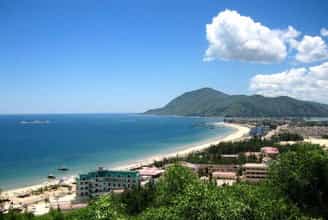
Thien Cam Beach
Thien Cam Beach is located in Cam Xuyen district, Ha Tinh province, about 20km from the city center. Although not as busy and famous as Cua Lo beach (Nghe An), Thien Cam beach attracts tourists because of its inherent wild and pure beauty. The ideal time to explore Thien Cam beach is summer, especially from June to July. During this time, you will really feel the clearness, freshness and calmness of the sea here. From August to October, Thien Cam beach is in storm season, so you should avoid traveling to Thien Cam during this time. Traveling to Thien Cam beach, you will have the opportunity to immerse yourself in the cool and blue sea water. Thien Cam Beach is located in the Central province so the water is clearer and cleaner than beaches in the North. Thien Cam Beach has 3 beaches, of which the most beautiful is the main beach which is 3km long, the remaining two beaches are 10km long. The blue, emerald-colored sea water, the gently stretching white sand beaches and the colorful rocky beaches have created a wild and rustic beauty in Thien Cam sea. If you are looking for a place to fully view this beautiful beach, look to Thien Cam Mountain right next to the beach. With an altitude of 108m above sea level, just standing at the top of the mountain you can see and observe the entire Thien Cam sea and surrounding islands. On Thien Cam Mountain, there is also Cam Son Pagoda, formerly a temple to Ho Quy Ly's father and son, built in the 13th century. Here, visitors can also admire the "million-year" footprint of the giant still clearly visible on the stone slab. Thien Cam has two main islands: Hon Boc Island and Hon En Island. Closer to the shore is Hon Boc with its giant elephant-shaped mountain and interesting rocks reaching out to the sea. Offshore is the small island of Hon En, which looks like a hand protecting fishermen from storms from generation to generation. To visit these two islands, you can contact the tourist boats or hotel reception directly to book a boat tour with ticket prices ranging from 500-600k/boat. Not only with the pristine beauty of the sea and islands, Thien Cam beach also attracts tourists with its diverse and rich seafood cuisine at cheap prices. Visitors can buy seafood at Cua Nhuong Fishing Port or catch seafood themselves in the rocks and process it on site. Types of seafood that can be mentioned include: one-sun squid (price 250k/fish), clams (30k/kg), clams, grouper porridge, tuna, shrimp, oysters,... In addition to typical seafood dishes, Thien Cam tourist destination is also famous for grilled goat specialties. Goat meat in Thien Cam is soft, sweet, lean, low in fat and thin-skinned and is often eaten with wing leaves dipped in ginger soy sauce, attracting many diners when coming to Thien Cam beach. Traveling to Thien Cam in the summer, don't forget to enjoy the Cu Ky bird - Thien Cam's specialty. The bird is only as big as a regular chicken, with brown or blue feathers and a green dot on the neck. Cuckoo bird is processed into different dishes such as: bird porridge, grilled bird, roasted bird. Cu Ky bird meat has a special fragrant and delicious taste. It would be a pity if you come to Thien Cam and miss this specialty.
Ha Tinh
7031 view
March to October

Hong Linh Mountain
In addition to the well-known name Hong Linh, this ancient mountain also has another name in Vietnamese called Ngan Rong (Roar) with a measured length of about 30km, the mountain direction is Northwest - Southeast. According to local people, Hong Linh includes 3 mountain groups: Dun Ngan, Thien Tuong and Eo Bau and a system of a series of caves and streams. There are quite famous caves that are often mentioned such as Ham Rong, Che Hai, Da Hang... It is not for nothing that this place is called "the symbol of the sacred soul of rivers and mountains", Hong Linh has existed over time, associated with the ups and downs of history. The top of the Flag Tower on the mountain was once the place where Mai Thuc Loan's son built a base, or Lau Mountain was the place where Ly Thanh Tong chose to build his palace. There are many different myths and legends still passed down by people related to this mountain and the years it has passed. Because of this, many pagodas, temples, and shrines, numbering up to more than 100, were built here by people. Some places have become famous pilgrimage destinations that many visitors from near and far visit for incense sticks every holiday such as Huong Tich Pagoda, Chan Tien Pagoda or Tien Son historical relic cluster. People come to Hong Linh mountain not only for pilgrimage, but also for spring travel, sightseeing, and enjoying the cool and peaceful mountains and forests. More specifically, Tien Son has been recognized by the State as a national historical relic cluster. Every year there is a traditional festival with many different activities to welcome tourists from all over. On the 15th day of the first lunar month every year, pilgrims from all over come here to worship and pray for peace.
Ha Tinh
6786 view
From January to December
 AI Travelviet