
 vn
vn en
en ja
ja ko
ko zh
zh


Da Nang's Unique Han River Bridges

Da Nang is famously known as the 'City of Bridges,' a moniker it truly earns. This isn't just because of the impressive number of bridges that gracefully span the Han River, but also, and perhaps more so, due to the truly unique and distinctive architectural design of each individual structure.
The Han River originates at the confluence of the Cẩm Lệ and Vĩnh Điện rivers, flowing between Cẩm Lệ, Hải Châu, and Ngũ Hành Sơn districts before emptying into Da Nang Bay near the entrance to Thọ Quang Port. Although only about 7.7 km long, the Han River is spanned by six impressive bridges.
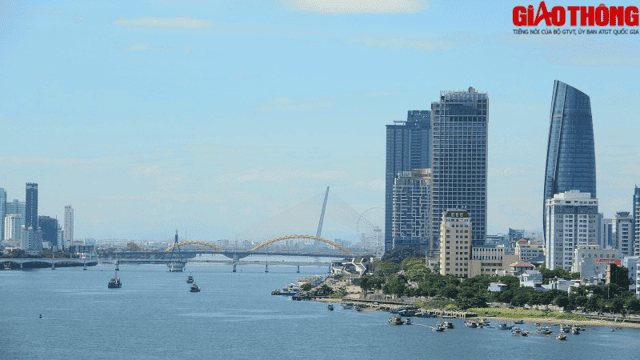
These bridges are not only vital for transportation but also stand as architectural highlights of the city, boasting unique features rarely found elsewhere in Vietnam.
Thuận Phước Bridge began construction on January 16, 2003, with an investment of nearly 1,000 billion VND from the state budget. As Vietnam's longest cable-stayed bridge, Thuận Phước connects Da Nang's two coastal roads, Nguyễn Tất Thành and Hoàng Sa - Trường Sa. The bridge holds a special location where the Han River meets the sea.
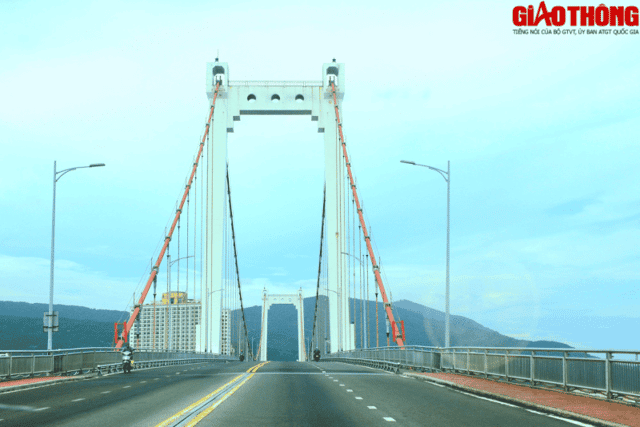
Thuận Phước Bridge measures 1,856m long and 18m wide, featuring two towers approximately 80m high from the pile cap, and three cable-stayed spans totaling 655m. It stands as Vietnam's longest and most distinctive cable-stayed bridge.
Due to its special location and the complex geological conditions of the river mouth, the construction of the bridge's foundations and piers, especially the foundations for the two main towers, faced significant challenges. Its impressive height and proximity to the sea also meant that strong winds impacted the construction progress. The bridge was inaugurated in 2009 after six years of development.
Han River Bridge is one of the first bridges to span the Han River, connecting Da Nang's two main arteries: Lê Duẩn Street on the west bank and Phạm Văn Đồng Street on the east. The bridge is 487.7m long and 12.9m wide, with 11 spans, each 33m long, featuring a prestressed reinforced concrete structure. It also includes two cable-stayed spans with a total length of 122.7m, where the main girders and towers are steel, and the deck is reinforced concrete.
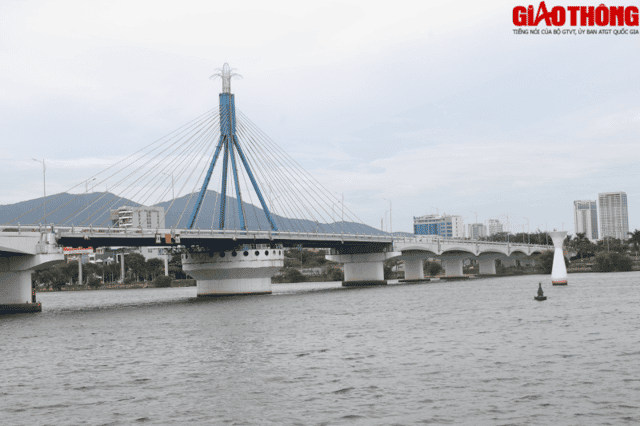
What makes the Han River Bridge truly special is that it was the first swing bridge in Vietnam to be entirely designed and constructed by Vietnamese engineers and workers. The bridge can rotate its middle span 90 degrees, opening two waterways for ships to pass through. This rotation typically occurs around midnight. Construction of the Han River Bridge began on September 2, 1998, and it was completed on March 29, 2000. Its opening put an end to the "ferry dependence" for residents on both sides of the Han River, significantly enhancing transportation infrastructure and boosting economic and social development on the eastern bank.
Dragon Bridge is the sixth bridge to cross the Han River. It is 666m long and 37.5m wide, accommodating six lanes of traffic. Construction began on July 19, 2009, and the bridge was opened to traffic on March 29, 2013, with a total construction cost of nearly 1,500 billion VND.
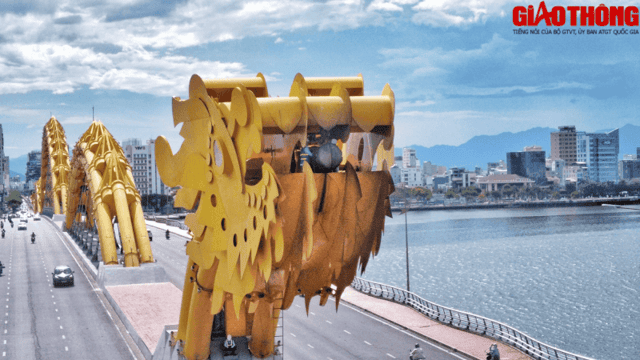
Dragon Bridge is designed with two separate traffic flows, each with six lanes. It connects Võ Văn Kiệt Street (Sơn Trà District) across the Han River to the Bạch Đằng Nguyễn Văn Linh intersection (Hải Châu District), effectively shortening the distance from Da Nang International Airport towards Sơn Trà District.
A striking golden steel dragon, facing the East Sea, is incorporated into the bridge's central median. This dragon is specially designed to breathe fire and spray water, offering a spectacular show for tourists on weekend nights, holidays, and Tet (Lunar New Year).
Not far from here are two parallel bridges connecting Hải Châu District and Ngũ Hành Sơn District: Trần Thị Lý Bridge and Nguyễn Văn Trỗi Bridge.
Trần Thị Lý Bridge was originally a railway bridge. During the French colonial period, it was called De Lattre de Tassigny, later renamed Trịnh Minh Thế Bridge, and is located about 20m upstream from Nguyễn Văn Trỗi Bridge. After 1975, it was named Trần Thị Lý Bridge and upgraded into a road bridge. Along with Nguyễn Văn Trỗi Bridge, it serves as a vital commercial link, connecting the two banks of the Han River.
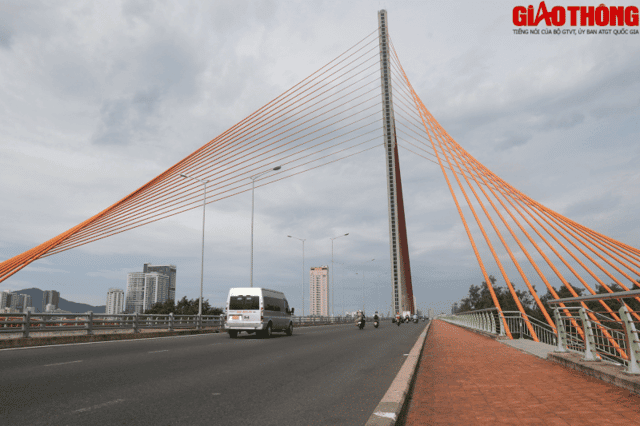
The bridge deck is 35.5m wide, featuring six vehicle lanes (each 3.75m wide) and two pedestrian lanes (each 3m wide) with protective railings. A unique aspect of Trần Thị Lý Bridge's structural design is its single pylon, inclined at 12 degrees. Unlike conventional cable-stayed bridges with rigid underground foundations, this pylon is rigidly connected to the bridge deck and rests on pier S5 via a spherical bridge bearing with a load capacity of up to 25,000 tons – currently the largest in the world.
Nguyễn Văn Trỗi Bridge is the very first bridge to cross the Han River, put into use in 1965. In 2015, its control system for lifting the bridge span was renovated, installed, and the technology for controlling and monitoring the lift span for navigation was transferred. Nguyễn Văn Trỗi Bridge no longer serves its original traffic function; instead, it has become a unique tourist attraction in Da Nang.
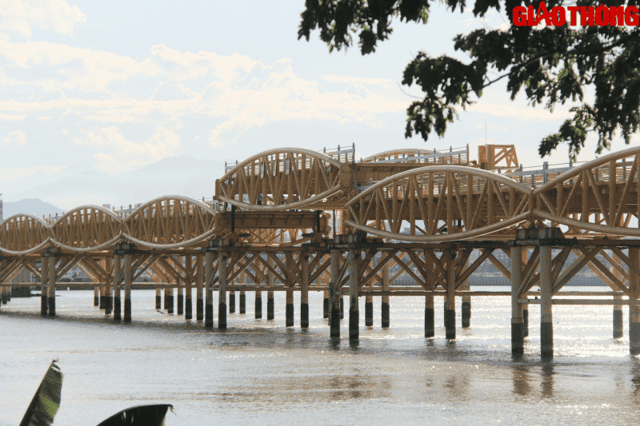
Nguyễn Văn Trỗi Bridge's middle span will now lift and lower once a day on Saturdays, Sundays, and during holidays from 4 PM to 6 PM, offering a captivating experience for locals and tourists alike. According to technical specifications, there are four lifting jacks, each with a lifting capacity of 100 tons, operating at a speed of 0.233m per minute. The lifting journey reaches a height of 3.6m, with the lifted navigation span measuring 36.45m in length.
Da Nang 5316 view
Update day : 04/09/2023
Source : baogiaothong.vn Affiliate links



Monuments close by
See all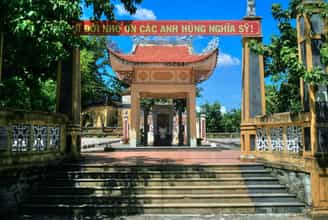
Trung Hoa Cemetery (Khue Trung Cemetery)
Nghia Trung Hoa Vang relic site (also known as Khue Trung Cemetery), is currently located on an area of 4,000 square meters in Khue Trung ward, Cam Le district. It is the resting place of more than 1,000 martyrs and patriots who fell in the early days of resistance against the French (1858 - 1860). At dawn on September 1, 1858, the French-Spanish coalition attacked the Da Nang estuary, beginning the invasion of Vietnam. With the spirit of solidarity for the country, our army and people fought back fiercely. During nearly 19 months of fierce fighting, thousands of soldiers sacrificed their lives heroically, making an important contribution to the failure of the French colonialists' attempt to quickly occupy Da Nang. Under war conditions, the gathering and burial of martyrs at that time was only temporary. When Da Nang was liberated, the people set up graves and gathered remains, building graves for soldiers who died here. Nghia Trung Hoa Vang was formed in 1866 in Nghi An village, Phuoc Tuong canton, Hoa Vang district. When the French colonialists built Da Nang airport (1925 - 1926), people had to move Nghia Trung to Ba garden in Khue Trung village. In 1962, Da Nang airport continued to expand, Nghia Trung was moved to its current location. Despite many relocations, Nghia Trung still retains the ancient stele engraved with the four words "Hoa Vang Nghia Trung" established in the 19th year of Tu Duc (1866) and two stone pillars inscribed with two parallel sentences: “The An Triem dry bones are inherited from ancient times The remnants of the soul reunited with gold." Roughly translated: “The king gave me bones to pass on old signs Keeping the remnants of my soul, I can see it now." Nghia Trung Hoa Vang is a place that preserves the sacred souls of rivers and mountains, and is a monument honoring the heroic spirit of fallen national heroes. At the same time, it is the place that marked the defeat in the first battle of the French army when attacking Da Nang. Next to Nghia Trung with more than a thousand tombs is a complex of cultural and historical relics, including: Hoa Que Tower Ruins, Ba Temple, a square Cham ancient well built of sandstone, tower ruins. Cham and the Ancient Church of Hoa Que village. In particular, the village's Ancestor Church and Ba Temple are valuable historical and cultural works, where local revolutionary cadres used them as secret locations for revolutionary activities. To commemorate the ancestors who contributed to building the village and the soldiers who sacrificed their lives in the early days of the resistance war against the French-Spanish coalition, every year in the third lunar month, the People's Committee of Khue Trung ward, Cam Le district solemnly organized the Martyr Sacrifice Ceremony with Khue Trung Village Association at Nghia Trung Relic Area. Nghia Trung Hoa Vang relic site was recognized by the Ministry of Culture, Sports and Tourism as a National Historical Site in 1999. Source: Da Nang Electronic Newspaper
Da Nang
9286 view
Rating : National monument
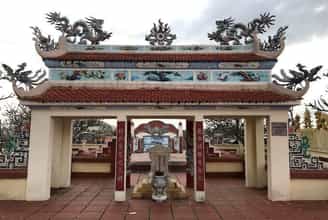
THE TOMB OF MR. ICH Khiem
Ong Ich Khiem's grave is located at Hoa Tho commune cemetery, Hoa Vang district, Da Nang city, 10km southwest of the city center. Mr. Ich Khiem, nicknamed Muc Chi, was born on December 21, 1829 in Phong Le Bac village, Hoa Tho commune, Hoa Vang district. He passed the bachelor's degree exam in the 7th year of Thieu Tri (1847) and became a mandarin under the reign of King Tu Duc. Famous for being intelligent, upright, and an assertive and strategic general, he was instrumental in leading troops to defend Da Nang when the French colonialists opened fire to attack and invade our country. Coming from a farming family, Mr. Ich Khiem soon showed his superior intelligence. After passing his bachelor's degree at the age of 15, he became a mandarin under the reign of King Tu Duc, held the position of Minor Phu Su, and was appointed Tri of Kim Thanh district, Hai Duong province. During his career as a mandarin, he achieved the highest title of Ta Thi lang of Infantry. With a straightforward, bold and somewhat hot-tempered personality, and born in a turbulent political era, Mr. Ich Khiem's career path encountered many storms and obstacles. He often confronted the tyrants and tyrants directly, and was forced to be dismissed from his position. At that time, he returned to his hometown to develop agriculture, buy and allocate land for people to farm, and instruct people to build roads, dig canals, and bring water for irrigation. In 1858, when the French colonialists attacked Da Nang and violated our country's sovereignty, the king called him to take up a new position, leading the army to pacify the country. Although he was originally a literary mandarin, the times made Mr. Ich Khiem become a martial mandarin. During his career as a general, he was dismissed many times, then made great achievements and was reinstated thanks to his undeniable military talent. However, in 1884, when he heard that King Tu Duc had passed away, he was imprisoned in Binh Thuan prison, the court was in chaos, and the scholar committed suicide at the age of 55. In early 1885, he was awarded the rank of Thi Doc. Up to now, Mr. Ich Khiem's talent, dignity and merit are still preserved in history books and are remembered and praised by people. Mr. Ich Khiem died on July 19, 1884 in Binh Thuan. His son, Ong Ich Thien, brought his body back to his hometown and buried it in Phong Le village. The tomb is built in an octagonal shape, with a length of 13.8m from the entrance gate; width 6.1m; The wall surrounding the tomb is 0.72m high. The tomb is 4.75m long; 3.5m wide; 0.35m high. In front of the tomb there is a stele house, inside is placed a 0.83m high marble stele; 0.54m wide decorated with dragons, phoenixes and flowers. Ong Ich Khiem's grave was recognized by the Ministry of Culture and Information (now the Ministry of Culture, Sports and Tourism) as a national monument on July 12, 2001. Source: Tourist Information Center
Da Nang
9053 view
Rating : National monument
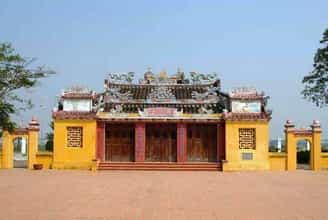
Dai Nam communal house
Dai Nam communal house (local people call it Nai Nam) is a typical cultural and historical relic of Da Nang city. For those who love discovering ancient cultural values, this is a destination not to be missed when coming to the "worth-living city". Dai Nam communal house - a communal house more than 100 years old, associated with many important historical stories and events of the nation. The communal house was built in 1905. In 1999, Dai Nam communal house in Da Nang was recognized as a national monument. The address of this relic is located in Hoa Cuong ward (now Hoa Cuong Bac ward), Hai Chau district, Da Nang city. In 1946, Nai Nam communal house was located in Hoa Binh village (in Nai Nam commune). At that time, Hoa Binh village was the residence of people from Hoa Son and Khue Trung. In 1949, Hoa Binh village merged into Da Nang city and was renamed the South area under this city (separated from Hoa Vang district). The South area includes Nai Nam, Hoa Binh, Khue Trung villages and part of Lien Tri commune. The communal house faces Southeast, built entirely of bricks, tiles and wood, with a roof covered with yin and yang tiles. The communal house has a large yard and surrounding walls. The communal house gate has four square pillars, each pillar is about 5m high. The two central pillars create the main entrance to the communal house, on the top of the pillars are molded two unicorns, the left and right pillars are attached to the wall, the top of the pillars is shaped like a lotus bud. On the middle pillars are pairs of parallel sentences made of porcelain. During the fierce resistance war against the French and the Americans, Dai Nam Communal House in Da Nang was one of the bases and locations of the revolution. The communal house became a base for secret operations. During the period 1960-1965, the communal house was a communication station, communicating in and out of the city. Many important historical events took place here such as the admission ceremony of Party members, the deployment of military and political forces at various times from 1850 - 1975. According to history, many heroes , soldiers lived, fought hard, and died at this location. Source: Da Nang website
Da Nang
8953 view
Rating : National monument
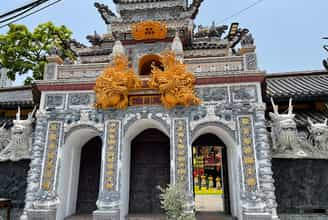
Long Thu pagoda stele relic (An Long pagoda)
The relic stele of Long Thu pagoda or An Long pagoda (Binh Hien ward, Hai Chau district) is a unique original artifact, with a unique form compared to all other types of stele at the same time in the Quang Nam-Da Nang region. is an extremely important document that contributes to the study of many historical and cultural issues of Da Nang. Long Thu Pagoda's stele is kept at Long Thu Pagoda (now An Long Pagoda - this name was changed after 1920), formerly in Nai Hien village, Tan Phuc district, Dien Ban district. The stele was made of gray sandstone in the 5th year of Thinh Duc, during the reign of King Le Than Tong (1657), compiled by Mr. Le Gia Phuoc, dharma name Phap Giam (from Hai Chau village, Dien Ban district). The size of the beer is gradually reduced from the bottom up, creating a round top that looks like an upside-down bell from afar. The height of the beer from the top to the bottom is 1.25m, 1.20m wide, 0.21m thick. The forehead of the stele has a title consisting of 6 large horizontal letters "Establishing the Stone Epitaph at Thu Long Pagoda", which according to the common translation is understood as "Establishing the stele on the stone at Thu Long Pagoda". The entire stele has 368 words (including 6 title words), including 360 small words in the middle of the stele, carved in 18 vertical rows from right to left. At both ends of the stele are 2 small "swastika" words. than. Both sides of the stele are decorated with garlands of flowers and leaves, and the top has a shape of the sun placed in a ring of fire. Currently, the stele has many faded letters that have to be reattached with cement mortar. Fortunately, the French Far East School made stamped copies and the Vietnam Han Nom Research Institute kept 3 stamped copies. This is the earliest dated stele, as well as the formation of Long Thu pagoda built by the Vietnamese community in Da Nang, this shows that the settlement was quite stable in the villages of Nai Hien and Hai Chau. very early. Regarding the construction of Long Thu Pagoda, the stele at the pagoda said: "All villagers agreed to build a new pagoda." Not only building the pagoda, the painting of statues and casting of bells were also carried out by the people at the same time. The epitaph clearly states: "The Hoi master, along with virtuous and religiously enthusiastic women and men, offered what they could. to decorate the main hall and create Buddha statues, at the same time cast a bell, build a bell tower...". The content of the epitaph shows that since ancient times, in the land of Nai Hien village, Tan Phuc district, Dien Ban district, Buddha often appeared to save many people. This place is a sacred land, believers come to pray for divine fulfillment. , see the image of a dragon's head (dragon head). Considering it to be a sacred gathering place, Nai Hien villagers and many local dignitaries, from Cai and his wife belonging to Association President Nguyen Van Chau, Cai and his wife joined Ty Tuong Than Lai Tran Huu Le, Lai Ty Tuong Than. Lai Tran Huu Ky, Commune Chief Pham Van Ngao and all the villagers agreed to build a new pagoda, on the land donated by Mr. Tran Huu Le. The association's owner, along with virtuous, religiously enthusiastic girls and boys, took care of arranging worship statues, casting bells, building a bell tower to hang bells and drums, and building a bell tower with a drum tower to serve as a place to worship Buddha. In addition to the above, many believers have spent money to buy more than three acres of fields in Cua Dinh and Gieng Vung areas to make offerings to the temple. The stele also lists a list of people who donated money and fields to the pagoda, headed by a Governor named Tran Van Huyen and his wife Nguyen Thi Van... The epitaph is an extremely important document that contributes to the study of many historical and cultural issues of Da Nang; Provides a lot of information to learn and confirm some issues about titles, place names, and local land situation. Besides, the layout, theme and decorative motifs on the stele are also criteria for accurate dating to be able to compare and research the art of the second half of the 17th century in Dang Trong. From those heritage values, in 1992, the Ministry of Culture and Information ranked the stele as a national monument. Recently, in November 2014, the People's Committee of Da Nang City submitted a document to the Ministry of Culture, Sports and Tourism requesting recognition as a national treasure for "Long Thu Pagoda Stele" along with 3 other Da Nang artifacts. Nang is the Heart of Fire, Nghia Trung stele is Phuoc Ninh and Pho Da Son stele is the Buddha. Source: Da Nang Electronic Newspaper
Da Nang
8918 view
Rating : National monument
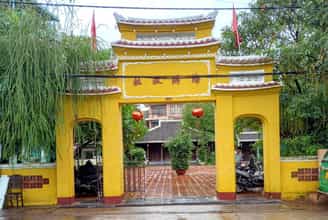
Hai Chau Communal House
Hai Chau communal house is considered one of the tourist destinations in Da Nang that is visited by many domestic and foreign tourists every year. Hai Chau communal house is considered the oldest communal house in the coastal city of Da Nang. This relic was officially recognized by the state in 2001. Hai Chau communal house was formerly known as Phuoc Hai pagoda. This is where Lord Nguyen Phuc Chu in the year of the Pig (1719) entered Quang Nam, stopped and stayed here. Hai Chau villagers then built an altar to King Nguyen Phuc Chu here. Hai Chau communal house is located right in the center of Da Nang city on the left bank of the Han River (alley 48 Phan Chau Trinh street, Hai Chau 1 ward, Hai Chau district). According to the genealogy of the Nguyen Van family, one of the 43 clans of Hai Chau village, the ancestors who pioneered and the later generations who cultivated Hai Chau village originated from Hai Chau village, Tinh Gia district, Thanh Hoa province. In the process of following King Le Thanh Tong to explore the land, they established Hai Chau village and settled in this land at the end of the 15th century. Records of the elders show that, in the 5th year of Gia Long (1804), Hai Chau village officials asked King Gia Long to build a communal house to worship the village's Thanh Hoang and the village's predecessors and successors on the land. Nghia Loi on the banks of the Han River. By 1858, the communal house was severely damaged due to the war of invasion by the French colonialists. Two years later, people rebuilt the communal house at the land that is now Da Nang University of Medical Technology and Pharmacy (99 Hung Vuong Street). In 1903, the French occupied the communal house and used it as a place to treat patients during the smallpox epidemic. A year later, the communal house was returned following the villagers' request. However, the people of Hai Chau thought that the village was seriously polluted, so they made a petition to King Thanh Thai asking for permission to rebuild the communal house at the current location (group 3, Hai Chau 1 ward, Hai Chau district). and exists to this day. Hai Chau communal house is one of the national historical and cultural relics in Da Nang, one of the Da Nang attractions that leaves many impressions in the hearts of tourists who come here. The main gate of this village communal house still retains the four words "Hai Chau Chinh Xa", written entirely in Chinese characters. Hai Chau communal house is an architectural complex, located in a campus of up to 3,500 square meters, including: Hai Chau communal house, Tien Hien church, Chu sect church and Ba temple. In front of the village communal house is a small lake with shady rockery and a sapling tree that is hundreds of years old. The church on the left is the church of the Nguyen Van family, the church on the right is a common church including 42 tablets of 42 clans, these 42 clans all come from Thanh Hoa, following King Le Thanh Tong to the South. from the year of the New Mao (1471). King Le Thanh Tong established Han Giang hamlet (now Da Nang) and those clans lived together to become Hai Chau village, which was ordained by the Nguyen Dynasty as "Chinh Commune". Inside the communal house, people keep many lacquered horizontal panels, parallel sentences, and gilded parallel tureens written entirely in Chinese characters and dating back hundreds of years. Among them, there are 9 horizontal panels and 2 pairs of opposing tureens made of wood, all beautifully carved and of high artistic value. On the bell tower of Hai Chau village communal house, there is a bell cast in bronze, on the body of the bell there are sentences and poems written in Chinese characters. These sentences and poems record the heroic historical milestones of the communal house. The general meaning of these words is as follows: In the 5th year of Minh Mang (1842), the pagoda was restored. In 1825, the king issued a decree for the pagoda, naming the pagoda "Phuoc Hai Pagoda", in the 13th year of Minh Mang (1832). ) On auspicious days, Hai Chau Chanh Dong commune created this bell. Source: Da Nang Electronic Newspaper
Da Nang
8403 view
Rating : National monument
Nearby tourist attractions
See all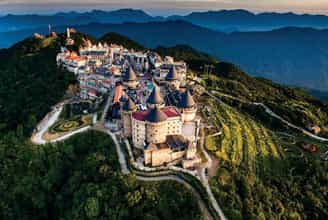
Ba Na Hill
Da Nang has transformed itself into an interesting tourist and resort destination, no longer the barren Central region as before. Explore and enjoy unique experiences at the tourist destination Da Nang - Ba Na Hills. The shopping area at the tourist destination Da Nang - Ba Na Hills has up to 20 souvenir shops, offering more than 2,000 diverse products. They are distributed throughout the tourist area, from the train station, wax statue display area, to Doumer restaurant and Fantasy Park... Here, you can easily find unique and meaningful souvenirs to give to your loved ones such as gemstone paintings, sand paintings, pebble paintings, embroidery paintings, lacquer paintings, scroll paintings, origami paper folding. , hand-painted dresses... In addition, you can also choose high-end gifts such as 3D statue carvings, cosmetic lines, high-end essential oils produced specifically for Ba Na... Especially at French Village, there is a shopping area with a full range of high-end goods from fashion, cosmetics, jewelry, and branded handbags. After experiencing Da Nang destinations at Fantasy Park or Love Flower Garden, visit the luxurious European cuisine area to enjoy unique delicacies. You can enjoy fast food and grilled food from famous restaurants such as Morin, Kavkaz, Buffet Club, La Crique&Café Postal, KavKaz Vista... Du Dôme Square is located atop the Medieval Castle in Fantasy Park, with creative architecture and panoramic views of Ba Na Mountain. Four tall columns and classic colors at this culinary square take you back to the Middle Ages. To fully experience the beauty of Ba Na overnight, you can stay at 3-star or 4-star hotels. These locations provide luxurious spaces, comfortable rooms and many good services. The 3-star Morin Hotel and the 4-star French Village offer distinct architecture but common luxury in a classic, elegant French style. The interior is meticulously decorated, with beautiful views and fireplaces in each room, ensuring coziness on cold winter nights. Shopping, enjoying cuisine and experiencing relaxation are three great experiences to explore the majestic beauty of Ba Na mountain.
Da Nang
7248 view
From January to December
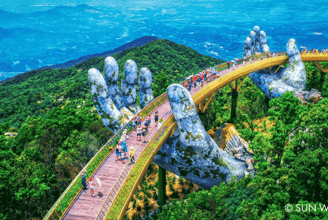
Golden Bridge
The Golden Bridge with the support of giant hands is being shared rapidly on social networking sites and travel communities, making many people surprised. Golden Bridge, a new project of Sun World Ba Na Hills. Construction started in July 2017 and was completed in April 2018. It recently went into operation and welcomed the first visitors to Da Nang. Possessing an extremely unique and novel design, unprecedented in Vietnam, the bridge was built at an altitude of more than 1,400 meters above sea level, with a total length of about 150 meters, with 8 bridge spans, the largest span being 21.2 meters. The bridge's surface is made of wood, 3 meters wide and 5 cm thick. Along both sides of the walkway are planted many Green Queen flowers, above is a railing made of gold-plated stainless steel. It can be seen that this bridge is designed and shaped to resemble the image of a woman using her hands to support a golden silk strip across. With its unique image, the Golden Bridge in Ba Na Hills has made many people surprised and admired the creativity of the designers and builders of this project. Not only can you admire the beauty of this unique project, coming here you will also be able to freely admire the majestic and breathtaking beauty of the surrounding mountains and forests. The feeling of walking above the floating clouds, admiring the beautiful scenery below will be an extremely wonderful experience for many visitors. Many beautiful photos have been taken by tourists coming here, many viewers thought this was some foreign tourist destination. But when they learned that it was the Golden Bridge on top of Ba Na, everyone was extremely surprised and excited and wanted to come immediately to admire this beautiful scene. It can be seen that Da Nang not only possesses amazing natural landscapes, but also works built from the human mind and hands are also presented in this city in an extremely unique way, in which it is impossible not to mention the Golden Bridge in Da Nang, a highly artistic work.
Da Nang
8534 view
March to August
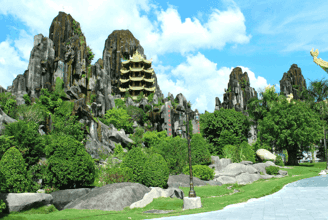
Ngu Hanh Son
Ngu Hanh Son Mountain - an impressive tourist destination in Da Nang, also known by the people here as Non Nuoc Mountain, is formed by a complex of five limestone mountains according to Metal - Wood - Water - Fire - Earth with many legendary stories that still resonate today. The name Non Nuoc mountain has been around for a long time and is included in local people's songs: "In the afternoon, clouds cover Son Tra, Thunder rumbles in Non Nuoc, the sky turns to rain". Visitors coming here will be amazed by the majestic and magical natural scenery that the Creator has bestowed on this place. Ngu Hanh Son is located on a vast, vast white sand beach near the coast stretching from Cat Tien Sa peninsula to Non Nuoc beach, in Hoa Khue village, Son Thuy hamlet, Hoa Vang district, now Hoa Hai ward, Ngu Hanh Son district, less than 8 km drive southeast from Da Nang city center. Ngu Hanh Son is famous throughout the country for the unique beauty of a sky, sea, and water with long-standing profound historical, cultural, and spiritual values. Walking on the mountains of Ngu Hanh Son, visitors can freely pick up beautiful marbles. The interesting thing here is that each mountain has a different color of stone, such as the stone in Kim Son is quiet blue, the stone in Tho Son is earthy brown, the stone in Moc Son is pure white, the stone in Thuy Son is pink and the stone in Hoa Son is bright red, each type of stone is a color corresponding to the five elements in feng shui of the Orient and perhaps its name. of those five mountains was also placed for that reason. Ngu Hanh Son is not only diverse in gemstones but also has many rare and valuable herbs such as: Thien Tue, Canh Thien, Moc Tinh, Truong Sinh Agar, Cung Nhan Thao, and Ly Ly. Coming to Ngu Hanh Son - one of the tourist destinations in Da Nang, visitors can also improve their knowledge about many rich animal species such as bats, sea swallows, gentle monkeys, etc. Walking slowly, breathing fresh, airy air and seeing many colorful wild flowers giving off fragrant scents, most of which are wild orchids, there is nothing more enjoyable. The land of Ngu Hanh Son is not only legendary, not only five elements, spiritual, not only a land of natural talent, spiritual land, but also a piece of history, associated with people and names that have entered the history books. Tourists will visit the grave of General Tran Quang Dieu's mother and the temple of Princess Ngoc Lan - King Minh Mang's younger sister, or visit the poetic autographs of the Le and Tran dynasties printed on cliffs covered with moss over the flow of time, all creating an eloquent testament to a legendary Marble Mountains, a land of spiritual masterpieces. Walking along the trails, tourists who are passionate about exploration will have the opportunity to visit the unique and amazing cave system, which is one of a kind beauty here. To explore and admire all the main caves of Ngu Hanh Son, visitors will have to invest 2 to 4 days with a tight schedule such as visiting Quan Am cave of Kim Son, Huyen Vi cave of Hoa Son or Am Phu, Linh Nha, Huyen Khong, Van Thong, Thien Long, Thien Phuoc Dia caves of Thuy Son, visitors will experience many different levels of emotions when going to those caves. According to many tourists, the most outstanding of all are Am Phu cave, Huyen Khong cave and Van Thong cave. Am Phu Cave of Kim Son Mountain with many legends that are both real and virtual, has long been spread everywhere, inherently all things always exist in two opposing directions: day must have night, when people are born, there must be death, if there is heaven, there must be hell because the cave has two corners to heaven and to the underworld. The cave was named that way during the reign of King Minh Mang in the early 19th century, when the king visited this mountain. The underworld is understood as the world of the dead, but according to Buddhism, death is not the end but a transition to reincarnation to another realm. Good and evil will be clearly defined in black and white. Huyen Khong Cave at a tourist destination in Da Nang is an open-air cave with a flat floor, a circular dome with 5 ventilation holes to the outside. On sunny days, the cave glows with natural light pouring in, creating a shimmering mysterious space. At the top, there is a statue of Shakyamuni Buddha, below is the altar of Ksitigarbha Bodhisattva, on the left is the altar of Lady Fairy, where business tourists come to pray for wealth and fortune. The temple of Lady Thuong Ngan is where most tourists come to pray for health and peace. Around the dome of the cave, there are many rocks clinging to the walls, creating strange shapes such as: the face of an old man, the image of a crane, an ostrich, the image of two elephant heads with trunks hanging down to the ground, the image of a stork with a long sharp beak pressed against the cave wall... Van Thong Cave is located in the heart of a circular mountain with a pipe slanting up towards the mountain. In the cave, there is a stone stele with the three ancient words "Ngu Uan Son" written on it. In the middle of the cave is a very large Buddha statue. Behind it is a road leading up to the cave. The deeper you go, the narrower it gets and towards the top of the mountain. Visitors must cling to the rocks to get up. At the end of the cave is a door to the outside about the size of a porch with a diameter of about 1 meter. From the top, light shines in, creating a brilliant and magical aura. When visitors stand at Vong Giang Dai on Thuy Son mountain, they can see far away and see the famous river that once entered the poetry of the Truong Giang River with its blue water, stretching endlessly. In addition to the beauty of mysterious caves, Ngu Hanh Son is also mentioned a lot for its pagodas leaning against the mountain. Although not too high, the space is very peaceful, quiet, and sacred. On Kim Son mountain there is a pagoda in Quan Am cave, on Hoa Son mountain there is Linh Son pagoda, on Tho Son mountain there is Long Hoa pagoda, Hue Quang pagoda, on Thuy Son mountain there is Tam Thai pagoda. Tam Thai Pagoda in Da Nang tourist destination is an ancient pagoda and Buddhist relic, the main hall worships a large bronze Maitreya Buddha sitting on a lotus, on both sides are statues of Quan Thanh and Bodhisattva. The pagoda is also a place where many pilgrims visit and pray to Buddha on holidays. Visiting the pagodas, standing quietly looking at the space with mountains and green trees, breathing the pure atmosphere at the pagoda door, visitors will feel their mind relax, a moment of silence lets their soul wander, harmonizing with heaven and earth, a rare thing in the bustling life of a noisy city.
Da Nang
7433 view
March to August
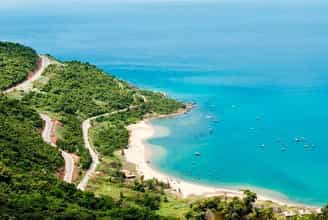
Son Tra Peninsula
Son Tra Peninsula has an area of about 4,439 hectares, with a tropical monsoon climate, average annual rainfall of 2,184mm, in the hot season the temperature is about 28-29 degrees Celsius, in winter the temperature is about 18-22 degrees Celsius. Son Tra Peninsula is a giant shield, the green lung of Da Nang city. Here is Tien Sa port, one of the three largest ports in Vietnam, a place for economic exchange, where many large international cruise ships welcome tourists to visit Da Nang. Coming to Tien Sa beach with fine sand and blue water of the sea is an eternal, serene beauty with ecological values voted by the world as one of the most beautiful beaches on the planet. From the top of Son Tra, visitors can admire the entire city of Da Nang in the shape of a bow, the Marble Mountains, Ba Na Mountain Chua and the majestic Hai Van Pass. Son Tra Peninsula is a diverse and rich nature reserve. Son Tra forests are almost in pristine form with unique flora and fauna. Here there are rare animals recognized by the world such as the red-shanked douc langur, red-faced chicken, etc. There are many stops to attract tourists such as Ban Co peak where there is an extremely interesting statue of a fairy sitting playing chess, Linh Ung Pagoda where the largest statue of Avalokiteśvara in Vietnam with a height of up to 67m, Thousand-year-old banyan tree... And right at the foot of the mountain, visitors can go to the poetic Da stream, or immerse themselves in the cool water of the sea, watching the clean and smooth sand beaches around the peninsula, the rocks piled up along the shore being eroded and wiped clean by the steady rising and falling tides. The whole area of But beach, Rang beach, Nam beach, Om beach, Bac beach... in addition to scuba diving services to see coral and cruises at sea, visitors can also visit and explore nature, have entertainment such as water motorbikes, parachutes, and participate in fishing festivals of coastal residents, which will certainly leave an unforgettable impression and satisfy tourists coming here. The appropriate time to travel to this place is from March to September. At this time the weather is sunny, dry, and there are rarely storms. If you go in the winter, there will often be fog, making it very difficult and unsafe to travel.
Da Nang
7105 view
From March – September
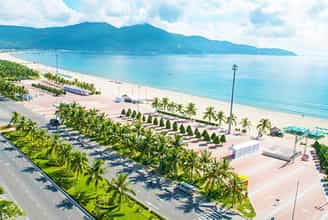
East Sea Park
With a convenient central location right near Pham Van Dong beach, My Khe beach - One of the most attractive beaches on the planet, East Sea Park is an attractive place to visit not only for people in the city. city but also for many tourists when traveling to Da Nang city with many interesting and vibrant activities taking place every day. The park is geographically located directly overlooking the East Sea and the Hoang Sa archipelago, so the city's people named the park East Sea as a way to express pride, patriotism and affirm democratic sovereignty. clan. In addition, the park is also known with many different names such as "Peace Park", "Love Park" or "Festival Park". Each name partly represents a unique characteristic of this tourist destination. One of the special things that attracts visitors to East Sea Park is the thousands of white pigeons fluttering in the sky. Coming here, you will admire the image of flocks of pigeons flying in the air and then swooping down gently next to the large yard next to the immense waves of My Khe beach, creating an extremely beautiful and peaceful image. right in the heart of the city. In addition, you can also feed them, harmonize and play with these friendly pigeons to "rediscover" the feelings of peace and relaxation in your soul. These will definitely be experiences you should not miss when coming to East Sea Park - Da Nang. Not only is it known as "Hoa Binh Park", people here also refer to East Sea Park as "love park" perhaps because the park's extremely romantic and poetic scenery has a magical attraction. with everyone. The rows of green coconut trees swaying in the wind on the clear blue seashore and the sparkling golden sand beach dyed in sunlight stretching to the smooth green grass, all seem to blend and create a poetic, autumnal natural space. attracts many couples to visit, go on dates as well as choose it as a wedding photography location, marking their hundred years of happiness. From here, visitors can also look out into the distance and admire the fishing boats and oil tankers operating peacefully on their homeland's waters or look to the Northeast, on the Son Tra peninsula is the statue. The tallest Avalokiteshvara Buddha in Vietnam. Furthermore, East Sea Park is also a place to organize many festivals, culinary festivals, cultural events, exhibitions and participate in teambuilding activities, game shows and exciting sports such as surfing, kayaking, parachuting. hovering in the air,... The park's public amenities are also gradually being equipped to serve visitors from everywhere.
Da Nang
8547 view
March to August
 AI Travelviet