
 vn
vn en
en ja
ja ko
ko zh
zh


Nga Nam Floating Market
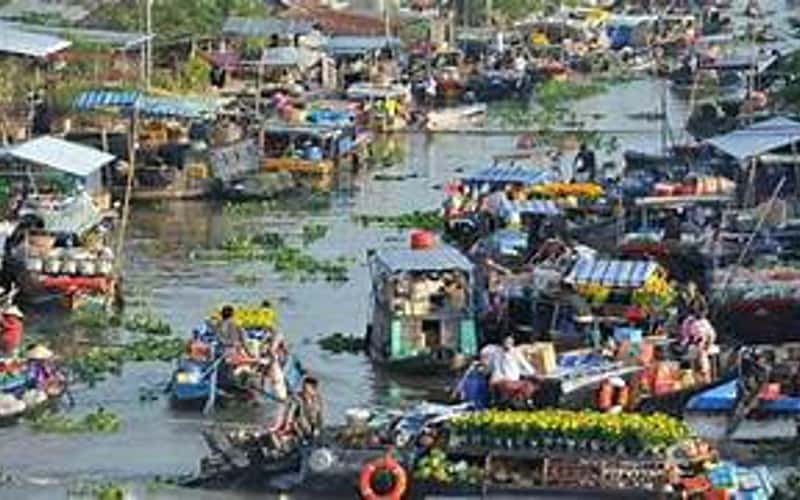
From Sóc Trăng City, embarking on a journey of just over 60 kilometers by road, you'll follow National Highway 1A until you reach Phú Lộc Town in Thạnh Trị District. From there, branch off onto National Highway 61B for another 24 kilometers, and you'll arrive at Ngã Năm Town. Ngã Năm is considered a pivotal administrative center within Sóc Trăng province's key economic region. It boasts a well-developed road network, including the Quản Lộ Phụng Hiệp route seamlessly connecting to National Highway 60. Beyond its roads, Ngã Năm is also a crucial waterway hub, connecting to neighboring provinces like Bạc Liêu, Cà Mau, and Hậu Giang. It's here that five river branches gracefully converge, creating the famous Ngã Năm Floating Market (Chợ Nổi). This bustling commercial hub offers a truly unique and picturesque riverine landscape. A glimpse of the vibrant Ngã Năm Market.
Nga Nam Floating Market – The Soulful and Most Bustling Riverine Trading Hub in Soc Trang
From Soc Trang City, travel over 60km by road along National Highway 1A to Phu Loc town (Thanh Tri district), then turn onto National Highway 61B and drive for another 24km to reach Nga Nam town. This is one of the administrative units within Soc Trang province's key economic zone, boasting a relatively synchronized transportation system, including Quan Lo Phung Hiep connecting to National Highway 60. Additionally, Nga Nam also features waterways connecting to nearby localities and regions such as Bac Lieu, Ca Mau, and Hau Giang, with five river branches converging to form the Nga Nam Floating Market – a bustling trade hub with charming and unique riverine scenery.
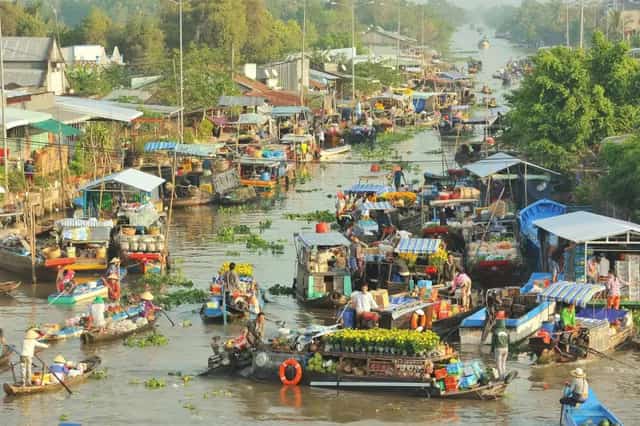
A corner of Nga Nam Floating Market
According to historical documents, the Nga Nam region was officially cleared and settled in the early 19th century as part of the Nguyen Dynasty's policy to reclaim land in the Mekong Delta. By the late 19th century, Nga Nam (now a town) was still largely covered in dense forests, primarily melaleuca trees and reeds, with a sparse population. French colonialists regarded this area as an exploration zone. As part of their Indochina exploitation plan from 1900 to 1924, the French colonialists dug several strategic large canals to develop new lands and facilitate administration and population control, including canals like Quan Lo Phung Hiep - Ca Mau, Ngan Dua - Cau Sap, Gia Rai - Pho Sinh, and Long My - Phu Loc.
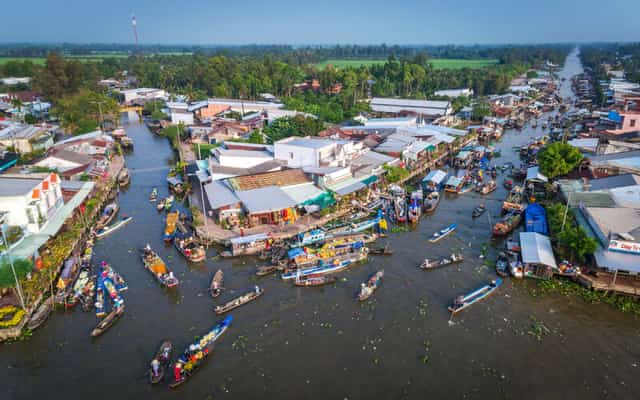
The name 'Nga Nam' originated when two canals (Xáng Canal and Quan Lo Phung Hiep Canal) intersected a natural river, creating river branches that flow in five directions. Nga Nam Floating Market is located at the confluence of these five waterways. The Nga Nam River flows into five branches: Nga Nam - Long My, Hau Giang province; Nga Nam - Phung Hiep, Hau Giang province; Nga Nam - Phuoc Long, Bac Lieu province; Nga Nam - Phu Loc, Soc Trang province; and Nga Nam - Vinh Quoi, Soc Trang province. Thus, the place name Nga Nam was formed.
To establish an administrative apparatus and exploit the people of this new land, in 1926, French colonialists separated the two tổng (districts) of Nhieu Phu and Thanh An, establishing Nga Nam District and Phu Loc District (the predecessor of today's Thanh Tri District). In 2003, Nga Nam District was established by separating from Thanh Tri District. By the end of May 2014, Nga Nam town was officially established, covering a natural area of over 24,000 hectares, with a total population of over 19,000 households and more than 80,000 people. To date, the town boasts two nationally ranked historical sites: Ba Chua Xu Temple in My Dong Hamlet and the Nga Nam Military Zone Victory Monument; and three provincially ranked historical sites: Minh Tien Holy See, Thanh Tri District Party Committee Base, and O Chum Pagoda.
Due to its advantageous location, people from Rach Gia, Soc Trang, Can Tho, Vinh Long, and My Tho flocked here to reclaim land and establish livelihoods. Locals from surrounding areas also converged here to exchange and trade goods, gradually forming the Nga Nam market.
It's called a floating market because all trading activities take place in a rather unique location: directly on the river! All buying, selling, and daily life primarily happen on boats. Both sellers and buyers use small boats (xuong) and larger boats (ghe) to move around and conduct transactions on the river. Large boats, small boats, five-plank boats, three-plank boats... load and unload goods continuously from the misty dawn until the market disperses as morning breaks.
Soc Trang province, and the Southwestern provinces in general, benefit from a tropical monsoon climate and fertile land nourished annually by the rich silt from the Mekong River. This creates ideal conditions for agricultural crops to flourish. The region boasts a diverse and abundant variety of plants, fruits, vegetables, and tubers, both in quantity and quality. Farmers often have surplus after harvest, and since these goods have a short shelf life, a need arose for small-scale farmers to trade and sell. They would typically transport their harvested produce and gather along a stretch of river to exchange and sell goods. Over time, this spontaneous habit evolved into a secondary profession during their leisure hours. Some even transitioned completely into trading, passing this livelihood down through generations.
Nga Nam Market is at its most vibrant and bustling from around 3-4 AM until 7-8 AM when the market begins to wind down. Smaller boats distributing goods head towards various canals and narrow waterways, while larger boats anchor elsewhere, waiting to fully unload before continuing their journey to more distant markets. Like many other markets along riverbanks, Nga Nam Market serves as a wholesale and retail hub, much like a general store where you can find almost anything. However, that refers to the Nga Nam market on land. On the river, the floating market primarily features seasonal agricultural products and fruits – 'what's in season is what you'll find.'
The traders at Nga Nam Floating Market often describe their business philosophy as “sell anything, buy anything.” During the early flood season, when the upper regions lack green vegetables, gourds, and pumpkins, boats converge on Nga Nam to stock up on goods for sale. During rambutan, mangosteen, plum, and longan seasons, these fruits pour in from the orchards to Nga Nam. Each trip must be worthwhile, so they carefully choose the size of their boat and plan their journey to ensure profitability, making the long trip rewarding.
Along the riverbank leading to Xeo Chich Canal towards Bac Lieu, there's still a clear passage between the river and the sparsely scattered houses on shore. It seems this area still preserves a glimpse of the “old Nga Nam market” with boats (ghe), small skiffs (xuong), and motorboats (vo lai) moored thickly along the banks. The "cay beo" (selling poles) hang laden with goods like cabbage, potatoes, tomatoes, cucumbers, onions, garlic, chili – all products that boats are selling. It's safe to say that Nga Nam Floating Market offers almost all the specialties of the Mekong Delta, from famous rice varieties of the "rice bowl" to fresh, delicious vegetables, tubers, and fruits from the orchards. And then there are shrimp, fish, crabs, frogs… precious gifts that nature generously bestows upon the lower Mekong region.
The market is most vibrant and bustling around 5 AM. The accents and conversations at this floating market still carry the distinctive charm of the old countryside, evoking a nostalgic feeling for travelers. The market is lively with the inviting calls of the boat-owners. Then there are mobile eateries: porridge stalls, bun nuoc leo (noodle soup), hu tieu (rice noodle soup), refreshing drinks…, ready to fully cater to visitors' needs. These scenes create the unique beauty of Nga Nam Floating Market, leaving a lasting impression on many who travel far.
One ingenious tool that effectively advertises and easily conveys information between sellers and buyers is the “cay beo” (selling pole). Even the elderly residents here don't know when the “cay beo” first appeared, but upon entering the floating market, these poles are the first thing traders look for. In the past, each boat specialized in a main product. Boats from Ca Mau sold mangrove charcoal, three-striped crabs (ba khia), fermented fish paste (mam), and mats; Soc Trang boats offered banh pia (pia cakes), sesame crackers (me lao), Chinese sausages (lap xuong), sticky rice, and plain rice; Hau Giang boats specialized in Cau Duc pineapples; and Kien Giang boats sold sweet potatoes.
However, it's not strictly necessary to hang a sample of every specialty product. For instance, no one hangs 'ba khia' (three-striped crabs) or fermented fish paste (mam) on a “cay beo,” as they are too small to be seen from a distance. For large fruits like jackfruit, coconuts, or pumpkins that cannot be hung, they are displayed at the front of the boat or piled high on the boat's roof. Traders paddle around the market, glancing left and right to find what they need. Customers standing on the riverbank also observe the “cay beo” to spot the items they wish to purchase. On the other hand, floating market residents also have things “hung but not for sale, and sold but not hung.” This is because their boats are also their daily living spaces, so they often dry clothes, which are not for sale. Secondly, some boats historically sold large jars (lu), pots (khap), and urns (kieu), but these were too big for sellers to hang. Another interesting detail: if a piece of coconut leaf is tied to a “cay beo,” it signifies that the owner intends to sell their boat.
The “cay beo” is typically made from aged tam vong bamboo, straightened, and about 4-5 meters long. Its pointed base allows for easy anchoring to stabilize the boat when docked, while the tip has holes for threading ropes to hang merchandise. Buyers simply need to stand a distance away, observe the “cay beo,” and find the type of goods they wish to purchase. Through generations, it seems no other form of advertising has replaced the “cay beo” at the floating market.
For the people of Nga Nam, visiting the floating market daily is a cherished habit. Many travel long distances by small boats (xuong) and larger boats (ghe) to the market, simply to enjoy a bowl of porridge, a bowl of bun nuoc leo (noodle soup), or to buy fruits, vegetables, and household items. Even though roads and bridges now lead to the market, locals still prefer paddling their boats to cruise the waterways, visit, and socialize with traders. The human connection at the floating market is evident in every gesture, in their simple, friendly words, and carefree laughter. Many residents here own homes on land but rarely abandon the floating market; their lives are inextricably linked to their boats (ghe, xuong) and their journeys.
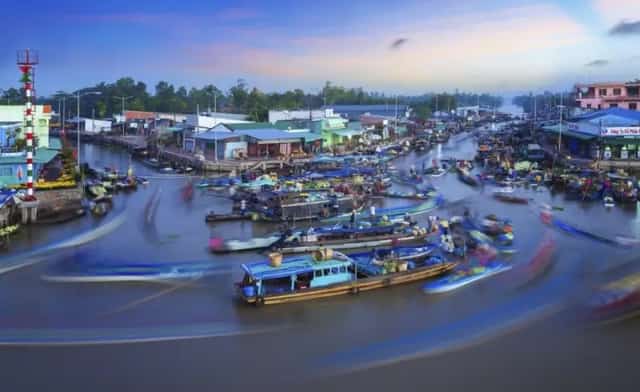
Nga Nam Floating Market today still retains the distinct soul of a Western Mekong Delta floating market, making it an ideal destination for tourists to explore and discover. The market is continually seeking investment and development from local authorities to foster trade and attract more tourists. The Department of Culture, Sports, and Tourism of Soc Trang province has invested in 10 boats for the town's Culture and Information Office to operate for tourists. The floating market has welcomed numerous domestic and international tourist groups seeking unique experiences. Many photographers have captured its essence, including a panoramic photo taken by photographer JetHuynh early in the morning, which was selected as an impressive image by RoughGuides – a renowned British travel magazine – in 2015.
Only by sitting in a small boat, paddled leisurely around the floating market by a local, can visitors truly appreciate the simple, rustic, and authentic beauty of this riverside town.
Can Tho 5578 view
Update day : 23/08/2023
Source : soctrang.gov.vn Affiliate links


Monuments close by
See all
Tam Vu Victory Relic
Tam Vu Victory Relic Area is located in Xeo Cao hamlet, Thanh Xuan commune, Chau Thanh A district, Hau Giang province. The glorious victories of the four ancient Tam Vu battles that took place on the Cai Tac - Rach Goi road section, less than 5km, were a brilliant highlight in the resistance war against the French colonial invaders of our army and people. After September 23, 1945, the Saigon - Gia Dinh army opened fire against the invading French colonialists, opening the Southern resistance war, then on October 30, 1945, the Can Tho army and people became heroic in their resistance against the French colonialists. recaptured Can Tho. After 90 days of siege and attrition, destroying the French army in Can Tho town, Le Binh's suicide squad disguised itself and gathered at the French command post in Cai Rang on the morning of November 12, 1945. Wounding many enemy soldiers, including the wounded officer of Rouen, terrified the French soldiers. With courage, the Republican Guard unit commanded by comrade Nguyen Dang on January 20, 1946, attacked the enemy's military convoy on Tam Vu Highway, destroyed 2 military vehicles, and killed a number of enemy soldiers. including Dessert, commander of the French expeditionary force in the West, one of five high-ranking French officers on the Indochina battlefield. We confiscated 10 guns, including 2 medium machine guns. The Battle of Tam Vu 1 had a very important meaning, this was the first victory of our armed unit against enemy motor vehicles, opening the door for the next battles on the Can Tho battlefield. Less than a year later, Can Tho's army and people continued to win the battle of Tam Vu 2, on November 12, 1946, commanded by comrade Ngo Hong Gioi, ambushing the enemy's military convoy on Tam Vu Highway. , destroyed 3 vehicles, killed 60 French and Le Duong soldiers, collected 60 guns of all kinds and many other military equipment and supplies. After the day of "National Resistance", implementing the directive "All People's Resistance" of the Party Central Committee's Standing Committee (December 19, 1946) and the call of beloved Uncle Ho (December 20, 1946). The all-people and comprehensive resistance war has developed strongly, Can Tho's army and people have achieved many victories, especially the activities of the "Party Assassin" teams, Rangers, and armed police to destroy enemies and evildoers. The storm in the inner city of Can Tho made people confused and afraid. At this time, the Tam Vu 3 battle took place on May 3, 1947, commanded by Minister Huynh Phan Ho, also on the old Tam Vu route. Our army and people destroyed 6 military vehicles, killed and injured nearly 200 French soldiers, and captured 8 machine guns, many guns and ammunition of all kinds, as well as military equipment and supplies. The Battle of Tam Vu 3 was a victory of heaven, earth, and people. When we returned to camp at Lang Ham to prepare for the Battle of Tam Vu 3, a squad of Khmer soldiers came in to cut down trees and were forced to destroy them. Our troops withdrew as a diversion, only 10 days later they returned to hide their troops, continuing to fight the Tam Vu 3 battle without being exposed, because the people protected the soldiers to defeat the enemy. Victory after victory, just one year later, the beautiful coordination of three types of troops (main force, local army and guerrilla militia) created a heroic miracle, continuing to win the battle of Tam Vu. 4, took place on the afternoon of April 19, 1948, under the command of Minister Tran Van Giau and Chief of Staff Vo Quang Anh, our army used the tactic of occupying and attacking, destroying 14 enemy military vehicles, killing Nearly 200 French soldiers, including one Quang Ba, collected many guns and ammunition, especially the 105mm cannon for the first time in the country, resounding throughout the Indochina battlefield. With the profound meaning and scale of victory of the 4 Tam Vu battles, the golden book of our nation's revolutionary tradition against invaders has become even more brilliant. Therefore, the Ministry of Culture and Information recognized the Tam Vu victory site as a national historical-cultural relic on January 25, 1991. Source: Hau Giang Province Electronic Information Portal
Can Tho
8332 view
Rating : National monument

Temple of the Lady of My Dong hamlet
My Dong Ba Chua Xu Temple is located in My Dong hamlet, My Quoi commune, Nga Nam town (Soc Trang). This place is associated with many important historical events of a heroic revolutionary land. Going back in history, My Dong hamlet, My Quoi commune was once a vast, empty land, crisscrossed with rivers and very deserted. At that time, My Dong Ba Chua Xu Temple was built on a foundation about 40cm high, with an area of 2,400m2. The temple is built of bricks, roofed with tiles, divided into 2 compartments, the first compartment worships Ba Chua Xu and her predecessors and descendants, the back compartment is used as a kitchen to prepare worshiping ceremonies. Before 1930, the uprising movement against the oppression and exploitation of the French colonialists and the henchmen of the American Quoi people continued but was not strong. In early 1930, comrade Quan Trong Hoang, a party member, returned to My Quoi village to organize propaganda and foster revolutionary theory for elite youth. From that human resource, in June 1930, the first Vietnamese Communist Party cell of Soc Trang province was established at My Quoi market with comrade Chau Van Phat as secretary. In a short period of time, comrade Chau Van Phat divided his thoughts, prayed for peace, was not steadfast in his stance, forgot his duties, and was disciplined. After that, the superior party organization nominated comrade Tran Van Bay as Secretary of the Party Cell and took My Dong Ba Chua Xu Temple as the location for cell cell activities. In the form of public activities such as organizing martial arts classes, teaching ancient music, teaching the national language... many secret training classes are continuously opened by the Party cell, secretly propagating the revolutionary line, recruiting many members. elite youth joined the Party, thereby promoting the growing development of the local revolutionary movement. After the uprising on November 23, 1940 throughout the provinces of Cochinchina, the French colonialists frantically launched large-scale raids to take revenge on the patriotic revolutionaries. The Temple of Ba Chua Xu in My Dong was also destroyed and leveled by them... It can be said that My Dong hamlet, My Quoi commune is not only the cradle of revolution, where the first Communist Party cell of Soc Trang province was established, but also the revolutionary base of agencies such as: District Party Committee and other organizations. Departments of Thanh Tri district, the Provincial Party Committee's Propaganda Department, the Department of Military Affairs, Communications, Kinh Tai, Civil Military Medicine, the Music and Dance troupe of Soc Trang province and a number of departments of the Bac Lieu Town Party Committee. During the resistance war, many times the French colonialists and then the American imperialists poured bombs and bullets to wipe out the revolutionary forces but still could not shake the iron spirit of the soldiers and people of this heroic countryside. The revolutionary base here was still maintained until April 30, 1975. According to the uncles at the Veterans Association of My Quoi commune, through the two resistance wars against the French colonialists and the American imperialists, many outstanding children of My Quoi's homeland were awarded and posthumously awarded the title of Hero of Strength by the State. People's Armed Forces, with more than 100 heroic Vietnamese Mothers. Through the rain of bombs and bullets during the war years, after the country was at peace, people in My Dong hamlet together rebuilt a temple made of bamboo, wood and thatched with leaves to worship and pray for their homeland. With favorable weather and wind, everyone has a peaceful and prosperous life. In 1997, the province invested funds to build a memorial stele where the first Vietnamese Communist Party cell of Soc Trang province was established. Every year, My Quoi people organize the Ba festival on the 16th day of the second lunar month. On November 27, 2003, Ba Chua Xu Temple in My Dong was ranked by the Ministry of Culture and Information as a National Historical-Cultural Monument. Source: Soc Trang Online Newspaper
Can Tho
8249 view
Rating : National monument

An Nam Communist Party Red Flag relic site
On the night of November 10, 1929, in a hut across the rice paddies of Co Do plantation (in Thoi Dong village, Thoi Bao canton, O Mon district, Can Tho province), comrade Ha Huy Giap - Member of the Executive Committee of the Special Committee for Security The Southern Communist Party of Hau Giang was assigned by the Special Committee to O Mon in coordination with comrade Nguyen Van Nhung and comrade Bay Nui to establish the An Nam Communist Party Cell, with comrade Ha Huy Giap as Secretary. The Annam Communist Party Cell of the Red Flag Party propagated and campaigned to raise revolutionary enlightenment for a large number of working farmers, guided the fight for their rights, and actively selected the masses to join party organizations. The Party cell quickly promoted the building and development of grassroots party organizations throughout the province to lead the revolutionary movement. The birth of this cell not only promoted the revolutionary movement in Can Tho but also had a strong impact on many localities in the region such as Dong Thap, An Giang... From the first Party cell, many other Party cells were established in the province... Mass organizations of the Party such as the Red Trade Union, the Red Agricultural Association, Youth, and Anti-Imperial Women were also organized in many places. , under the leadership of the party cells, gathered a large number of people and promoted the revolutionary struggle movement. To preserve and promote historical values, the city has invested in building a project to preserve, restore and promote the value of historical relics. Location of the establishment of the An Nam Communist Party Cell of the Red Flag Party with an area of nearly 40,000 square meters. The project was completed and put into use in 2019 right on the old plantation land, which is also the center of Co Do district today. The relic area is built in the style of an open park, with airy space, including items: monuments, reliefs, stele houses, squares, and lotus ponds. On October 31, 2013, the Ministry of Culture, Sports and Tourism decided to classify the location where the An Nam Communist Party Cell of the Red Flag was established as a national historical relic. Currently, the relic site is a place for sightseeing, studying, traditional activities, cultural and artistic activities, and sports for people of all walks of life and tourists from near and far. Source: Can Tho City People's Committee
Can Tho
8038 view
Rating : National monument

Can Tho Grand Examination
The Can Tho Grand Prison historical relic is currently located at No. 8, Ngo Gia Tu Street, Tan An Ward, Ninh Kieu District, Can Tho City. To serve the ruling apparatus in Can Tho, from 1876 to 1886, the French colonialists promoted the construction of many agencies and offices... including a prison named "Prison Provinciale". The prison was built on an area of 3,762 square meters, adjacent to the Governor's Palace, opposite the Administrative Building and separate from the residential area, people often call it Can Tho Grand Prison. When the Geneva Agreement was signed in 1954, the Saigon government changed the name of Can Tho province to Phong Dinh province, and the Can Tho Grand Prison was renamed the Correctional Center. But no matter what name it is called, Can Tho Grand Prison is essentially a hell on earth - a place where imperialist colonialists imprison and exile our revolutionary soldiers and patriotic compatriots. The Big Examination Gate has an arch shape, on the left of the gate is the office of the on-duty supervisor, on the right is the office and residence of the chief supervisor. The large prison is surrounded by a wall from 3.6m to 5m high, covered with pieces of bottles and barbed wire. At each corner of the wall is a 6m high watchtower with guards and floodlights at night to control prisoners. Inside the large prison, there are 21 collective cells and many solitary confinement cells. Between the prison rows is a large yard for prisoners to sunbathe. In this yard, the colonialists and imperialists also built pagodas and churches to show respect for the prisoners' beliefs and religion. Around 1963, two rows of buildings were built on the yard behind the temple, the ground floor had no walls - for a time it was used as a vocational guidance house for prisoners... The prescribed capacity in each collective cell is only about 30 to 40 people, but sometimes the number of prisoners reaches 70 to 80 people. Especially after the Southern Uprising, the enemy crazy used all tricks to terrorize and take revenge on our people. Many leaders, party members and the masses were imprisoned by the French colonialists at the Can Tho Grand Prison. In addition, the enemy also brought hundreds of people participating in the uprising and leading comrades in the provinces of Soc Trang, Bac Lieu, Ca Mau... here to detain and brutally torture them. Especially during the period when US imperialism used the "Law promulgated by the Republic of Vietnam regime on May 6, 1959 to terrorize and restrain our people, arresting all those suspected of being "Viet Cong", At this time, the number of prisoners in each room sometimes reached more than 100 people. Many prisoners could not endure the regime of imprisonment, torture, and harsh food and had to slowly die in this dark prison. The remaining people were infected with all kinds of diseases: scabies, malaria, typhoid, tuberculosis... For special political prisoners, the enemy was locked up in solitary confinement cells, tortured to the point of paralysis but still alive. loyalty to the Party and the people, keeping integrity until the last breath. Despite extreme torture, the Party comrades in prison still had Party Cells, Party Committees, study activities, and organized struggles with the enemy every hour and every minute, resolutely preserving revolutionary qualities. It is the indomitable fighting spirit and patriotism of political prisoners that has inspired and enlightened the revolution by many prison guards and guards, and they volunteered to be our internal base. Inform political prisoners of our situation and the enemy outside to take precautions or have strategies to fight the enemy in prison. The South was completely liberated, and Can Tho Grand Prison became a deeply engraved evidence of the indelible crimes of colonialism and imperialism. It is here that so many outstanding people from their hometown of Can Tho and neighboring provinces have fallen to contribute to writing the glorious and heroic history of the nation. On June 28, 1996, the Ministry of Culture and Information ranked Can Tho Grand Prison as a national historical relic. Source: Can Tho tourism information portal
Can Tho
7901 view
Rating : National monument

Pothisomron Temple
Pothi Somron Pagoda is an ancient Khmer pagoda located on the O Mon river, in Chau Van Liem ward, O Mon district, Can Tho city. The pagoda was recognized as a city-level historical and cultural relic in 2006. In the pagoda's grounds there are many trees, including a tree called Somron, so the pagoda was named Somron. Initially, in 1735, Pothi Somron Pagoda was only built with simple materials such as leaves and bamboo. By 1856, the pagoda was built with precious woods such as spokes, ca ca, Thao lao and covered with fish-scale tiles. 100 years later, the pagoda was degraded, Venerable Thach Khieng - Abbot of the pagoda from 1950 to 1988 went to Phnom Penh to request a new design from famous architects of Cambodia, on the basis of preserving traditional architecture. system. Construction on the new pagoda began in June 1950 and was completed in 1952. This architecture is kept until now. The pagoda has one side facing the gate of the Khmer Theravada Buddhist Academy, the other gate is close to the gently flowing O Mon River with a cool water wharf. The main hall is a prominent building in the architectural complex of Pothi Somron Pagoda, built in the East direction. Khmer people believe that although Buddha is in the Western world, he always looks towards the East to save sentient beings. The steps leading up to the main hall have a sophisticated Buddha statue meditating. On the wall are drawings depicting the life of Buddha presented very vividly. The images of the nymphs Kennâr and the god bird Krud are carved so high as to support the tile roof. The main hall's roof has three overlapping levels, with a dragon image running along the edge of the roof with its tail reaching straight up into the sky. The columns, fences, door frames, roof tops, and walls are all meticulously carved with geometric and water hyacinth patterns. Khmer pagodas all have core towers, but perhaps there are few pagodas that can preserve a more than 200-year-old tower like Pothi Somron Pagoda. The bone tower is right in front of the main hall, built of umbrellas, laterite, and bricks dating back to the 18th century. Inside this tower are the remains of many Buddhists and have been preserved for many generations. According to Venerable Dao Nhu, abbot of the pagoda since 1988, said: some Buddhists asked to rebuild and renew the outside of the tower, but the pagoda did not agree, because this is evidence of the pagoda's history and culture. nation's culture. The pagoda currently preserves many antiques. These are wooden swallow wings made in 1856 carved with images simulating stories about Shakyamuni Buddha, more than 100 sets of Satra sutras (leaf books), 17 wooden statues nearly 200 years old. The Buddha statue in the Center of the Main Hall was carved in 1885. During the two resistance wars against the French and the Americans, Pothi Somron Pagoda supported and sheltered many young people who escaped the military draft of the old regime. Many monks and monks of the pagoda, after returning from secular life, became party members and union members. Typical examples include Mr. Dao Sang, Chief of Police and Mr. Dao Ca, Chairman of the Dinh Mon Commune Resistance Committee in the years 1945 - 1948. For nearly three centuries of existence, the ancient temple is still dignified and pure, many monks have studied here, there are monks with high virtue and great merit, such as: Venerable Dao Nhu, practicing at Pothi Som Rom was 12 years old and became the abbot of the temple. Up to now, Venerable Dao Nhu is making great contributions to the sect and church as the new leader of the Khmer Theravada Buddhist Academy. Today, Pothi Somron Pagoda is the origin of many social and cultural activities launched by the Vietnam Fatherland Front Committee of Can Tho City, the Buddhist Association of Can Tho City and the Department of Culture, Sports and Tourism. Source: Western Travel
Can Tho
7835 view
Rating : City-level relics
Nearby tourist attractions
See all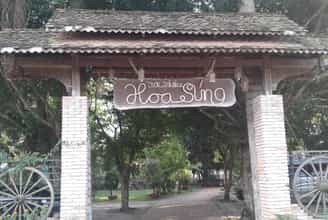
Water Lily Ecological Garden
Can Tho always attracts tourists with its rustic and simple beauty from nature to people. To fully explore this land of Tay Do, don't forget to visit the Hoa Water Ecological Garden. Hoa Sung Ecological Garden is located right on Highway 61B (the road connecting Can Tho - Vi Thanh), Ba Lang ward, Cai Rang district, only about 5km from Can Tho city center. The garden is more than 1 hectare in size, is a garden food court, serving Southern-style country dishes, along with recreational fishing and amateur music activities that will definitely bring relaxing moments. Great for visitors. When traveling to Can Tho, coming here, you can comfortably immerse yourself in the peaceful natural scenery of the Western garden. Water Lily Ecological Garden was built with a green, airy space, rows of coconut trees full of fruit silhouetted on the water surface, bunches of water lilies shimmering on the lake surface, lush jackfruit garden laden with fruit, a truly idyllic beauty. poetic. The path system in the Hoa Sung eco-garden is meticulously invested with old bricks and occasionally you will see the image of a cart wheel in a small corner of the garden that looks extremely rustic. In the eco-garden there is also There is a plank bridge next to the bridge for visitors to enjoy the breeze, as if evoking a peaceful childhood in a Southern village. Coming to Hoa Sung Ecological Garden, visitors not only feel the fresh, cool air of the orchard but can also relax by fishing for snakehead fish, giant fish... raised in the pond. After a moment of recreational fishing, guests can ask the gardener to process the "trophies" into their favorite dishes, then enjoy them under the thatched huts. Coming here, don't forget to enjoy delicious rustic country dishes such as: fried rice husk shrimp, grilled snails with pepper, eel with cilantro, grilled garden chicken with salt and chili, braised giant fish, braised snakehead fish, catfish. grilled, grilled snakeheads, boiled or stir-fried garden vegetables... One of the unique dishes that diners find hard to miss when coming to Hoa Sung is the fish sauce hotpot served with coconut vegetables, chopsticks or water lily. The attractive point of this fish sauce hotpot is that it uses fresh coconut water available in the garden to cook, thanks to which Hoa Sung fish sauce hotpot has a sweet taste, with a very unique aroma compared to other places. Most of Hoa Sung's typical dishes are made from fish raised in ponds, vegetables and fruits grown on site, ensuring "homegrown" criteria of freshness, quality, and hygiene. food production. To make the menu more diverse, in the floating season, Hoa Sung Ecological Garden also updates dishes made from specialties of ling fish, such as: crispy fried ling fish, braised or cooked sour...
Can Tho
6622 view
From January to December
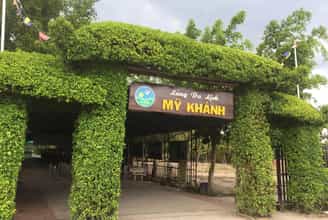
My Khanh tourist village
My Khanh Can Tho tourist area is located about 10km from the city center. The area of My Khanh tourist area is very spacious, up to more than 300,000 m2. This place opens up many unique spaces such as fruit gardens, ancient houses, fish ponds, canals and many interesting games. The route to My Khanh Can Tho tourist area is probably quite unfamiliar to many new visitors coming here for the first time. You can refer to the following transportation methods: By road: For tourists around the Can Tho city area, you can choose motorbikes, passenger cars, taxis... These means of transport are popular, convenient to travel and easy to control. Traveling by water: Traveling by cruise ship will definitely be a memorable experience. You can visit Cai Rang and Phong Dien floating markets, which are typical and interesting trading activities in Can Tho. If you are coming from a far away place, you should find places to stay to rest to complete your sightseeing and discovery journey. This will make your trip more meaningful by having a comfortable place to rest after hours of hard fun. The best time to visit My Khanh is from November to April next year. At that time, it was the dry season with beautiful golden sunshine, flowers and fruits were ripe with fruit gardens full of brightly colored fruits. This time is very suitable for sightseeing experiences or super beautiful scenery for you to enjoy super "virtual" check-in. The first thing to mention when introducing My Khanh Can Tho tourist area is the ancient Southern houses. The houses are all over 100 years old, built and presented according to the architectural style of ancient Southern people. Behind the ancient houses, My Khanh Can Tho tourist area also has a traditional craft village preserving the specialties of the Southern region. Visitors will be able to witness firsthand the steps of making rice paper, noodles or the process of making delicious wine. These will also be meaningful gifts for you to enjoy or buy as gifts for loved ones. Countless types of typical fruits of the West are available at My Khanh tourist garden, with all colors, each tree is laden with fruit. You will definitely be "dazzled" by the rows of mangoes, rambutans, jackfruits... planted along the path. Not only are they pleasing to the eye, you can also enjoy the delicious flavor of these fruits. What could be better than seeing and enjoying fruit right in the garden? My Khanh Can Tho tourist area is a space to enjoy Southern amateur music. These melodies are the traditional art of Cochinchina. In 2013, UNESCO recognized them as an intangible cultural heritage of humanity. Coming to My Khanh Can Tho eco-tourism area, tourists can also transform into landowners, "returning" to the ancient lifestyle with Ba Ba clothes, large houses and servants. The experience is also recreated very realistically when you travel by horse cart or wade through ditches to catch fish. My Khanh tourist village also surprises you with the bustling atmosphere of the racetracks. In particular, the grumpy piglets or cunning dogs are the main characters of the extremely thrilling and attractive contest. You can buy betting tickets for the "candidates" that you believe will reach the finish line the soonest. Besides, My Khanh Can Tho tourist area also has many attractive activities such as watching circus, fishing, watching 6D movies,... Tourists can witness impressive circus performances with their own eyes or bottle-feed the fish themselves. very interesting. It would be a pity to travel to My Khanh Can Tho and miss the culinary experience of the river region here. The dishes are all famous specialties of the Southwest river region. When coming to My Khanh Can Tho tourist area, don't forget to enjoy the specialties: grilled snakehead fish, fish sauce hotpot, noodle soup, braised perch, crab hotpot,...
Can Tho
7046 view
November to April

Lung Cot Lau eco-tourism area
Lung Cot Cau tourist area is one of the ideal eco-tourism destinations for those who love rivers and gardens. Lung Cot Cau tourist area is located in Nhon Nghia commune, Phong Dien District, only about 5km from Can Tho City Center towards Vi Thanh. With a rustic natural setting, imbued with the rivers and waters of the Southwest, cool air, surrounded by fruit trees along ponds and lakes, it attracts a large number of visitors. Lung Cot Cau Tourist Area is also identified as a cultural relic of the ancient Funan Kingdom. Coming to this eco-tourism area, in addition to visiting and enjoying dishes from garden fruits and specialty dishes of the southwest, visitors also have the opportunity to learn more about the ancient Oc Eo culture. The place name Bung Da Noi - Lung Cot Cau is a name that was formed not long ago, about 20 years or so from the coincidence of people digging ditches, planting beds, finding crabs, catching fish... in the valleys. Bau, natural ditches and discovered and picked up a number of pieces of porcelain, teapots, stone statues, and pieces of gold belonging to the Oc Eo culture. When in the 1990s, the Central Institute of Archeology sent a survey team to Nhon Thanh hamlet, Nhon Nghia commune, Phong Dien district to conduct exploration and excavation. Through the results of archeology and ancient documents and bibliographies, there is enough basis to confirm that, before the Chenla (Khmer), there was once an ethnic group with a South Asian Hindu civilization and culture. , lived, settled, and disappeared on the map of the Mekong River basin for quite a long time. Thanks to excavations, archaeologists have encountered many large wooden stakes in a number of ponds and ponds around the area, at a depth of 2 to 3 m under the layer of plant alluvium. In addition, they also discovered many green, rectangular shaped rocks that had been processed, "floating" in the pond of this relic. Along with relics made of ceramic, bronze, gold, and large fossilized animal bones, experts have confirmed that under the alluvial soil of Bung Da Noi - Lung Cot Cau over 1,500 years ago, there were Phu residents. Nam Co lived in a quite prosperous community. Why this kingdom fell to this day has no satisfactory explanation. From planting a garden and digging a fish pond, the host family decided to turn this place into a rustic, ecological tourist area associated with learning about history. In particular, when coming to the floating rock - Lung Cot Cau tourist area, in addition to visiting the orchard and enjoying Southern-style dishes, visitors can also experience becoming a true Western farmer. Digging ditches to catch fish, rowing canoes to pick vegetables, digging the ground to harvest cassava and dwarf tubers... Officially put into operation in 2015, Lung Cot Cau eco-tourism area has an area of more than 7 hectares, of which most are orchards such as durian and mangosteen (mainly) and the rest are other types such as Bon bon, mango, longan, rambutan, pineapple, orange, tangerine, avocado, guava, plum, banana, grapefruit, Ha Chau strawberry and vegetables... The rest is built an amusement park centered around a Large pond with fish, this is where visitors have a comfortable space to eat, drink and play together. Lung Cot Cau tourist area is open for free, only charging fees for food and some services. Coming here, you can participate in typical rustic games of the river region such as: walking on a bamboo bridge without handrails, canoe racing, tug of war, cycling on the monkey bridge... you should rent extremely comfortable Ba Ba clothes. roof to easily participate in fun activities. Among all the activities, duck catching and fish catching are vibrant games typical of Westerners that are loved and participated in by many tourists. You will be extremely excited to chase ducks in the field and scream when you catch them, wading into the ditch and splashing water to catch snakehead fish hiding in deep mud will be extremely interesting experiences. taste. With the obtained spoils such as perch, snakehead fish, etc., the restaurant will process them into attractive dishes: grilled fish, sour fish soup with a strong Southwestern flavor that everyone must love. Not only does it attract tourists by its charming and poetic scenery, this place also has a system of water houses and resorts with light, beautiful and airy architecture for visitors to rest and comfortably eat and drink. At the tourist area, they serve rustic dishes such as grilled snakehead fish, roasted pork, steamed chicken with dwarf roots (or leaves, crab leaves), crab hotpot, country fish sauce hotpot... Especially, there is Seasonal dishes such as: stir-fried durian flowers, mangosteen salad, rambutan salad, grapefruit salad or Sesbania seaweed shrimp... The dishes are affordable and have strong flavors of the western region. Lung Cot Cau Ecotourism Area is also a place to regularly organize cultural exchange programs, amateur music competitions and art programs to celebrate major holidays.
Can Tho
6951 view
From January to December
Bao Gia Trang Vien ecological garden
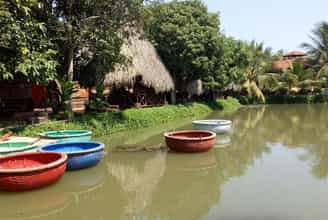
If you have the opportunity to travel to Can Tho, remember to visit Bao Gia Trang Dien ecological garden to immerse yourself in the green Western space and enjoy the fresh air. Participate in recreational activities of fishing, rowing basket boats... and enjoy Southern specialties. Bao Gia Trang Vien Ecological Garden is located at 268 Phu Quoi Area, Thuong Thanh Ward, Cai Rang District, only 7km from Can Tho city. With an area of about 20,000 square meters, Bao Gia Trang Vien ecological garden overwhelms visitors with its unique and ancient garden. In addition to beautiful bonsai trees, this place also has tall sala trees and many hundred-year-old star fruit trees. The space is airy and poetically beautiful with water lily ponds and swimming fish. The attraction at Bao Gia Trang Vien is that there are new adventure games, such as: basket boat swimming, mountain climbing, aerial games, off-road racing... Among them, slapping ditches and catching fish is a popular activity. most loved by tourists. It was fun when the whole group got covered in mud, becoming real Western farmers catching fish hidden under the mud. Not only can you play freely and have lots of laughter, but you can also enjoy rustic Western dishes from fish you catch yourself. You can rent a ba ba shirt and bandana when participating in this game and Bao Gia Trang Bien will equip you with traditional fishing equipment that is authentic to Westerners. In particular, there is a clean vegetable garden, a melon garden (Japanese Taki variety), and Gia Lai forest vegetables for visitors to harvest and prepare dishes. The spacious campus at Bao Gia Trang Vien is suitable for organizing picnics and team games. With many diverse activities: folding coconut leaves, five-fruit tray, learning to make folk cakes, making rice paintings, learning to sing amateur music... it will definitely leave unforgettable impressions in the hearts of visitors. Bao Gia Trang Vien Ecological Garden also has a lovely homestay area with a view of the romantic river, making it an ideal place to stay for tourists.
Can Tho
6415 view
From January to December
Xeo Nhum ecological garden
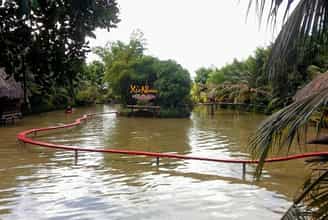
Currently, in Can Tho city there are many garden tourist destinations, including Xeo Nhum Ecological Garden which is a favorite place for many tourists. Because this place has healthy trees and sweet fruits, the space is quiet, suitable for visitors to relax and rest after stressful working days and noisy city life. Xeo Nhum Ecological Garden is located in Hong Loan residential area, Hung Thanh ward, Cai Rang district. Just leave Can Tho, run along Highway 1A toward Soc Trang for more than two kilometers to arrive. With an area of over 2 hectares, Xeo Nhum pleases visitors with its green space of gardens, fish ponds, gardens and beautiful flower fences. The highlight of creating the Xeo Nhum ecological garden is the shady perennial longan trees, next to the cool, romantic rows of green bamboo. The scene in the garden is very poetic, idyllic, rustic with trellises of gourds, luffa, bitter melon, water docks, nets, and rowing boats familiar in Southern villages. The food area around the fishing lake is designed in an airy, quiet space. Sitting here, visitors can enjoy Western-style dishes: steamed bamboo chicken with grapefruit, mangosteen bamboo chicken salad, grilled yellow catfish young luffa salad, seafood grapefruit salad, steamed snails with bottle gourd, and cooked mackerel fish. Acorns... All are "homegrown" of Xeo Nhum, bamboo chickens are raised in the garden, fish are raised in ponds, gourds and luffa are planted in the vegetable garden. At Xeo Nhum ecological garden, you can also experience growing vegetables like a farmer. If you like, you can rent land (each plot area is 10m2, cost about 100,000 VND per month) to grow vegetables, care for them and harvest them yourself. Staff at the garden will take care of the area when visitors are not present. During harvest time, visitors just need to come pick and bring the fruits home, or they can ask the chefs here to process them on the spot into delicious dishes. In addition to the service of growing their own vegetables, visitors can dig ditches to catch fish, go fishing, hook up, catch snails... Especially and the unique mark of Xeo Nhum is the colorful homestays. The rows of colorful and lovely homestays create a very beautiful background for those who like to live virtually.
Can Tho
6285 view
From January to December
 AI Travelviet