Relic point Vietnam
Việt Nam
Phon Xuong Fort
Phon Xuong Fort is located in the center of Cau Go town. Here De Tham and the uprising command stayed the longest, directing the strategic and tactical direction of the Yen The insurgent army. Phon Xuong Fort is 30 km west of Bac Giang province; From Bac Giang city, follow National Highway 1A (old) through Thuong River bridge, turn right along Provincial Road 398, Bac Giang-Cau Go route. Phon Xuong Fort, also known as Don Go, Don Cu, is located on the south side of a nearly 20m high hill, nearly 800m south of Go stream. Now this hill is called Phon Xuong hill or Ba Ba hill in Cau Go town. This is a large-scale base with a different structure from Ho Chuoi post and other posts. The fort has an almost rectangular architectural plan running along the North-South direction, with an area of about more than an acre of Northern Vietnam including two citadels. The outer citadel starts from the eastern hillside and runs around the foothill to the northern hilltop, forming an arc that protects the inner citadel, 140m long, 0.80m thick and 4m high. The inner city walls are located on top of a roughly rectangular hill. The inner wall on the east side is 71m long, the north side is 85m long. The wall is made of rammed earth, 2m thick at the base, 3m high and 1m wide on the surface. Inside the wall, there are 3 different levels that can be shot standing or kneeling. There are battlements all around the wall. The outer wall slopes gently like a roof. Phon Xuong Fort has 3 gates: The main gate faces East and two side gates are in the South and North. The two side gates open to the surrounding forests. In particular, the northern gate connects to the forest of the remaining half of the hill. The two 1.50m wide side gates are no longer intact, the main gate is 15m from the north wall, 2m wide with 4 steps up and down. Inside the main gate, there is a guard station located on the northern side of the wall in a square shape of 2m on each side. Inside the main door there are two layers of protective earth walls and many battlements. The gates all have two doors, the outside gate and the inside gate, and are all made of ironwood. The outermost position of the station is the guard posts, followed by the auxiliary posts, the trench system and then the surrounding citadel. The distance between the two rings is 20m at its widest and 10m at its narrowest. Within the citadel is a large space including a system of houses, guest houses, warehouses... all are thatched houses with mud walls mixed with straw. Except for the square house that receives guests, it is built of bricks. From the north to the south of the citadel, respectively, are the houses of Hoang Hoa Tham and Ba Ba, the house has 5 rooms running west and east. The second house is square with four sides left empty and is used as a meeting place for Hoang Hoa Tham with generals and to receive guests. The next house consists of two rows located close to the West and East sides of the citadel, and is the residence of the insurgent army. Next, there are 8 kitchens and stables located close to the southern edge of the citadel running east-west, followed by a light pole and flag pole. The architecture of Phon Xuong Fort is a special architectural style. Not only does it meet the requirements of being a stronghold, it also flexibly handles combat mobility and meets the requirements of being a command post, a place for insurgent transactions. Over time, the rampart system and residential buildings in the citadel built with rammed earth are also easily eroded. Now the residential buildings in the citadel no longer exist, and the citadel walls are no longer intact as before. Particularly, the eastern part of the wall still retains many old architectural features. There are quite clear bullet holes in the citadel wall. In the citadel, a Ba Ba temple is currently built. Every year, on March 16 of the solar calendar, Yen The festival takes place on this relic complex. Around the late 80s of the twentieth century, Mr. Hoang Hoa Tham's daughter, Mrs. Hoang Thi The, came here and when she died, she was buried here, on the tombstone there was only the simple words: "Mrs. Hoang Thi The, born in 1901, died December 9, 1988". It can be said that Phon Xuong was the capital of the uprising, the starting place to expand the movement to localities. Here the insurgents fought bravely against a large-scale attack by the French colonialists led by Colonel Vat-tay on January 29, 1909. With those historical and cultural values, Phon Xuong Fort is one of 23 relics ranked as Special National Monuments in Decision No. 548/QD-TTg dated May 10, 2012 of the Prime Minister. . SOURCE: BAC GIANG PROVINCE ELECTRONIC INFORMATION PORTAL
Bac Ninh
4578 view
Rating : Special national monument
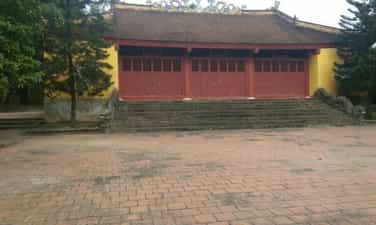
Dinh Vong
When talking about Song Van, we must mention the Vong communal house relic area with the typical traditional folk festival of Tan Yen land. Vong communal house relic area includes a complex of ancient relics with all types, such as Vong communal house, Vong pagoda, Vong temple, Vong Nghe, Vong fountain and Rainbow bridge. On January 15, the Dinh Vong Festival takes place again. The following is an introduction to this relic and the annual traditional festival. Song Van is an ancient land that has left a resounding mark in the history of the nation's struggle. Ancient Vong communal house belonged to Van Cau commune, Van Cau district, Yen The district. Today, this relic is located on the land of Ngo village, Song Van commune, Tan Yen district. According to documents still recorded in the locality, the ancient Rainbow Bridge was classified as a beautiful bridge, a two-span bridge curved like a rainbow, the whole thing was made of ironwood, the architecture was in the style of "The Upper House, the Lower House" above. has a roof and is painted all red. The bridge was built during the Mac Dynasty in the 16th century but it was destroyed, leaving only 2 bridge abutments and the ancient people went down in history with the proverb "Yen The Rainbow Boy". It is like a common symbol for the whole Yen The Ha region, famous for its bravery and martial arts. The ancient Vong Communal House had a large scale, sophisticated sculptural architecture, and was located on a high, open area of land near the Vong River and the Rainbow Bridge. The communal house consists of 5 compartments built entirely of ironwood with two rows of tall columns. The wooden structures such as stripes, beams and more are all carved and carved with many rich floral themes. On the edge of the communal house's roof are a pair of dragons flanking the moon, the four corners are covered with four carved dragons, and at the end of the corner are four curved blades, making the structure both superficial and less rough. The communal house turns to face the South, behind is the Rainbow forest with many ancient trees. Previously this area was a primeval forest. In front of the communal house is a meandering Rainbow River, with water flowing all year round. According to feng shui laws, the communal house is located on a beautiful land, where the spiritual energy of heaven and earth, rivers and mountains converge. Vong Pagoda was built in the same direction as Vong Communal House, with a public-style architecture including a front hall with 5 compartments, 2 wings, and 4 curved roofs. Burning incense in 4 compartments connected to the Buddha hall, 3 compartments, 2 wings and 4 curved roofs. Vong Pagoda is built behind Vong communal house, creating the layout "First God, then Buddha". The pagoda was built during the Le Dynasty and was built itself during the Nguyen Dynasty. In front of Vong Pagoda, there are stone incense trees and ancient trees that are as old as the time when Vong Pagoda was established, creating a solemn and ancient scene. Vong Temple also overlooks the Vong stream and the Rainbow Bridge consists of 1 compartment, 2 wings and 4 curved roofs. Inside the temple there is an altar, a throne, tablets and other offerings. Nghe Vong today only has a small harem with 2 rooms adjacent to Ngo and Rainbow bridge. The profession was set up by the people to worship 18 dukes of the Duong family - those who had many contributions to the people and the country were worshiped at Vong communal house. Vong communal house festival is a festival with a long tradition. This place also preserves many unique folk cultural features. The center of the ancient festival was held at the Vong communal house relic area on a large scale, the main forces being the 4 communes of Song Van, Viet Ngoc, Ngoc Van, Lam Cot. In the past, Vong communal house festival was held on the 15th of the first lunar month and the 9th, 10th, and 11th days of the 9th lunar month. During the festival, people organize sacrifices, procession of books, competitions, and folk games. The procession in the Vong communal house took place with solemn ceremony. On the 15th, a procession of 17 religious rituals is organized from the funeral home in Van Cau village to the communal house. At the head of the procession is a person playing a general. This person must be carefully selected each year. When the procession arrives at the communal house, a solemn ceremony is held. In the old Vong communal house, there was a very solemn horse sacrifice custom, many games, many folk sports competitions rich in martial arts such as: Martial arts dancing, wrestling, horse racing, archery, crossbow shooting, shooting and many more. folk games of cockfighting, kite flying competition, rice blowing competition, word running... The Vong communal house festival is held solemnly and happily for three or four days and nights. At the Vong communal house, in addition to performing tricks, there are also singing competitions between regional troupes and other places that come to perform, making the festival atmosphere even more attractive. Vong Communal House Festival also contributes significantly to educating today's descendants to preserve the noble principle of "drinking water, remember the source" left by our ancestors. SOURCE: TAN YEN DISTRICT ELECTRONIC INFORMATION PORTAL
Bac Ninh
4424 view
Rating : National monument

Me So Pagoda.
Me So Pagoda is located in Me So village, Me So commune, Van Giang district, Hung Yen province. The pagoda belongs to the Northern sect. Me So Pagoda is located next to the Red River dyke, in the middle of a rich countryside that has long been famous for its thousand-eyed, thousand-armed Quan Am statue. The pagoda was built in the Later Le Dynasty and has been repaired many times. The remaining vestiges were mainly restored at the end of the 19th century. Only the thousand-eyed, thousand-armed Guan Yin statue remains relatively intact. Guan Yin or Avalokiteśvara means to hear the cries of suffering of living beings in life to save them. Guanyin can manifest into thousands of different forms to adapt to every situation to save every case of suffering. With boundless magical power and power, and absolute wisdom with thousands of hands and eyes, he saved all. The statue was created in a meditating position and is quite large in size. From the crown to the seat is 1.4m high, the pedestal is 0.53m high, the lotus flower is 0.23m high, with an elegant, pure face and slim body, creating a beautiful statue in both content and form. show. The statue has two main pairs of hands, the first pair clasped in front of the chest, bearing the "standard de" seal, the other pair of hands raised above to support the lotus stems and small Buddha statue. The large hands are more or less soft and flexible, the arms are round, the bare soles are clasped at the sides in different high and low positions. The opening of the arms is high enough without obscuring the statue. Right behind the big arm is a system of small arms with hundreds of arms and eyes formed into 10 layers growing in symmetrical pairs. These ten layers of hands and eyes are divided into 3 large parts, creating the feeling of a halo radiating from the statue's head. Above the statue's head, the halo is embossed with a cloud shape with small arms intertwined like bird wings in a flying position. This bird avoids the "ungainly" halo of the image, arousing the viewer's curiosity about Buddhism. The small hands of the statue are shown with long, slender arms, the eyes are placed in the palm of the hand to form the nectar seal, these arms vary in length according to the degree of opening gradually taking the statue's head as the center, making them as having a combined function to form an aura... Together with the lotus base and pedestal, all create a complete statue with meticulously skilled lines. The contemporary concept of beauty has been conveyed by artists into the statue with elegant, benevolent lines for the face and figure. This is one of the wooden statues that represent Vietnamese fine arts of the late 18th and early 19th centuries. The thousand-eyed, thousand-armed Guan Yin statue at Me So Pagoda is the pride of Vietnamese statue sculpture, bringing many creative features while still reflecting the compassionate spirit of Buddhism and the soul of Vietnam. Me So Pagoda was ranked as a national architectural and artistic relic by the Ministry of Culture and Information on November 16, 1988. Source Electronic information portal of Van Giang district, Hung Yen province.
Hung Yen
3573 view
Rating : National monument.
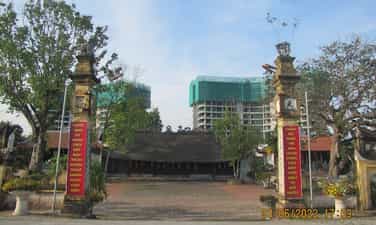
Dinh Dau and Ngo Temple
Ngo Temple worships Hai Ba Trung, the first Vietnamese woman to raise the flag of insurrection to drive invaders out of the country and regain independence for the country. The temple was built by our ancestors right at the beginning of the village in a spacious campus, open to all four winds, with a harmonious, solemn and magnificent landscape. The front of the temple has a semicircular lotus pond, printed with a large screen with scroll shapes shaped like flags, swords, dragons, cups, and phoenixes. In front of the temple gate are two large, tall square pillars engraved with two lines of parallel sentences: - Phong District's veteran veteran is majestic and clear in the North. - The incense garden preserves the eternal relics of Tran Nam Bang. The idea is: (The victory of the Chau Phong insurgent army resounded to heaven and earth The fragrance of the two ladies is famous forever.) Next are two floors of statues, in which are carved images of a pair of war elephants - Two Ladies riding elephants into battle. Inside the Temple, there are horizontal panels, couplets, tablets, sacrificial objects... all painted in red and gilded, overwhelming the colors. The harem has two ancient altar thrones and statues of the Two Kings and Ladies sitting in the large coffin. The statue is about one meter high, with exquisite and unique sculpted lines. With a forward posture, the statue's two arms are raised to eye level, a sign of the word Trang Khoat, seducing the three armies, holding the mountains and rivers firmly. The statue of the Two Ladies is resplendent in pink attire, radiating a halo of shimmering candle lights. Ngo Temple still retains 18 ordinations passed through dynasties since the reign of Le Canh Hung. Those are extremely valuable documents. In August 1945, Ngo Temple was the place where a large rally took place after the Van Giang district government was seized, declaring the end of the old regime and the new government returning to the people. Many years have passed, after many restorations and embellishments, Ngo temple still retains its ancient appearance. In 1989, the Ministry of Culture recognized Ngo Temple as a national historical-cultural relic, protected by the State. The historical site of Ngo Temple is forever associated with the historical sites of Dong Chau, Gieng Da, and Bai Yen. Those places marked great feats of a historical period, recognizing the efforts of the Phung Cong people who followed the Hai Ba Trung uprising. Dinh Dau was built at the same time as Ngo Temple and worshiped Hai Ba Trung - National Heroes. Dinh Dau is big, beautiful, windy, rural, ancient, mossy, filled with colors over the years. The gate of the communal house is hung with hanging lanterns and two rows of parallel sentences reminding posterity to cherish order. The pavilion curves upward toward the three mountains in the style of four sacred animals adoring the moon, covering the pre-ceremony and harem areas. The middle of the ceremony area is filled with incense burners, has a crane top, an incense burner... Above is hung a gilded hammock door. Four large horizontal panels spread across the pavilion, bearing 4 lines of text: Thanh Vuong Palace Eternal heroic spirit Thang Long determines the peak Righteousness and light All have summarized the sacred and respectful appearance of the communal house. On both sides of the ceremony area are two majestic and solemn rows of Eight Treasures and golden swords. The harem has statues of the Two Kings carved from precious stones following the national model at Dong Nhan temple - Hanoi. Around the communal house, there are many ancient trees that are hundreds of years old, providing shade and the quiet communal house marks the mark of time. In the early years of peace and the years of resistance against America, Dau Communal House was the venue for many commune-level Party Congresses and many important conferences of Van Giang district. In 1970, also at Dinh Dau, the Ministry of Health of the Democratic Republic of Vietnam organized a conference of medical leaders in the entire North, chaired by Minister Pham Ngoc Thach, to decide on major medical policies during the period. period of building socialism and fighting against America to save the country. Dinh Dau had 18 conferments throughout the dynasties and also began in the Le Dynasty. In 1989, the Ministry of Culture issued a ranking certificate recognizing Dau communal house as a national historical and cultural relic. Source Electronic information portal of Van Giang district, Hung Yen province.
Hung Yen
3469 view
Rating : National monument.
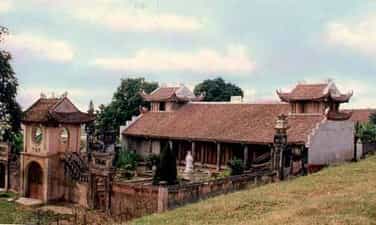
Phu Thi Pagoda (Hung Phuc Tu)
Phu Thi Pagoda is located on a large campus, outside and close to the foot of the Red River dyke, in Me So commune, Van Giang district, Hung Yen province. The pagoda was built in the style of the character "Dinh" (丁), the door faces southwest and has the Chinese name Hung Phuc Tu. The pagoda was built during the Later Le period and followed the Northern sect. The pagoda has been restored many times and the most recent time was in 1991. When entering the pagoda, visitors will first go through the three gates - the gate outside the pagoda. From the outside, the three-entrance gate looks like three separate structures with three doors. The middle door is tall, built on two floors, and has a square floor plan. The upper and lower floors are equal. On the roof of the second floor is a tiled roof with four blades radiating out in four directions. On the left and right sides are two small symmetrical doors. Right behind these two small doors are steps leading to the second floor of the middle door. Passing through the three gates is the front hall (Upper Palace). Looking from the outside, the front street is built in a matchmaking style with two bell towers and drums on the roof top. The temple bell (Dai Hong Chung) was cast during the reign of King Minh Mang. Inside, visitors will see the front hall consisting of five rooms with large and airy space. Four rows of lim columns are regularly distributed in the middle of the front hall. On the central crossbeam of the front hall is a hammock embossed with the image of two dragons flanking a moon and painted with gilded vermilion. Adjacent to the inner wall are 6 statues: the statue of Khuyen Thien, the statue of Trung Evil, the statue of two holy monks, and the statue of two attendants. These statues add to the majesty of the front hall. Besides, the pagoda has many ancient statues made of wood or painted terracotta, such as Chuan De statue, Ksitigarbha statue (1.08m high); set of statues of Thap Dien Minh Vuong (0.90m high), statue of Anathapindika (1.07m high). The pagoda has been recognized by the Ministry of Culture and Information as a national historical and cultural relic. According to Decision No. 14 dated April 4, 1984. Source Electronic information portal of Van Giang district, Hung Yen province.
Hung Yen
3590 view
Rating : National monument.

Memorial area of famous person Hoang Hoa Tham
Trung village, located in Ngoc Chau commune, Tan Yen district, is an ancient village associated with many memories of the hero Hoang Hoa Tham from childhood to adulthood. This place, in the past, used to be the place where Hoang Hoa Tham fought and played hide and seek, now it is a place to worship and commemorate him - a person who has made great contributions to his hometown of Bac Giang and the country of Vietnam. Whenever talking about Trung village, people often mention the memorial relic of famous person Hoang Hoa Tham. The relic site is about 20km northwest of Bac Giang city. This is a relic complex that includes works such as: communal houses, temples, pagodas, inns, residences and tombs of Hoang Hoa Tham's relatives. According to oral tradition of local elders: Dinh Trung was originally built by Mr. Hoang Hoa Tham in Tan Chau (Trung Ngoai). After that, Mr. Thong Luan moved the communal house to Trung Trong, adjacent to the front of Trung Pagoda. The ancient communal house consisted of a three-room vestibule connected to a one-room harem, forming a nail-shaped layout (J). In the past, Dinh Trung had two religious sects conferred on the village's Tutelary Gods by the Nguyen kings, Cao Son and Quy Minh Dai Vuong. After Hoang Hoa Tham passed away, to show respect and respect for the national hero, local people worshiped him in the communal house along with the village Tutelary God. Through time and war, Trung Communal House was seriously degraded and damaged. Now only the foundation in front of Trung Pagoda remains. After Hoang Hoa Tham was murdered, to show gratitude and respect to the talented general, the people of Trung village built a temple as a memorial place, near the relics of communal houses and pagodas of Trung village. . Since its construction until now, the temple has been regularly cared for by people, repaired, purchased worship objects, sculpted statues of De Tham... to pass down to posterity. Hoang Hoa Tham Temple is currently in front of the communal house relic area, Trung Pagoda, looking to the Southeast. Hoang Hoa Tham Temple consists of three compartments in a rectangular layout. Inside the central space is a 150cm high bronze statue of Hoang Hoa Tham, and on the left wall hangs a picture of Mr. De Tham's family and his children at Phon Xuong station. According to historical sources: Hoang Hoa Tham is also known as De Tham. His father is Truong Van Than, originally from Di Che village, Di Che commune, Tien Lu district, Hung Yen province. He was born into a Confucian family with a martial and patriotic tradition. Both father and mother participated in the uprising against the Nguyen dynasty and were murdered by the Nguyen dynasty. At this time, he changed his family name to Doan and Nghia and was raised by his uncle to escape the court's pursuit and changed his name to Thien. Hanging around in the Son Tay area, afraid that he wouldn't be able to escape, he carried his nephew and ran to Trung village, Ngoc Chau commune, Yen The district. Once again, he changed his family name to Hoang and named himself Quat, and his grandchild's name was Tham. Since then, Trung villagers still think they are father and son, but no one knows they are uncle and nephew. Because his family was poor, Mr. Quat had to let him be adopted by Mr. Ly's family in the village, while he worked as an embroiderer to make a living. However, from his youth until adulthood, Hoang Hoa Tham was closely associated with memories of Trung village and Yen The region. Born in a context where the country was invaded by foreign invaders, living in a locality where many leaders rose up to fight against the invaders and guarded dangerous places, they greatly influenced Hoang Hoa Tham's life. That's why people in the Yen The area still remember and tell quite clearly every story about Hoang Hoa Tham's childhood and adulthood. SOURCE: ELECTRONIC INFORMATION PORTAL DEPARTMENT OF CULTURE - SPORTS - TOURISM OF BAC GIANG PROVINCE
Bac Ninh
4681 view
Rating : National monument
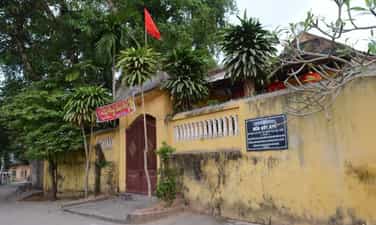
Goc Khe Temple
In the system of special national relics of Tan Yen district, Goc Khe Temple is one of the typical relics. The relic is located near Nha Nam intersection, behind is Phu Doi, which is closely related to the Yen The uprising. This relic appeared late, around the early years of the twentieth century. When it was first built, the temple had a moderate scale, including 3 pre-worship spaces and 2 back palace spaces, and the architectural structures were made of strong Tetra wood. Over time, due to the devastation of natural disasters and wars, the temple degraded and was repaired and embellished many times. Goc Khe Temple has a nail-shaped architectural plan including a 3-compartment pre-sacrificial building and 1 back-room, with a wooden roof structure, roofed with tiles, trussed columns, and hitch guarding the wall. In the temple, a number of worship objects are still preserved such as: Incense bowl, tray, lamp, wooden betel box. The system of worship statues in the temple are ancient wooden statues with typical Nguyen Dynasty statues. Because it is located right next to Nam Thien pagoda and in the Phu Doi area, during the Yen The peasant uprising, this temple preserved many historical events in the upper land of ancient Yen The and present-day Tan Yen. During the period 1892-1894, Goc Khe temple was the place to organize many meetings between Hoang Hoa Tham's generals such as: De Cong (Ta Van Cong), De Nguyen (Ta Van Nguyen), De Can (Ta Van Can), Thong Ngo (Ta Van Khau), Quan Khoi (Giap Van Khoi). Through these meetings, an agreement was reached to propose important and decisive strategies and strategies to achieve the single goal of expelling the French colonialists. Every year, on January 15 and 16, Nha Nam people organize a festival to honor the Holy Mother, and remember the merits of Tran Dynasty King Tran Quoc Tuan. At the same time, the festival is also an activity to pay tribute to the generals of the Yen The uprising who heroically sacrificed themselves to protect the peace of the people. During the festival, there are sacrifices, book processions, unique folk games and various forms of folk arts activities, attracting people from all over the region to eagerly attend the festival. Goc Khe Temple, a very popular name. The scale is not large but contains many interesting things and is an important evidence in a period of Nha Nam's history. SOURCE TAN YEN DISTRICT ELECTRONIC INFORMATION PORTAL
Bac Ninh
4505 view
Rating : Special national monument
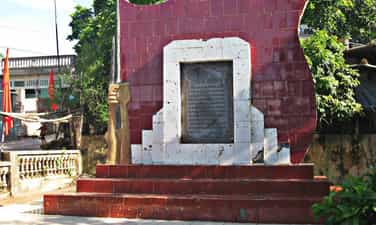
French cemetery
From 1885 onwards, the Yen The Uprising movement developed strongly, so the French colonialists established a system of posts to fight the uprising movement led by Luong Van Tam, then Hoang Hoa Tham. They established Nha Nam, Bi Noi, Cao Thuong, Bo Ha stations... from which they organized sweeping operations to suppress the French insurgents who clashed with the Yen The insurgents in many villages and communes. base areas such as the battle of Mac village (1885), the battle of Sat village (1889), the battle of Cao Thuong (1890), the battle of Ho Chuoi (1890- 1891), the battles along the banks of the Soi River in the areas: Don Hom, Kham Nghe, De Trung, De Truat, Thong Phuc, De Lam (1892), Phon Xuong, Don Den, Rung Phe (1909), Ngan Van (1911)... In those battles, they suffered many defeats. Many enemies were destroyed but the movement still could not be suppressed. The names of French and Vietnamese officers and soldiers who died in campaigns due to the fighting methods of the insurgents were brought back and buried in cemeteries in Voi (Lang Giang), Bo Ha (Yen The), Nha Nam (Tan Yen)... The French cemetery in Nha Nam is one of the cemeteries formed like that. The current French cemetery is located in Nha Nam commune, Tan Yen district, about 23km northwest of Bac Giang city. From 1885 onwards, the Yen The Uprising movement developed strongly, so the French colonialists established a system of posts to fight the uprising movement led by Luong Van Tam and then Hoang Hoa Tham. They established Nha Nam, Bi Noi, Cao Thuong, Bo Ha stations... from which they organized sweeping operations to suppress the French insurgents who clashed with the Yen The insurgents in many villages and communes. base areas such as the battle of Mac village (1885), the battle of Sat village (1889), the battle of Cao Thuong (1890), the battle of Ho Chuoi (1890- 1891), the battles along the banks of the Soi River in the areas: Don Hom, Kham Nghe, De Trung, De Truat, Thong Phuc, De Lam (1892), Phon Xuong, Don Den, Rung Phe (1909), Ngan Van (1911)... In those battles, they suffered many defeats. Many enemies were destroyed but the movement still could not be suppressed. The names of French and Vietnamese officers and soldiers who died in campaigns due to the fighting methods of the insurgents were brought back and buried in cemeteries in Voi (Lang Giang), Bo Ha (Yen The), Nha Nam (Tan Yen)... The French cemetery in Nha Nam is one of the cemeteries formed like that. The current French cemetery is located in Nha Nam commune, Tan Yen district, about 23 km northwest of Bac Giang city. The French cemetery is located on a small hillside that used to belong to La village in Nha Nam. This village was completely destroyed by the Black Flag army. There are many graves in the cemetery grounds and are divided into two types: The first type is tombs built of square and rectangular stones. This is a type of grave for officers. The second type is a soldier's grave covered in soil with a stone stele. Among the French officers' graves, there are two graves lined with square blue stone slabs and rectangular stone slabs with French characters engraved on them. All the graves in this cemetery have now been leveled with no trace of their graves left. Only large, heavy stones remained scattered in the hillside village. At the Bac Giang Museum, a stele was collected clearly stating that the person buried here was Nguyen Van To who died in Ho Chuoi (1890-1891). This small stele said that it was a Vietnamese soldier buried in a dirt grave. The green stone blocks covering the tombs are very large and come in many sizes. There are two square blocks of stone on which two circles have been carved on both sides, symbolizing olive branches wrapped with a silk ribbon. It is the French symbol for those who died for France. The front side is engraved with many words recording the names and reasons of those who died in battle in Yen The. The French cemetery and Phu Hill have become places marking events that cannot be ignored in the history of Yen The - Tan Yen today. It is a piece of evidence that contributes to helping people of all walks of life understand more about the Yen The uprising movement led by Hoang Hoa Tham and about the August Revolution in 1945. Here the local government built the stele marking the August Revolution of 1945 on Phu Hill to educate patriotic traditions for future generations. SOURCE TAN YEN DISTRICT ELECTRONIC INFORMATION PORTAL
Bac Ninh
4339 view
Rating : National monument

Plum Village Communal House
Mai Vien communal house is located in Mai Vien village, Song Mai commune - a commune with a large area, dense population and development in many economic and social fields of Kim Dong district. Mai Vien is understood in that "Mai" village is as beautiful as an apricot garden, "Vien" village has many officials and employees. According to legends and ordinations and legends among the people, Mai Vien village communal house was built quite early in the Later Le dynasty on a small scale. The communal house is located on a high, airy mound with beautiful scenery, convenient for the people's cultural and religious activities. The facade faces Southeast, in front of the communal house is an ancient banyan tree with a water well dating back hundreds of years. The courtyard of the communal house is covered with cool canopy of almond and longan trees. Looking at the entire exterior, we feel a sense of majesty and respect because of the massive and ancient appearance of the village communal house. Mai Vien communal house relic was built in the style of the letter I (cong letter) but lost the harem and 2 tea houses. Now the remains are a massive pre-worship house that has just been repaired by the people, the roof is covered with flat tiles, the gables on both sides of the communal house are covered with two pliers crowned with unicorns. Stretching the roof, the artist embossed a pair of dragons flanking the moon, bending into 3 healthy and majestic sections. The architecture of Mai Vien communal house is tall and imposing, the structure of the roof trusses from the top to the roof is in the style of overlapping beams, the system of horizontal supporting beds is embossed with stylized leaf shapes. Due to historical and social upheavals, communal house architecture was no longer consistent and had to be renovated many times during the Nguyen Dynasty, so the architectural art bears strong Nguyen Dynasty characteristics. Like other communal houses in other communes, Mai Vien communal house is considered both a headquarters for people to meet and discuss village affairs as well as a place to worship the emperor. According to the ordination and legend, the communal house worships 5 village tutelary gods and 3 holy ancestors such as: Trung Thanh Dai Vuong, Linh Lang Dai Vuong, Cao Mang Dai Vuong, Dong Vinh Dai Vuong and the tutelary god who had meritorious services to the people. , taught villagers how to burn lime, make bricks, and become masons. During the resistance war against the French, Mai Vien communal house was a gathering place for veteran revolutionary comrades. In 1942, the revolutionary movement developed, revolutionary cadres came here to create a base. The communal house is also where the base district soldiers are stationed, printing resistance documents and digging secret tunnels in the rear to protect the guerrilla soldiers. During the years of anti-American resistance, the base was still facing difficulties. Song Mai Commune People's Committee temporarily borrowed Mai Vien Communal House to hold meetings here. It was not until 1988 that it was paid to the village. Today, Mai Vien communal house still preserves precious artifacts of historical and cultural value such as: at the communal house there is currently a throne worshiped by the Nguyen Dynasty, 3 incense bowls of the Nguyen Dynasty, 2 color boxes, 1 wishing shelf with 27 colors. styled through dynasties, resonators, wooden pedestals and some other late-dating altar items, 2 bronze tops, 2 pairs of bronze candles, 1 pair of water hyacinths. In 1998, Mai Vien communal house was recognized by the state as a national historical relic. Local people not only consider this a center for cultural and religious activities, but also a place for people to organize and review ancestral traditions, fine customs and community lifestyle. Through this, there is cultural exchange between regions and between members of the same community to create bonds of compassion and neighborliness. The communal house is the pride of the people in the village. Source Electronic information portal of Kim Dong district, Hung Yen province.
Hung Yen
3764 view
Rating : National monument.
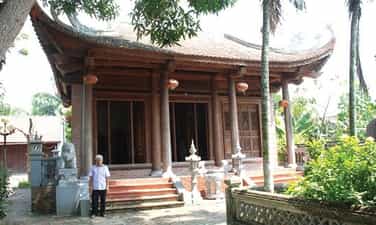
Ba Chua Mua Temple
Lady Mia (1580 - 1648) Her real name is Tran Thi Cu, born on May 5, Canh Thin year (1580) in Mua village, Thien Thi canton, former Khoai Chau district, now in Cong Vu village, Vu Xa commune, Kim Dong district, Hung Yen province. Legend has it that one day, Lord Trinh Trang's chariot passed through this area, bustling with thrones and palanquins, flags filling the sky, trumpets and drums resounding, and villagers excitedly went to see. A girl cutting grass next to the main road still wore it as if she didn't know anything. When the palanquin passed, she did not look up, her hands quickly pulled the sickle to gather grass, her mouth sang softly and clearly: The hand holds the half-moon One hundred herbs are in my hands The soldiers were surprised, the singing became louder and the palanquin slowly stopped. God raised the curtain and saw a girl with stunning beauty. She responded intelligently, knowing that this was a strange woman. God ordered her to be brought back to Thang Long capital, then given her national status and changed her name to Trinh Thi Ngoc Am. She helped the lord oversee the studies in the palace of the concubines and beauties, strengthening the solidarity between the lord and the Le court. She gave birth to a daughter, Trinh Thi Minh, who was given 4 gold plates and 1 silver plate by God. Not long after, Princess Thuy Minh passed away. She was so sad that she asked to become a monk at the village temple. The Lord loved his talented wife very much, so he opened a branch river from the Cuu An River to run through the Silk village to transport precious items to build the tower. Every day, she went up to the tower to pray for the lord's palace in Thang Long. She spent money to help people clear the land and open rivers to bring water to the fields. She is rich in virtue and helps people and prays to Buddha to bless the people. She herself asked to establish and repair pagodas around the area and popularize Buddhist offerings. Not only did she make a great contribution to restoring the pagoda, but she also spent money with the people of 13 villages to build communal houses. Ms. Trinh Thi Ngoc Am died at the age of 68, people worshiped her as a god and built a temple right in her hometown. Mua Temple was built in the 17th century and restored during the Nguyen Dynasty. The architecture is in the style of the letter "Nhi". The Tam Quan gate is quite massive, with two rows of parallel sentences: Talent and beauty are everywhere in the lord's palace Complete love for the homeland Next to it is a small office building with a green stone statue, with a pot-bellied figure worshiped by an incense bowl also made of green stone touching the kneeling feet, with three ears and a tiger face. In front of the temple door is a stele erected in 1634 with the inscription: Princess Mua Trinh Thi Ngoc Am, the first concubine of Lord Trinh Trang's palace. The second stele erected in 1650 recognized her contributions to the villagers in building pagodas, communal houses, temples, shrines... In the center of the main hall, there is a stone incense burner, carved into three reliefs: the middle one is embossed with a clear image, the two sides are carved with "Dragon water", the surrounding is carved with a stylized water wave pattern, carrying the style of the temple. Later Le distance. On the two pillars of the great altar, there are two parallel lines praising her virtues: Highly talented, dignified, and powerful in controlling the mountains and rivers Accumulating virtue as a monk, the lord also devotes himself to Buddhism The harem has a statue of Princess Mua. In 1634, Lord Trinh Trang had a statue of her carved in stone while she was alive. The life-sized statue sits on a lotus throne, with a crown on its head, embossed with the image of Buddha Tathagata, large flowers in its ears, and legs folded like a person meditating. In front of the princess statue is a stone statue of the Duke, sitting cross-legged and wearing a robe. The two temples on both sides worship statues of Thi Ve and Kim Dong worshiping the princess, their bodies embossed with folded clothes. Behind the harem is a nine-grade lotus court, with a lotus flower base and a statue of the princess in her old age. On June 8, 1963, while working on irrigation for the Ngang Cau River, the citizen dug up 4 gold plates and 1 silver plate from Lord Trinh Trang as a reward for his daughter. At the bottom of one plate was an inscription. "Princess Thuy Minh, golden princess, eight-star princess" (my father's silver cup given to me, Princess Thuy Minh). From the above values, Ba Chua Mua Temple was ranked by the Ministry of Culture and Information as a National "Art" relic No. 2233-Decision/Ministry of Culture and Sports on June 26, 1995. In particular, on December 31, 2020, the Prime Minister issued Decision No. 2283/Quyet Dinh - Prime Minister, recognizing the collection of Cong Vu lotus gold plates (Mua temple, Vu Xa commune) dating back to the century XI – XII are National Treasures. Source Electronic information portal of Kim Dong district, Hung Yen province.
Hung Yen
2498 view
Rating : National monument.