Relic point Vietnam
Việt Nam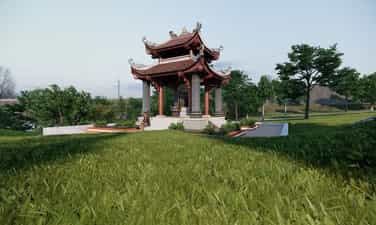
STONE CELEBRATING THE PLACE OF ESTABLISHMENT OF THE WOMEN'S ADVOCACY COMMITTEE OF HA GIANG PROVINCE
STONE CELEBRATING THE PLACE OF ESTABLISHMENT OF THE WOMEN'S ADVOCACY COMMITTEE OF HA GIANG PROVINCE - Location: Bo Loong village, Hung An commune, Bac Quang district, Ha Giang province. - Directions: Commemorative stele where the Women's Mobilization Committee of Ha Giang province was founded, 70km south of Ha Giang city center, from Ha Giang city follow National Highway No. 2 towards Ha Giang - Tuyen Quang, to Market No. 9, Hung An commune, turn left along the road to Bo Loong village for more than 2km to reach the Beer location. In March 1943, Viet Minh cadres from the north of Tuyen Quang province went to Bo Loong village, Hung An commune, Bac Quang district, Ha Giang province to propagate the revolutionary line of the Viet Minh front and build a base. local revolution. Here, the Women's Advocacy Committee was established with 5 members. After its establishment, under the direction of Viet Minh cadres, the women propagated and mobilized women in Hung An commune and neighboring localities to join the Women's Union for National Salvation and participate in the revolutionary movement. Actively contributing to the revolutionary struggle to expel the enemy, gain power, and liberate the homeland and the country. The establishment of the Women's Mobilization Committee in Bo Loong village, Hung An commune - is the first grassroots organization of the Association, marking the development of the women's activist movement, which is also the premise for the year 1945: Ha Giang Province Women's Association for National Salvation was established (later Ha Giang Province Women's Union). The construction of a commemorative stele where the Women's Mobilization Committee of Ha Giang province was established in Bo Loong village, Hung An commune is to remember the place where the first grassroots organization of the women's activist movement was established, and has educational purposes. Traditional education about the traditions of patriotism, fighting against invaders to protect the country for young generations to follow, thereby constantly learning and cultivating to be worthy of previous generations, contributing to protecting and protecting the country. Build a country that is increasingly rich in beauty and culture bright. SOURCE: ELECTRONIC INFORMATION PAGE OF BAC QUANG DISTRICT, HA GIANG PROVINCE
Tuyen Quang
4205 view
Rating : Provincial level relics

Lady Temple
Chua Ba Temple does not have stone stele and related documents and papers recording the year of the temple's original construction as well as the process of formation and development. However, through the process of learning through the stories of local elderly people and some related documents collected, it can be determined as follows: Chua Ba Temple has existed in Vinh Tuy town for a long time, at that time the surrounding temple area was still desolate and deserted. The temple is built of simple, simple bamboo and leaves. The main altar holds a statue of the Lady, also known as Saint Mother Lieu Hanh[8]. Currently at the temple there are three stone stele: One stele is covered by banyan tree roots, making it impossible to read and stamp the words; A stele's letters are too faded to be read; There is only one stele left that records the year of merit entering the temple, which is 1947. Through transcription and translation, it can be seen that the content of the stele records the names of those who contributed to donating to build the temple, thereby confirming The temple was built before 1947. During the research process of Ha Giang Provincial Museum to serve the work of building relic records, it has collected from National Archives Center I and National Archives Center III a number of relevant documents that can be collected. determine the time to build the temple in Vinh Tuy town, there are a number of French dispatches in 1931 written about donations from the people to build a temple in Vinh Tuy town, Bac Quang district, province Ha Giang. Thereby, it can be determined that the time of rebuilding the temple was around 1931. Through research and collected documents, it can be seen that Chua Ba Temple had the introduction of Mother Goddess worship from the lowlands, through merchants in the process of doing business on the river, they brought their feet with them. incense to worship at Chua Ba temple. At present, the year of the temple's origin is unknown. However, based on the period when lowland residents came to Ha Giang to trade and start a business, it can be said that Chua Ba Temple was established in the early twentieth century, 1931 was just the year of donations from the people to build it. back to the temple, not the year the temple was originally built. Over the course of history, the Temple has been restored many times, the most restored and repaired times were in 1982 and 2006, thanks to the merits of local people and tourists from all over, forming the current state. Since being recognized as a provincial-level historical and cultural relic, Chua Ba Temple has been directed and directed by all levels and sectors and directly managed, planned and protected by the People's Committee of Vinh Tuy town. and promote value. Vinh Tuy Town People's Committee has issued a Decision to establish the Temple Management Board and develop internal rules and operating regulations. The functional branches have surveyed, determined the boundaries and zoned into 2 relic protection areas with a total area of 710m2 (area I is 295m2, area II is 415m2) to ensure that the relic area is not encroached. occupy, invade and influence. Lady Temple has been restored, repaired and embellished many times since its construction until now, in which 1982 and 2006 were completely restored with funds from local people and visitors. Currently, the facilities are still in good use and are regularly repaired to meet the needs of people's religious and spiritual activities. 6. Value of ranked monuments and ranking time The cultural and historical relic "THE TEMPLE OF GOD" is ranked as a provincial cultural and historical relic according to Decision No. 244/QD-UBND dated January 29, 2011 of the People's Committee of Ha Giang province "Decision on ranking Provincial-level relics, historical and cultural relics SOURCE: ELECTRONIC INFORMATION PAGE OF BAC QUANG DISTRICT, HA GIANG PROVINCE
Tuyen Quang
4554 view
Rating : Provincial level relics

TEMPLE OF SAINT TRAN HUNG DAO
Tran Hung Dao Temple was built in Tan Tien village, Tan Quang commune, Bac Quang district, Ha Giang province. The location of the temple is shown on the map of plot number 10, plot 52 of Bac Quang district, specifically as follows: + The East side borders the residential road of Tan Tien village, with a length of 31m. + The West borders Mr. Vuong Xuan Thu's land, 34m long. + The South borders Mr. Vuong Xuan Thu's land, 32m long. + The North borders Mr. Dien Van Luc's house, 43.5m long. - Directions: From Ha Giang city, follow Highway 2 towards Ha Giang - Hanoi to Km 47, turn left along the road to Tan Tien village headquarters about 500m to Tran Hung Dao Temple. 1.3. Historical origins of formation and development: Tran Hung Dao Temple currently does not have a stone stele or other documents recording the year of construction of the temple. There are only 02 conferral documents talking about the merits of Tran Hung Dao, without recording the year of construction and historical origin of the temple. temple. Therefore, it is impossible to determine with absolute accuracy the origin of formation and development process. However, through the process of research and through the stories of local elders, Tran Hung Dao Temple was previously located in Vinh Quang village, Tan Quang commune. In 1947-1948, due to the war and the implementation of "scorched earth resistance", the Temple was forced to be destroyed, then the worship objects were moved to Nam Tuoc village, Dong Tam commune (about 3000m from the current location). At that time, whenever the rainy season occurred in Nam Tuoc village, floods often made it difficult for people to go to Temple ceremonies. Therefore, around 1948-1949, Mr. Vang Seo Cang and Do Van Doc stood up to transfer the incense bowls and tablets of Tran Hung Dao and bring them to Cam Son Temple (Temple at the foot of Cam Mountain) - the current location. From then on, people called it Tran Hung Dao Temple. Since settling here, the Temple has been restored many times, the largest restoration and repair in 2004 and 2008 thanks to the merit of local people and tourists from all over, forming the current status. now. The historical relic area "TRAN HUNG DAO TEMPLE" is ranked as a provincial historical relic according to Decision No. 243/QD-UBND, dated January 29, 2011 of the People's Committee of Ha Giang province "Decision on ranking relics". provincial level”. SOURCE: ELECTRONIC INFORMATION PAGE OF BAC QUANG DISTRICT, HA GIANG PROVINCE
Tuyen Quang
4863 view
Rating : Provincial level relics
Thong Pagoda
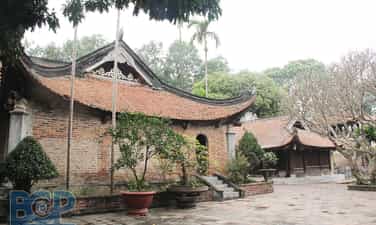
Thong Pagoda is located in the Yen The uprising relic cluster, about 2km northeast of the center of Phon Xuong station. The temple is located near Road 265, convenient for sightseeing and research. In the past, Thong Pagoda belonged to Nua village, Huu Trung commune, at one time it was An Lac commune, Huu Thuong district, Yen The district, now it belongs to Dong Lac commune, Yen The district, Bac Giang province. The temple was built a long time ago and has been renovated through many stages. Around the years 1901-1902, along with many other relics in the Yen The area, Thong Pagoda was renovated by De Tham to make it more spacious. In the book Yen The Uprising by author Khong Duc Thiem, Nguyen Xuan Can recorded: "The dilapidated pagodas, temples, and Catholic churches were repaired as many as the communal houses in Ha, Lan, Cao Thuong, and other provinces. Leo Pagoda, Thong Pagoda, Phon Xuong Pagoda, Catholic churches...". The Thong Pagoda relic area currently includes the following construction items: The temple garden, the Model House and the main temple area are all located on a hill with a total area of 3093 m2. The current pagoda has a nail-style architectural plan including a three-compartment front hall connected to a two-compartment upper palace. The connecting part of the front hall's roof resembles the traditional style of stacking gongs and gongs. The architectural components are not carved but still imbued with the color of ancient times. The upper palace has two compartments, the connected part has a striped gong-shaped roof, and the architectural components are not carved. The pagoda is decorated with a complete system of Buddha statues including 17 statues and a number of documents, artifacts, and valuable worship objects such as trays, incense bowls, ancient altars... with historical and value. scientific research. Thong Pagoda is the place marking many historical events associated with the Yen The uprising, the place where the Yen The insurgent army and the French colonialists met to sign the first peace agreement (1894-1897). In 1894, in order to have time to prepare and strengthen De Tham's forces, he organized to capture alive Set-nay, editor of the Future of Tonkin newspaper, and the staff following Logiu, and raid a train. then retreated to Phon Xuong. The arrest of Mr. Set-nay has dealt a strong blow to public opinion. The bourgeoisie and contractors are demanding to be saved. Faced with that situation, the French colonialists asked Bishop Velatco to act as a broker to negotiate with the insurgents. The conversation lasted for 15 days at Thong Pagoda. De Tham governed 4 cantons: Muc Son, Yen Le, Nha Nam, and Huu Thuong to collect taxes there for 3 years. During the negotiation, negotiation and signing of the treaty at Thong Pagoda, many documents call this the first peace between the Yen The insurgent army and the French colonialists. As a special relic, a place marking the historical events of the Yen The uprising, Thong Pagoda is one of 23 relics belonging to the Yen The Uprising Sites signed by the Prime Minister with Decision No. 548/QD- On May 10, 2012, TTg recognized it as a special national monument. SOURCE ELECTRONIC INFORMATION PORTAL DEPARTMENT OF CULTURE - SPORTS - TOURISM OF BAC GIANG PROVINCE
Bac Ninh
4480 view
Rating : Special national monument

Dinh Dinh Thep
Dinh Thep Communal House is about 31km northwest of Bac Giang city. From Bac Giang city, follow National Highway 1A (old) past Song Thuong bridge, turn right along provincial road 398 (Bac Giang-Cau Go route), to Cau Go town. From Cau Go, turn left along Provincial Road 265 about 4km to Tan Hiep commune and Dinh Thep communal house relic. Dinh Thep Communal House was built a long time ago and has been renovated and renovated through many stages. In the 9th year of Thanh Thai (1907), Hoang Hoa Tham repaired and renovated the communal house to preserve the ancient cultural value of the relic. The current relic has been renovated and renovated beautifully, consisting of three rooms and two wings, a vestibule connecting the two rooms of the harem, creating an architectural plan in the style of a nail. The roof rafters are simply connected in the form of cantilevered trusses, and the architectural components are not carved. In the communal house worshiping Cao Son, Quy Minh, Minh Giang Do Thong, worshiping Hoang Hoa Tham and Yen The insurgents who died in battle, these are all people who have made many contributions to the people and the country. The communal house also preserves a number of valuable worship objects and three stone steles of the Nguyen Dynasty with content recording the merits of repairing the communal house. The most outstanding value of the Dinh Thep communal house relic is the place where the Conference took place marking the time to consolidate the organization of the Yen The insurgent army: In 1888, Hoang Dinh Kinh (Cai Kinh) fell into the hands of the French invaders and was executed. death, the uprising of the Bai Say movement and a number of patriotic scholars were violently suppressed by the French colonialists. Yen The became the center of attraction for the remaining armies to join forces to fight the French. At this time, it is necessary to consolidate the movement after years of resistance against the French and re-plan the long-term plan for the Yen The uprising. In the meantime, an important conference took place at Dinh Thep communal house. Dinh Dinh Thep was also the place where the French invaders had to hand over 15,000 francs to De Tham in exchange for two prisoners: In 1894, De Tham ordered his troops to organize many ambushes to block French transport convoys to steal food and weapons. equipment for the insurgents. At Dinh Thep communal house, France had to pay 15,000 francs to De Tham. Many local witnesses recounted: "In October 1894, the French sent soldiers to bring the silver to De Tham at Dinh Thep village communal house on three pots filled with white silver. Mr. Tham also picked up a few copper coins per pot to bring. Come out and try to see if the silver is real or fake." After that, negotiations between De Tham and the French through the bishop of Bac Ninh, the two French prisoners were returned by De Tham. Dinh Thep Communal House is not only a center of cultural and religious activities, a place to organize traditional festivals of the people, but also a place where many historical and political events took place associated with the people's resistance war against the French. Locally, most notably at this relic, the Congress of generals took place to elect leaders in 1888. Dinh Thep communal house festival takes place on January 6 and March 16 of the solar calendar with many games. folk express essence God of martial arts, the desire for freedom of Yen The people such as bird flying contest, horseback archery contest, crossbow shooting contest, ethnic martial arts competition, wrestling... With great contributions marking the historical transformation of the peasant uprising led by De Tham, Dinh Thep communal house is one of 23 relics belonging to the Historical Relics System: Sites of Yen The Uprising Recognized as a special national relic site by the Prime Minister signed Decision No. 548/QD-TTG dated May 10, 2012. SOURCE ELECTRONIC INFORMATION PORTAL DEPARTMENT OF CULTURE - SPORTS - TOURISM OF BAC GIANG PROVINCE
Bac Ninh
4312 view
Rating : Special national monument
Leo Pagoda
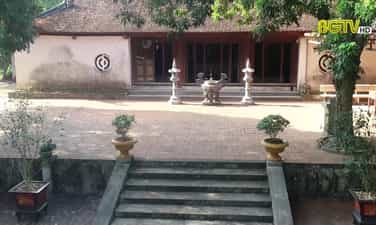
In the Yen The uprising relic system, Leo Pagoda is a quite special relic and still preserves almost intact ancient values related to the Yen The uprising. The pagoda is located next to an important traffic road (formerly a small trail in the forest since 1909 when the French colonialists opened the road from Nha Nam through Leo pagoda gate to Phon Xuong) connecting the Phon Xuong base area with Lang Thuong district, which is now Phon Xuong. Road 398, located at the gateway of the forward station of the Phon Xuong base area and the strongholds of the Yen The insurgent army. Leo Pagoda is called after the name of Leo village, Huu Xuong commune, Huu Thuong district, Yen The district, formerly Phon Xuong commune, Yen The district, Bac Giang province. The temple is located next to Road 398, about 25 km northwest of Bac Giang city. From Bac Giang city, follow provincial road 398 towards Bac Giang - Cau Go about 25km to reach the relic. The second way, from Bac Giang city, follow National Highway 1A (new), about 20km, to Kep town intersection (Lang Giang), turn left along road 292 about 15km to Cau Go town center, turn left again. Follow provincial road 398 about 2km further to reach Leo pagoda relics. Ancient Leo Pagoda was built in an ancient complex of relics including communal houses and pagodas following the "pre-god, post-Buddhist" way of connecting the temple before the pagoda, all located in the forest of Leo hill looking south. The temple was built in the 16th century and has been renovated through many stages. During the Yen The uprising in the years 1897-1909, Leo pagoda and many other cultural, religious and religious works in the area were very interested in De Tham's money to repair and renovate them as places for cultural, religious and religious activities of the people. Yen The insurgents and local people. Over time, this relic complex is no longer as intact as before, the three-entrance gate, the communal house in front of the pagoda no longer exists, now only the pagoda remains located in the old location on Leo hill, Phon Xuong commune, district. Yen The. The relic's campus is large and beautiful, made even more ancient by ancient trees such as frangipani trees, hyacinth trees... The current architectural plan of the pagoda is shaped like a gong, including the front hall with 5 compartments and 2 wings, the bridge house with 3 compartments and the upper palace with 1 compartment and two wings. The roof frame architecture is made of sturdy ironwood, the system of roof rafters is linked in the style of a stack of gongs and beams. The architectural structures are carved with simple floral themes but still imbued with the color of ancient times. The pagoda is decorated with a complete system of Buddha statues according to the Truc Lam lineage. Documents and artifacts at the pagoda such as stone stele, ancient incense bowls of the Nguyen Dynasty, a system of Buddha statues, ancient trees in the relics... are all there. cultural historical value. The Yen The uprising broke out in 1884, the forested hills were used by the Yen The insurgents as strongholds, and temples and pagodas were used as advance stations and as a base for the insurgents to travel back and forth. Leo Pagoda is located near Ho Chuoi station, about 1km to the East. During the battles with the Yen The insurgents at Ho Chuoi station (1890-1891), Leo pagoda was the French military base to act as a stepping stone to attack Ho Chuoi station. Leo Pagoda is a place that marks many historical events associated with the Yen The insurgent army. During the second period of peace between the Yen The insurgent army and the French colonialists (1897-1909), Leo Pagoda still served as a frontline position, observing the French colonialists' incursions into the Phon Xuong base area. It is a point of contact for regular correspondence and correspondence of the insurgent army. The pagoda is also a place to welcome guests and a gathering place for patriotic soldiers. Therefore, during this time, Leo Pagoda received a lot of attention from De Tham, who gave money to repair and embellish. Also at Leo Pagoda, an incident that went down in folk legend happened, demonstrating the high vigilance of Hoang Hoa Tham. During the French colonial period, they wanted to negotiate a peace treaty with the Yen The insurgents, but they still had many internal conflicts. To resolve a problem still tied to the insurgents, the head of the province made an appointment with De Tham to meet at a place near Phon Xuong. That location was determined to be Leo Pagoda. Both sides did not carry weapons. The entourage stayed behind. The day before the meeting, the French agent went to sleep at Leo pagoda, De Tham slept in that village... After the moon set around midnight, there were noises in the forest, you had to pay close attention to see them. Twelve soldiers quietly crawled through the dense forest toward the hut where De Tham was lying. The next morning, everyone gathered outside the temple. People looked at each other anxiously and waited. There were no signs that De Tham had been murdered, so people had to split up to look for him. On the grass next to the village, at the foot of the blockhouse, 12 soldiers' bodies were seen lying side by side. The soldier's body lay on the outside, a knife stuck in his chest along with the peace treaty. The other corpses had their hands clasped together holding a piece of wood with the word "betrayal" written on it. After this incident, De Tham posted everywhere the insurgent's denunciation about the betrayal of the French invaders... In the past, Leo Pagoda had monks. About Hoang Hoa Tham's death, there is also a legendary story related to the abbot of Leo Pagoda. By 1913, the Yen The insurgent army had gradually disintegrated, De Tham retreated to hide in the Yen The forests, waiting for an opportunity to launch and rebuild the movement. During this time, the French colonialists spread the news to public opinion that they had killed De Tham. They put three heads in Nha Nam and said that among them was De Tham's head so that everyone could come and identify them. But in fact, people believe that it is not De Tham's head but the head of a monk of Leo pagoda. I don't know the truth, but through that detail it is enough to see the close connection between Hoang Hoa Tham and the temple. And legend still holds that the monk of Leo Pagoda died instead of De Tham. SOURCE: ELECTRONIC INFORMATION PORTAL DEPARTMENT OF CULTURE - SPORTS - TOURISM OF BAC GIANG PROVINCE
Bac Ninh
4431 view
Rating : National monument
Trieu Da Communal House
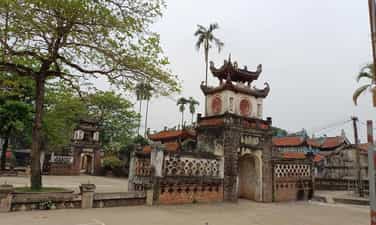
Temple worshiping Trieu Da (during the reign of Emperor Trieu Vu), village 10, Xuan Quan commune, Van Giang district. The communal house was built a long time ago and restored during the Nguyen Dynasty in the 24th year of Tu Duc (1871). Currently, artifacts such as palanquins, stone stele, thrones, and worship statues are still preserved. The annual festival is from the 14th to 16th of the second lunar month. Trieu Da Communal House, Xuan Quan Commune, Van Giang District, Hung Yen Province, was called "Nam Viet Linh Tu". It was not until Ly Anh Tong's reign that it was renamed Long Hung Communal House. Trieu Da communal house has bold architectural features of the 17th - 18th centuries. The communal house's grounds are spacious and airy with an area of about 13,000 square meters. The communal house was built in a foreign domestic style, with construction items located on a straight road stretching from the communal house gate to the harem. The main items of the relic include: the outer gate, Nghi Mon, the great altar, the lower harem, the upper harem and two rows of Giai Vu. The front porch faces South, which is the direction of wisdom and life. The Nghi Mon gate at Trieu Da communal house is completely different from the Nghi Mon gate of many other relics. The ritual gate is made in the style of a two-story, eight-roofed pile of matches, the blades are covered with dragon heads and monkey heads raised high, the roof is tiled, and the banks are flanked by two dragons flanking the Buddha. The neck of the match is emblazoned with three Chinese characters: "Long Hung Dien" (Long Hung Palace). Nghi Mon's architectural structure is in the form of a pile of lotus mats, smooth planing, and sharp edges. The two sides next to it are placed two statues of Tuc Ve (gate guards), statues created in the solemn upright posture of a guard. On both sides of Nghi Mon, there are two side gates made in the style of two floors and eight roofs. Inside the side gate is a small road leading to the inner temple area. Trieu Da Communal House built a main gate and two side gates like today. It is possible that in the past, kings and mandarins in the court often came here to worship and pray for the blessing of the island. Passing through the yard is the inner temple area. The first building is the great worship hall with 3 compartments and 2 floors built in a double-match style with 2 floors and 8 roofs. The dragon-head-shaped blades are raised high. At the top of the roof, there are two numbers flanking the monstrance in the middle of the roof. The great altar is made in a pine style, the two gables are closed, the bottom and back are left blank, creating ventilation for the monument. The altars are structured in the style of stacking lotus beams, the beams and 7 heads are all carved with stylized flowers and leaves. In the middle of the great altar is an incense altar for communal worship. The incense altar is made of wood and carved with four sacred animals and four precious animals. On the incense table are placed worshiping objects such as: incense bowl, copper top set, pair of water hyacinths... Trieu Da's rear palace consists of three rooms and two dishes, with a tiled roof. In the middle space, on the summer side, the porch is built forward to form a space. This space is made of four pillars with two floors and eight roofs. This is the place where the bowl of worship is placed. On both sides of the porch are two statues of Tuc Ve (gate guards). The statues pose in an upright position with a solemn face. Separating between the porch and the inside is a system of tables, each door is engraved with a theme such as: phoenix riding clouds, dragon horse rolling clouds... very sophisticated in the artistic style of the Nguyen Dynasty. The structure of the lower bow sets is a simple gong stand style, smoothed and sharpened. Supporting the roof is a system of two rows of main columns and two rows of military columns. In the center of the nave is the altar, above which is the throne containing the throne of the Village's Thanh Hoang Trieu Vu De. The throne and tablet are 2.1m high; 0.73m long; 0.7m deep. The throne's base is shaped like a fish-wound kneeling leg with a tiger-shaped face. Tablets; The other part is shaped like a fireball, inside the station are 6 dragons curled up; The body is decorated with four sacred lines, shaped like a fire knife; On the body of the tablet is engraved a text in Chinese characters praising the god's merits. In addition, the table is also decorated with a number of worship items such as: candlesticks, candlesticks, ... especially an ancient tamarind-colored incense bowl with a diameter of 0.3m; 0.32m high, decorated with water and mountain patterns, on both sides of the altar are two 1.76m high Eunuch statues; shoulder height 0.5m. The statue is in an upright position. On both sides of the lower palace are altars; The space on the left worships Trieu Da's children and grandchildren; The room on the right worships the queen and two princesses, Truong Trang and the second princess. Connected to the lower palace are three upper palace rooms with an architectural structure of rafters, smooth and sharp. The engravings in this building are concentrated mainly on the front door with themes: stylized flowers and leaves, two dragons flanking the moon, fire swords, phoenix holding a lotus flower..., carved very skillfully by the artist. passionate and full of creativity. In addition, on both sides of the inner temple there are two rows of banh vu, each row has 10 rooms, simple structure, used as a place to receive guests and meet. The communal house is ranked "Artistic Architecture" according to Decision No. 49/2007/Decision - Ministry of Culture and Sports, dated August 3, 2007. Source Electronic information portal of Van Giang district, Hung Yen province
Hung Yen
3494 view
Rating : National monument.

Comrade Le Van Luong Memorial House
Comrade Le Van Luong - an excellent student of President Ho Chi Minh, the first generation of party members of the Communist Party of Vietnam, with 83 years of life, nearly 70 years of continuous revolutionary activities, he has made important contributions to the victory of the Vietnamese revolutionary cause. In recognition of those great merits and contributions, comrade Le Van Luong was awarded many noble titles by the Party and State: Gold Star Medal, 50-year Party badge and many noble orders and medals. other. Comrade Le Van Luong Memorial House was built in 2003 in Nghia Tru commune, Van Giang district, Hung Yen province. This is a project built by the Provincial Party Committee, People's Council, People's Committee of Hung Yen province and descendants of the Nguyen family to remember the comrade's great contributions and contributions to the Vietnamese revolution. This is also a place to display documents and images as well as worship comrade Le Van Luong - a typical senior leader of the Party, of the revolution, an outstanding son of the Vietnamese people. The memorial house has a Dinh (丁) character structure, including two altar buildings, a harem and other items such as: gate, reception house, Nguyen family church, stele building... The architectural items are Made in the traditional style and still relatively consistent. The altar is the place to display and introduce nearly 100 documents, images, and artifacts typical of comrade Le Van Luong's background, life, revolutionary career, and great contributions to his homeland. country. Connected to the Tieu Te is a Harem pavilion with simple architecture like a hitchhiking bridge truss with no decorative patterns. The harem is the most sacred and solemn place where the altar to worship comrade Le Van Luong is placed. On the altar is placed a statue of comrade Le Van Luong's portrait cast by Prime Minister Phan Van Khai on the occasion of the inauguration of the 1996 memorial house. 2003 shows the Party and State's concern for comrades. On the same campus as Comrade Le Van Luong Memorial House is the Nguyen family church built by Comrade Nguyen Thi Bich Thuan (comrade Le Van Luong's wife) in 2005. The church is simple but solemn, on the altar is placed The throne and tablet are titled "Nguyen family Liet To". Next to the Nguyen family church is a stele building built in a four-pillar style with four twisted curved roofs buried in spirals. Inside is a stone stele engraved with words praising the merits and steadfast heart for the Party and people of comrade Le Van Luong and his wife Nguyen Thi Bich Thuan. Every year, the death anniversary of comrade Le Van Luong is organized by the local government and family descendants on the 26th day of the third lunar month (comrade's death anniversary). This is also an opportunity for everyone to gather together to remember the gratitude of our predecessors who sacrificed for the independence, freedom, and happiness of our children and grandchildren today and tomorrow. To honor the great contributions of comrade Le Van Luong to the revolutionary cause of the Party and the nation, while affirming the cultural and historical value of the Comrade Le Van Luong Memorial House, Ministry of Culture , Sports and Tourism issued Decision No. 673/Decision - Ministry of Culture, Sports and Tourism on March 24, 2022, recognizing the ranking of Comrade Le Van Luong's memorial site as a "Historic Relic" National level family./. Source: Department of Culture, Sports and Tourism.
Hung Yen
3713 view
Rating : National monument.
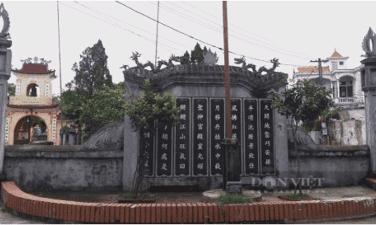
Da Nguu Village Communal House
Da Nguu communal house in Da Nguu village, Tan Tien commune, Van Giang district (Hung Yen) said that, based on the vestiges of Ba Chua's mausoleum as well as the ordination of dynasties (including the ordination of King Quang Trung in the past Da Nguu communal house was built very early in 1520, two brothers, Cong Ca and Cong Hai, organized the construction of the communal house. When starting the construction, the village elders bought 101 ironwood trees using 100 ironwood trees as pillars, 1 split tree as a chisel handle and not using any iron nails. There are few communal houses or temples in the Northern Delta region that have a porch structure surrounded by columns Da Nguu communal house. According to the legend of the ancients: "Da Nguu is like a crouching ox, seventy-two stars" (meaning: "Da Nguu village has the shape of a lying buffalo, there are 72 earth gods"), in the middle of the village there is high terrain That beautiful, airy communal house was built with 100 columns. The communal house consists of 3 buildings: the front porch, the middle court and the back palace. The front of the communal house looks to the Northwest and has many large carved paintings The second court has rows of hammock doors carved with magnificent dragons and phoenixes and the great inscription "Long live the Holy Palace". The gilded, mother-of-pearl mosaics are hung on the columns and in front of the altar praising the merits of the three deities worshiped in the harem: Chu Dong Tu, Tien Dung and Princess Hong Van. In front and behind the communal house, there are two Ngoc wells planted with lotus. On summer days, lotus scent is fragrant. On the annual village festival (from the 10th to the 12th day of the second lunar month), the elders often hold a bathing ceremony for the thrones in the shrines at the two Ngoc wells. To the east of the communal house is the old man's house - a place to worship those who have contributed to the country, to the west is Khanh Van Tu. The ritual gate of Da Nguu communal house was built in the traditional style of communal houses and temples in the Northern Delta, including 4 pillars forming three gates. The pillar is built of bricks. The two pillars in the middle are tall and big; The two pillars on both sides are small and low. All four pillars have a top decorated with four phoenixes, the upper body of the pillar is decorated with lanterns, the middle is a box decorated with parallel sentences, and the base is tied in the form of a puffy neck. Between the two tall pillars is the main gate to the communal house. On both sides of the main gate are two side gates, above which there is a roof, in the form of 4 roofs. There is a wall surrounding the communal house. The communal house's yard is 20m wide, 32m long, paved with Bat Trang tiles. In the middle of the yard there is a path made of paved bricks that is higher than the surrounding yard. On the left side of the yard there is a Ta Vu court, where the offerings are placed. The Great Hall consists of two buildings: the Pre-District and the Main Hall, placed parallel to each other. The hall is 20m long, 7.7m wide, includes 5 compartments, 4 roofs, and a 1.4m wide corridor surrounding 3 sides. The electricity hall has the structure of a communal house. The middle space has a low floor called the boat's heart room, which is the place for ceremonies. The 4 compartments on both sides have high floors and are meeting places. The front hall has 40 columns, the main column is 4.2m high, 0.45m wide in diameter, the military column is 3.1m high, 0.35m wide in diameter. It is the column system arranged along the corridor that makes the communal house have more columns than other traditional communal houses. The front and both gables of the front hall have 2.25m high wooden doors with bars on top. Da Nguu Communal House is also a witness of historical events. Pho Duc Chinh (1907 - 1930) - one of the leaders of the Vietnam Nationalist Party, brought his organization here to build a base to prepare to fight against the French. In 1929 - 1930, Da Nguu communal house was the place where meetings took place to listen to Viet Minh cadres propagandize about the Russian October Revolution... With great values in cultural history and architecture, Da Nguu communal house was Ranked as a national monument since 1995. Source Electronic information portal of Van Giang district, Hung Yen province.
Hung Yen
3321 view
Rating : National monument.

Ho Chuoi Fort
Build a brave and courageous fighting spirit, not afraid of sacrifice, determined to fight to the end to protect your homeland and country. This is the core, most important factor that determines the victory in the Battle of Banana Pit of the Insurgent Army. In particular, in the context of the early years of the Yen The uprising, the Insurgent Army with rudimentary weapons and equipment had to confront the French Expeditionary Force - a professional army equipped with weapons, equipment and supplies. modern means of warfare, so building political and spiritual factors and determination to fight for the Insurgent Army is of decisive significance. Realizing that, De Tham and the leaders of the Insurgent Army educated and fostered a spirit of patriotism and hatred for the enemy in the Insurgents. Accordingly, on the basis of a just war, De Tham taught about the suffering of people losing their country; clearly shows that the cause of suffering is due to the brutality of the invading French empire. Through practice, he showed everyone clearly the hypocritical and hypocritical face of the enemy army; that it was the French army who shot and killed civilians and burned down houses and fields. If you want to save the country and the family, you must rise up to fight the French and his Insurgents swear to kill the enemy to protect the people. That's why the Yen The uprising in general, and the Ho Chuoi battle in particular, the insurgents demonstrated a spirit of courage and strong determination that the enemy did not expect. That was when the enemy fiercely bombarded the station, but the insurgents did not flinch, waiting for the enemy to get very close before opening fire to destroy them, causing the enemy to panic and flee. Even in the third attack (December 22, 1890), the enemy urged European and African troops to use bayonets to attack our fortifications, but the insurgents remained calm, took control of the battle, and rose up to destroy the enemy. leaving them helpless, suffering heavy losses, forcing them to retreat. Not only did De Tham regularly foster patriotism and determination, but when dangerous situations occurred, De Tham also proactively and calmly encouraged the insurgents to fight. Typically, in the battle on January 9, 1891, when Ho Chuoi post was burned by enemy fire, De Tham used the loudspeaker to encourage: "Soldiers in the loyal army, in the indomitable army, in the The army will win. I am very pleased with you! Try to resist. Reinforcements are coming. You are invincible"1. That spiritual medicine promptly encouraged and encouraged the insurgents in the station to calmly, enthusiastically, and resolutely defend, while the forces in the forts, despite the hours-long shelling, still maintained their positions. fight; When the opportunity came (when the enemy infantry was approaching), we all rushed out of the fortifications and fought fiercely, destroying most of the enemy's forces and maintaining the battlefield. Later, researchers all believed that, at Ho Chuoi, the French army faced an opponent with surprisingly high fighting determination.2. Create a dangerous, continuous, solid posture, ensuring smooth defense and attack. Through many battles with the French army, the Insurgents have mastered the rules of operation, combat tactics, and the enemy's strengths and weaknesses. That is, fear of close combat, especially difficulty in maneuvering in difficult terrain; rely on artillery fire and when there are casualties, morale easily declines, etc. Firmly grasping that fatal weakness, the Insurgents Supreme Command advocates creating a solid defensive posture in the Yen The mountainous area. Accordingly, in a low-lying area of the Huu Thuong forest filled with wild bananas, the Insurgents built Ho Chuoi station as a semi-floating, semi-submerged fortification (to limit the enemy's firepower and artillery) as their headquarters. To support the main post, the Insurgents also set up two defensive fortresses (North and South) about 100m away from Ho Chuoi, creating a flexible position to protect and support each other. In addition, De Tham also sent people to set up a system of defense posts around Ho Chuoi, such as: Hom post, Skull Cave, Nua village, Vang village,... a logistics base in Vong Dong with a system of fighting villages (Duong Sat, The Loc, Luoc Ha, Cao Thuong) with many dangerous obstacles. Thanks to a solid posture, the Insurgents were able to detect and attack the enemy from near and far, consuming and destroying many enemy forces before they reached their main target. In particular, at Ho Chuoi, with its unique and dangerous position, the forest became an obstacle to the enemy's firepower and limited vision; If you get close to the base of the fort, you will be shot back from dangerous battlements, etc. The uniqueness of this posture is also shown by the system of submerged trenches (without banks) connecting points together and connecting to Go stream in the rear, creating a flexible maneuver position, while being able to attack the enemy. From the front, you can attack the flanks and rear of their formation. This explains why the enemy gathered large, elite troops, with many modern weapons, attacked from many directions, for many days, but all four attacks were unsuccessful. SOURCE: National Defense Magazine
Bac Ninh
4497 view
Rating : Special national monument