Relic point Vietnam
Việt Nam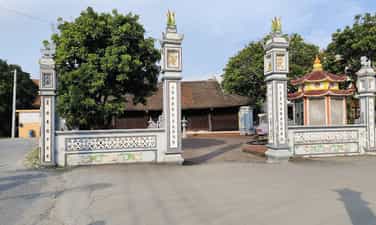
Sam Khuc Communal House
Sam Khuc communal house (also known as Cham communal house) belongs to Viet Hung commune, Van Lam district, Hung Yen province. Based on the legends, ordinations, and declarations of Elder Huong and Ly, the translator of Sam Khuc village (formerly My Trach village) collected by the Institute of Ancient Far East in 1938, is currently kept at the Research Institute. Han Nom and Hung Yen Provincial Library and the stories of the elders in the village, Sam Khuc Communal House is the place to worship the village's Tutelary God Pho Cuu Dai Vuong (Hung Vuong King's reign), whose merits helped the kings defeat the enemy. set establish order in the country and bring a prosperous life to the people. On the first sentence of the Great Pagoda, there is written the absolute date of the year the communal house was built: "Duy Tan Nham Ty, year of the year, smell of moon, gradually approaching Sun Luong, time of residence, Thuong Luong Dai Cat" (August 6th, year of Nham Ty (1912), Duy's era name). Tan Truong Thuong Luong is good). Based on the existing ordinations, including the earliest ordination in the 10th year of Tu Duc (1856), it can be known that Sam Khuc communal house existed before that time. Sam Khuc Communal House was built on a high, open area of land, with the front facing southwest. The communal house has a Dinh-shaped floor plan. Looking from the outside, in front of the communal house is a lake, between the lake and Nghi Mon is a village road running through. Through Nghi Mon is a large yard, in the innermost part is the architecture of the majestic and majestic Great Court and the Harem. The structures and architectural components are all made of four-stone wood, imbued with the Nguyen Dynasty's artistic style and are still consistent and solid. The ritual gate is made in the style of four pillars (lanterns) forming 3 doors. The Dai Bai Court is the item with the largest area at Sam Khuc communal house, including 05 compartments made in the style of gable walls with dimensions of 19.3m long, 10.17m wide, 6.4m high (from the roof to the floor). family). All four sides around the Dai Bai foundation are lined with bricks, 0.65m high above the communal house yard, covered with mortar on the outside. The foundation is firmly reinforced. The floor is tiled (30cm x 30cm), with a square pattern. From the yard, there are brick steps leading up to the Dai Bai porch. Dai Bai's architectural structure includes 6 sets of rafters, with 24 wooden columns (12 main columns, 12 military columns), with 4 rows of column bases. The distance between the front column and the rear column is 4.22m, the main column and the military column is 2.05m. The columns stand on green stone bases without decorative patterns. Supporting the roof of the Dai Pagoda are the roof beams and armpit beams. The roof system of Sam Khuc Dai Bai communal house is all made in the style of "hidden piles of beams and pillars". The armpits of the Dai Bai communal house are crafted in two forms: "semi-stacked beams" in the side compartments and "con me" in the middle compartment. The Harem Court is an item consisting of 03 compartments, located parallel to the Great Pagoda Court, made in the style of a gable wall, measuring 7.9m x 7.1m (the distance between the two main columns is 2.8m; the main column is 2.8m). the one to the army column is 1.67m). The Harem Center is where the altar to worship the village's Tutelary God Pho Cuu Dai Vuong is located. Tiled floor 20cm x 20cm, public letter pattern. The foundation is lined with red bricks covered with mortar. The special thing about Sam Khuc village's rear palace is that it still retains part of the wooden floorboard architecture of the ancient communal house. The harem has a structure of 4 rows of columns with 6 main columns and 10 military columns (main columns have a diameter of 300mm, military columns have a diameter of 250mm). Supporting the roof diaphragm are the ridge beams, armpit beams and a system of wooden columns placed on the base of the platform. The harem has 03 sets because the roof is made in the style of "stacking the beams", not decorated with patterns. The carvings here focus on architectural components, creating the perfect beauty of the building, bearing the main artistic style of the Nguyen Dynasty with many rich and diverse decorative themes, making the house unique. The house became lively and achieved the highest architectural and artistic value in the art of the Nguyen Dynasty. In particular, the image of the four sacred animals with dragons is the main element in the carved panels, in addition, there are also decorations such as the four sacred animals, four precious animals (pine, chrysanthemum, bamboo, apricot), flipped leaves, clouds, and flowers. Tho script,... Sam Khuc communal house is a unique architectural work, which preserves many precious relics of both tangible and intangible culture. Almost all architectural structures and components are densely carved with rich and diverse decorative themes representing mascots and plant patterns in motion. Currently, Sam Khuc communal house still preserves rare and valuable relics and antiques: miracles, great characters, scrolls, ordinations, bronze bells, thrones and tablets, hammock doors, palanquins, etc. .In addition to material vestiges of historical and artistic value, Sam Khuc communal house is also the place where spiritual and cultural activities of the people here take place, clearly reflecting the character of the village community while also promoting Moral: "when drinking water, remember the source". Religious rituals, festivals, and traditional folk games reflect the social life of the residents here. With the above values, Sam Khuc Communal House, Viet Hung Commune, Van Lam District, Hung Yen Province has been ranked by the Minister of Culture, Sports and Tourism as a National Architectural and Artistic Monument according to Decision No. 3078 /Decision - Ministry of Culture, Sports and Tourism dated October 27, 2020./. Source Department of Cultural Heritage.
Hung Yen
4390 view
Rating : National monument.

Dong An Temple
Dong An Temple is a relic with a long history. Up to now, the foundation of the ancient temple still remains, showing that this place was once built on a very large scale, including bricks from the Le Dynasty (late 18th century) and a A number of artifacts dating back over 100 years are kept at the temple. Dong An is an ancient name with the meaning that the people are united in their gratitude to the general Hung Dao Dai Vuong - Tran Quoc Tuan, who had merit in the war to expel the Yuan-Mongol invaders. In addition, the temple is also known by local people by another name, Mi temple, because it was previously associated with the name of Mi village. Experiencing ups and downs of historical fluctuations associated with the heroic land of Bao Thang over the centuries, the Temple is still located on a field in Quyet Tam village, Thai Nien commune, Bao Thang district. With a strategic location along the Red River, belonging to the ancient Bao Thang gate, the temple is both a spiritual cultural milestone marking the territorial sovereignty of the border region and one of the places of secret revolutionary activities of the Vietnamese government. Bao Thang's army and people during the resistance war against the French colonialists. Dong An Temple is the place to worship Saint Tran, Hung Dao king Tran Quoc Tuan. During the three resistance wars against the Yuan and Mongols, he used his strategic skills to lead soldiers and people everywhere to unanimously defend the country. Among them, it is impossible to mention the land of Quy Hoa (present-day Lao Cai), where Bao Thang gate is located at the beginning of the Fatherland, which is one of the key points that the Northern enemy targets every time they invade our country. Therefore, during the resistance war against the Northern invaders, Bao Thang was always a key position for our army on the strategic map. During the three resistance wars against the Mongol army, under the talented leadership of Tran Hung Dao, the army and people of Quy Hoa region actively defended the gate, blocking the enemy right from the border gate, contributing to the victory. of the people of the whole country. To commemorate the merits of the generals and soldiers who joined the people in fighting against foreign invaders and the talented leadership of Hung Dao King Tran Quoc Tuan, people everywhere came together to build temples to express their deep gratitude. . In Lao Cai city, there is Thuong Temple, a temple dedicated to him, built in the 17th century, built by local people for worship, and annually welcoming many domestic and foreign tourists to celebrate and sightsee. Although the exact age of Dong An temple has not been determined, based on the results of archaeological excavations of Dong An temple's foundation, the earliest construction materials for the temple date back to the Le dynasty (18th century). Therefore, it can be said that Dong An Temple is a temple that, although it exists after Thuong Temple, is also one of the relics worshiping Hung Dao King Tran Quoc Tuan and has many spiritual meanings for Bao Thang people for many generations. . To this day, people still say, "This land used to be a vast field with luxuriant vegetation along the Red River. That year, the Northern invaders invaded, and Tran Dynasty generals went up to suppress the border invaders." During the battle, he was injured and then when he returned to the temple grounds, he stopped to recuperate. After that, the people saw only the armor left but no body, so they built a temple to commemorate that general's merit in fighting the enemy." With historical values, in 2016 Dong An Temple was recognized by the Provincial People's Committee as a provincial-level historical and cultural relic. Dong An Temple has a convenient location, located right near the banks of the Red River, overlooking the river with a charming landscape. In the future, it will develop into a spiritual tourist destination that attracts many tourists when coming to Lao Cai in general and Bao Thang district in particular. In the coming time, Dong An Temple will be a bright spot on the spiritual tourism map of Lao Cai province when connected with other relics in the district such as Lien Hoa Pagoda in Phong Nien commune, Ngoi Bo temple in Gia commune. Phu are all relics located along the Red River. Along with the system of sacred temples of Lao Cai province located along the left bank of the Red River such as Thuong Temple, Mau Temple, Cam Temple, Quan Temple, Doi Co Temple... These are attractive spiritual tourism addresses. Tens of thousands of visitors visit, worship, and perform ceremonies on various occasions throughout the year. There are many famous relics throughout the region and region. Besides, with the revolutionary tradition of a heroic district, Bao Thang also has many tourist attractions introducing local history during the resistance periods that contributed to the overall victory of the whole country such as the base area. Soi Co - Soi Gia revolution; Pho Lu station, followed by the famous beautiful Tien cave in Xuan Quang commune, Dau Nhuan waterfall in Phu Nhuan commune with many beautiful, wild and untouched waterfalls. It is an interesting destination for those who like to experience, explore… When connecting Dong An Temple with the above relics and scenic spots, it will form tourist spots and routes that attract tourists to Bao Thang district, creating a new direction in developing the local tourism economy. region in particular and Lao Cai province in general. SOURCE: LAO CAI PROVINCE DEPARTMENT OF TOURISM
Lao Cai
3678 view
Rating : Provincial level relics

Memorial site of President Ho Chi Minh
Located right in the center of Lao Cai city, the memorial site of President Ho Chi Minh in Lao Cai is often known as "Ho Chi Minh Park", located in Lao Cai ward, Laos city. Cai, Lao Cai province. The relic site is a memorial site, marking the only visit of Uncle Ho and the government delegation to the Party Committee and people of Lao Cai. The relic's location is located on the foundation of the old Lao Cai Power Plant, where Uncle Ho spent time visiting and encouraging workers at the power plant construction project that was about to be completed. In the midst of the country's difficulties, despite being busy with thousands of jobs, President Ho Chi Minh took the time to visit and work with the Party Committee and people of Lao Cai on September 23-24, 1958. Remembering the great contributions of President Ho Chi Minh and appreciating his precious feelings for his homeland Lao Cai, on the occasion of the 40th anniversary of Uncle Ho's visit to Lao Cai (1958-1998), Lao Provincial People's Committee Cai built Uncle Ho's memorial area. In 2022, the Memorial Site of President Ho Chi Minh in Lao Cai was recognized by the Ministry of Culture as a national historical relic. This is a spiritual work for people and tourists from near and far to have the opportunity to express their gratitude, respect, and offer incense to commemorate the great President Ho Chi Minh. Besides, the Memorial Area is also a "red address" to educate young generations today and tomorrow about the nation's history, his background, and his great career. This place is always open to welcome people from all over the country to visit and pay their respects and gratitude to President Ho. SOURCE: LAO CAI PROVINCE DEPARTMENT OF TOURISM
Lao Cai
3669 view
Rating : National monument
Bac Ha station
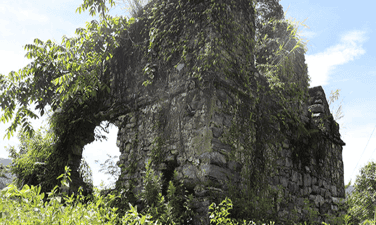
Bac Ha Fort is located right in the center of Bac Ha town, built on a high hill overlooking the entire Bac Ha town area. This is a large-scale military garrison, built in a spiral shape from low to high, with a barbed wire fence on the outside, followed by a protective wall surrounding the station with many huts. guarding the entrance. Inside the station there are many architectural units with different functions, forming a closed internal system to serve the French army when occupying Bac Ha. Before Bac Ha was liberated, the French colonialists burned Bac Ha station and fled, leaving this historical relic no longer intact. Currently, most of the works belonging to Bac Ha Fort have been destroyed, only a part of them remains such as: blockhouse, three-compartment water tank in the center of the hilltop; a tunnel in the south of the monument and a foundation embankment system surrounding the Fort. Of these buildings, only the walls, roof and foundation systems remain. Some buildings only have traces of their foundations left, such as: Quan Ba's house, horse stables, and soldier's house. Today, being classified as a provincial historical relic, Bac Ha post promises to create an attraction for tourists to visit and learn about the history of our ancestors fighting against foreign invaders in the past. Visit Bac Ha White Plateau. SOURCE: LAO CAI PROVINCE DEPARTMENT OF TOURISM
Lao Cai
3339 view
Rating : Provincial level relics

Silver Falls
Lao Cai province has just ranked Silver Falls, residential group 2, O Quy Ho ward, Sa Pa town, Lao Cai province as a provincial-level scenic relic. The Provincial People's Committee has just issued document No. 3415/QD-People's Committee dated December 31, 2023, ranking Bac Waterfall as a provincial-level scenic relic Accordingly, the relic protection area is determined according to the Minutes of zoning of relic protection areas and the Zoning Map of relic protection areas in the relic scientific records. The People's Committee of Lao Cai province assigned the Department of Culture and Sports and the People's Committee of Sapa town to develop a plan to protect, manage, restore and use the Thac Bac scenic relic in accordance with current regulations. state action. Silver Waterfall scenic spot in Residential Group No. 2, O Quy Ho Ward, Sa Pa Town is one of the attractive tourist destinations, attracting a large number of domestic and foreign tourists (each year welcoming over 45,000 visitors). ). The Silver Waterfall landscape has been known since the 20th century, during the French colonial period, along with famous tourist and resort destinations: Silver Waterfall, Cau May, and Stone Cave. By 2011, Lao Cai province invested in building Thac Bac irrigation lake to store water upstream and adjust to ensure year-round water volume and create majestic landscape and beauty for the waterfall. From a distance, Silver Waterfall looks like a soft, silvery white silk strip across the sky. When approaching, the rushing waterfall looks like a Bach Dragon rising and roaring between the sky and earth in a very majestic way. Having gone through the ups and downs of history and climate change, Silver Waterfall is still a beautiful and attractive place for domestic and foreign tourists, fully meeting the criteria and approved by the People's Committee. Lao Cai province is ranked as a provincial-level scenic relic./. SOURCE: Lao Cai Provincial People's Committee
Lao Cai
3526 view
Rating : Provincial level relics
Ta Phin Cave
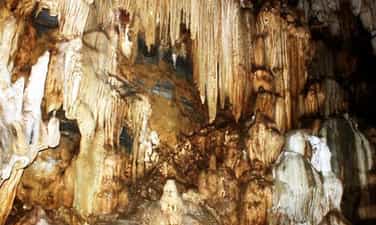
National relic - scenic spot Ta Phin Cave is located in Ta Phin commune, Sa Pa district, Lao Cai province, 12km north of Sapa town, this is where two ethnic groups Dao and Mong live. It is also a place with many research and archaeological values, and attracts many tourists to visit. Coming to Sapa, tourists who want to visit Ta Phin Cave will go through town to Ta Phin village, nearly 1km north of the People's Committee headquarters of Ta Phin commune, there is a limestone mountain range, a branch of the mountain range. Hoang Lien Son mountain. In this mountain range there is a small mountain. At the foot of the mountain, visitors see a crack with a cave entrance, about 5m high, about 3m wide, opening a path through the ground, attracting the curiosity of visitors. Tourists come here to explore caves. Starting the journey of discovery underground, visitors go about 30 meters in the dark and bumpy and will encounter a cave. From here, the cave divides into many underground paths that can only fit one person. In many steep sections, one must cling to rocks and swing up and down. Following these small walls leads to more and more paths, there are even corners that turn around and crackle and eventually return to the original position. To continue the journey to explore the cave, visitors follow the path of the big cliff. Here, visitors have the feeling of going up the cliff. The path is zigzag, sometimes up and down, sometimes bulging and sometimes resembling a person. A young woman is holding a baby, some look like bathing fairies, some look like giant raspberries with rough white patches of lava, patches of coral clinging around the edges, some look like smooth white pillars hanging down. from the top down... In particular, the widest part of the cave is on the high dome about 8m, creating conditions for the stalactites to hang down, intertwine with each other without any arrangement, winding, undulating, glittering jade color, with drops of water from the top of the mountain gradually seeping and then condensing. The tip of the stalactite drips like a beat in an illusory space. SOURCE: Lao Cai Provincial People's Committee
Lao Cai
3589 view
Rating : National monument

Nghi Lang ancient citadel
Nghi Lang ancient citadel Nghi Lang ancient citadel, also known as Phuc Khanh temple, is located in Pho Rang valley, Bao Yen district, Lao Cai, and was recognized as a national historical and cultural relic in 2002. Nghi Lang ancient citadel is a sacred place of worship. The Bau Lords, bearing traces of heroic deeds, fought against the Mac Dynasty, protected the borders of the Bau Lords, protected the people, and protected the country. The Bau Lord Worshiping Festival takes place on the 10th day of the first lunar month every year. People gather to commemorate the Bau Lords' merit in protecting the country. SOURCE: Vietnam Tourism
Lao Cai
2619 view
Rating : National monument

Bao Ha Temple
Bao Ha Temple When talking about Bao Yen district, no one knows about Bao Ha temple, one of the most popular tourist attractions in this district. Bao Ha Temple worships the national defense god Hoang Bay, a mountain hero who fought the enemy to protect the village. Bao Ha Temple is very majestic, quiet, and the natural landscape here is charming: on the wharf, under the boat, and surrounded by vast, vast, green mountains and forests. Bao Ha's main temple festival is held on the 17th day of the 7th lunar month every year - the death anniversary of General Hoang Bay, attracting a large number of domestic and foreign tourists to attend. During this festival, there are palanquin processions, sacrifices, incense offerings, and cultural and sports activities bearing the characteristics of Vietnamese cultural festivals. On weekdays - especially in the spring, pilgrims from all over the country often gather here to burn incense to commemorate, pray for peace, and pray for fortune, making the atmosphere at the temple cheerful.
Lao Cai
2653 view
Rating : National monument

Ong Pagoda
Ong Pagoda, also known as Ban Tich Tu, is located in Binh Luong village, Tan Quang commune, Van Lam district. The pagoda has an ancient and sacred beauty, built during the reign of King Ly Than Tong and is now nearly 1000 years old. This is the pride of Van Lam people in particular and is a historical and cultural relic with long-standing value of the land of Hung Yen. About 19km from the center of Hanoi capital, along Highway 5 direction Hanoi - Hai Phong, turn right into Binh Luong village, Tan Quang commune (Van Lam district) is an ancient pagoda called Pagoda by the people here. Grandfather. According to the pagoda's stele (now only the waterfall is currently stored at the Institute of Sino-Nom Studies), the pagoda was built during the reign of King Ly Than Tong (1128 - 1138). The stele bears the symbols 5527 - 5528, on the forehead of the stele is the title: The Self is Compassionate, the date of the stele is the 20th Le Chinh Hoa period (1644), the stele's content records the worship of Zen Master Tu Dao Hanh and the meaning of the stele. Named the pagoda Ban Tich pagoda. Ong Pagoda under the Le Dynasty was located in two villages: Binh Luong and Luong Xa, Dinh Loan commune, Gia Lam district, Thuan An district, Kinh Bac region. In the 13th year of Minh Mang's reign (1834), Bac Ninh province was changed. At the end of the Nguyen dynasty, it was called Van Lam district, Hung Yen province. In the pagoda, there is still a bronze statue of Zen Master Tu Dao Hanh, King Ly Than Tong (5th generation of Ly Dynasty - also the incarnation of Tu Dao Hanh after his death at Thay Mountain). The pagoda is arranged harmoniously and proportionally in the Tam style including the following categories: front hall, middle hall and back palace. In 1938, the pagoda was restored and re-embellished, the structure of the rafters is in the style of stacking smooth planed beams with patterned spots. The entire frame and columns of the ancient pagoda are made of solid ironwood, combined with elaborately carved ancient architecture, giving the front hall a solid and highly artistic position. Coming here, visitors will admire the ancient beauty of the temple with very elaborate and unique artistic architecture. Entering the temple gate is a peaceful, quiet space with a quiet mossy temple roof. According to history books, Ong Pagoda was built by King Ly Than Tong in the spring. Therefore, every spring, the people of Binh Luong village in particular and the people of Tan Quang commune along with tourists from all over gather here to celebrate and hold incense offerings to commemorate those who have contributed to fighting the enemy and defending the country. , built a temple. The traditional festival of Ong Pagoda takes place on 3 days, from March 7 to March 9 (lunar calendar), of which March 9 is the main festival. In 2001, the Pagoda was ranked by the Ministry of Culture and Information as a national architectural and artistic relic, the pride of Van Lam people. Source Department of Cultural Heritage.
Hung Yen
4674 view
Rating : National monument.

Fansipan peak
CTTĐT - Lao Cai Provincial People's Committee has just issued document No. 1396/QD-UBND dated June 7, 2024, deciding to classify the Fansipan peak area as a provincial-level scenic relic. Accordingly, the People's Committee of Lao Cai province ranked Fansipan peak area, Hoang Lien commune, Sapa town, Lao Cai province as a provincial-level scenic relic. The relic protection area is determined according to the Minutes of zoning of relic protection areas and the Zoning Map of relic protection areas in the relic scientific records. The Provincial People's Committee assigned the Department of Culture and Sports and Sapa Town People's Committee to develop a plan to protect, manage, restore and use the scenic relics of the Fansipan peak area in accordance with current state regulations. Fansipan peak area, Sin Chai village, Hoang Lien commune, Sa Pa town is the highest mountain massif in the Hoang Lien Son range, nicknamed "Roof of Indochina" with an altitude of 3,143m, formed about 260 meters from today. -250 million years. In 1905, the French survey team organized an expedition and placed the first landmark on the Fansipan peak area to establish the coordinates of geodetic points in the area. From here, Fansipan appeared in French maps and documents recording Sapa, becoming a tourist destination for those who love adventure. Fansipan peak area has become a Sa Pa tourism brand, known and desired by many domestic and international tourists. SOURCE: Lao Cai Provincial People's Committee
Lao Cai
2732 view
Rating : Provincial level relics