Relic point Vietnam
Việt Nam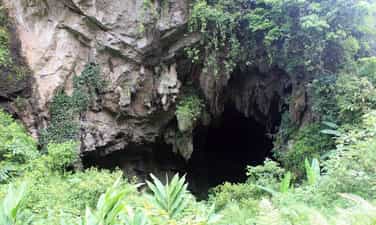
Ham Rong Cave
Ham Rong Cave is located right at the foot of Ham Rong mountain, Na Bu village, Tung Chung Pho commune, Muong Khuong district, Lao Cai City (now Muong Khuong town) nearly 2km from the district center. This is a large cave located in the heart of a limestone mountain. The reason it is called Ham Rong is because according to legends and folk tales, in the cave there is a very large dragon that often appears when the weather changes. Therefore, local people named that cave Ham Rong cave. Coming to Ham Rong cave, visitors will have the opportunity to admire the mysterious beauty amidst a vast mountainous area. The road to Ham Rong cave is quite convenient, visitors follow the Tung Lau stream to the main entrance to the cave. This stream curves all year round over each ravine, passes through caves, forming the "Pao Tung" waterfall - a wonderful landscape of the entire Muong Khuong region. Ham Rong cave complex includes 2 main caves connected to each other with a total length of about 750m. Ham Rong cave entrance is more than 6m wide and the cave arch is 5m high, so it is convenient for tourists to visit. The inside of the cave is divided into many small interconnected niches, about 10m deep to reach single dark-colored stalactites, continue up through a small hole - a place to receive natural light that shines deep into the cave. The strange shapes are: stalactites clinging to the cliffs with dome caves that look soft like climbing gourds. Going deeper into the cave, visitors will see shapes that look like goats eating. grass, shapes of birds in flight, they blend with the landscape shimmering under the lights. Suddenly before the visitors' eyes appeared a palace with the Emperor's crown dotted with sparkling jewels, then shapes resembling successive terraced fields. In the middle of the cave is a round cylindrical block with a head like a Buddha and a kind face, but its body is thorny and rough, clinging to each other like antennae, in some places it looks like a fairy chess board, like a princess's chamber. Lord... The deeper you go into the cave, the more you realize the splendid majesty with the variety of colors creating a poetic and lyrical beauty. Ham Rong Cave has great value in terms of tourism, geology, and aesthetics. Coming to the cave, visitors can not only admire the charming scenery of mountains, forests, natural rivers and streams, but also provide conditions for researchers in geography, soil and stratigraphy. Ham Rong is also a source of artistic inspiration for artists and photographers. Ham Rong Cave was recognized by the state as a National Scenic Monument according to Decision No. 15/QD-BVHTT dated April 14, 2003. SOURCE: Lao Cai Provincial People's Committee
Lao Cai
4332 view
Rating : National monument
Muong Vi Cave
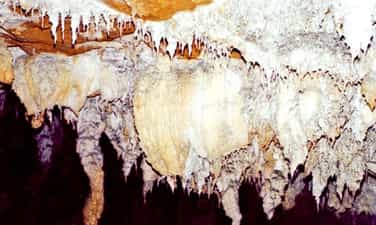
28 km northwest of Lao Cai city through Bat Xat district to Ban Vuoc, turn left to Muong Vi commune - where there is a large valley, surrounded by rolling limestone mountains forming a complex of caves. Large area called Muong Vi cave complex. This place includes Na Rin, Cam Rang, Cam Rum and Cam Tam caves, all quite beautiful. This is one of the unique and attractive relics of Lao Cai province. Na Rin Cave is a large cave with many transparent silver-colored stalactites interwoven together like simple screens in design but exuding luxurious and pristine beauty. The stalactite heads look like drops of pure water originating from a small stream located on the cave wall. The stalactites look like crystal chandeliers of different sizes. Cam Rang Cave is located halfway up a mountain in a high position with little moisture, the emulsion color is slightly dark brown but solid. Inside the cave are rocks shaped like long gourds and a tray of five yellow fruits that attract the eyes of all tourists coming here to visit and explore. Inside the cave there is a sky gate, above the gate is a stalactite strip that looks like a crown with elaborate iridescent lace strips. Equally attractive are Cam Rum and Cam Tam caves, these two caves also have many rocks with unique shapes covered with colorful stalactites. Cam Tam cave alone contains many rich and attractive folk elements. There are many ancient traces left here, reflecting the spiritual cultural life of the Giay ethnic community. Muong Vi Cave also contains many mystical folk tales about the intelligent and heroic Giay king with his feats of fighting against foreign invaders and protecting his village, such as building streams to prevent water from attacking invaders, planting bamboo to create fences. fought against the enemy very effectively, then came the story of the King's flying stone horse... There are also folk tales telling the story of beautiful and gentle fairies who often come down to help people. during the busy planting and fall seasons planning... Muong Vi cave complex is a large cave complex with many different characteristics and research values, is a place containing rich folk treasures about the country and people here, and is also a place Learn about the research of geologists. In particular, the Muong Vi cave complex has a practical value in the strategy of protecting border security and enriching the local ecological environment. This is also a place to learn about aesthetic values, providing creative inspiration for creative researchers in literature and painting. Currently, this place has been attracting the attention of many scientific fields such as culture, environment, tourism, geology... in order to exploit, conserve and promote the values of relics to serve the people. economic development for the locality. Muong Vi cave complex was recognized by the state as a National Scenic Monument according to Decision No. 38/QD-BVHTT dated June 11, 1999 of the Ministry of Culture and Information. SOURCE: Lao Cai Provincial People's Committee
Lao Cai
4353 view
Rating : National monument
Cam Temple
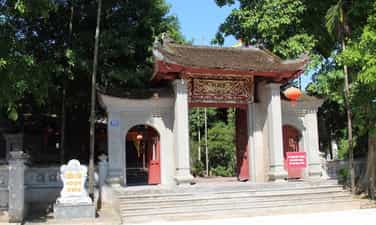
Cam Temple is located in Soi Muoi village, Van Hoa commune (now the group of 3 Pho Moi wards - Lao Cai), the temple is located at the foot of a low hill, surrounded by lush fruit trees, in front of the temple are 3 ancient trees: the sycamore tree. , jackfruit trees and jade trees spread shade to the temple, creating an ideal landscape. The temple was built and existed nearly 200 years ago and is associated with the history of building and defending the country of the Vietnamese people in general and Lao Cai ethnic people in particular. The temple has a legend associated with the three times of resistance against the Mongol army under the command of the Tran Dynasty's king, general Tran Quoc Tuan - who was awarded the title "Van Co heroic spirit of the highest class of blessings". . Legend has it that in 1257, Tran Quoc Tuan marched to the border to command the defense against the Mongol invaders (13th century). Many generals fell on this border land. Cam Temple was built to commemorate 5 Tran Dynasty soldiers (names unknown). At that time, the station area (today's Pho Moi) was a dense primeval forest. During an inspection and command of border defense (around 1257), General Tran Quoc Tuan chose the location of the current Cam Temple. Now working as a 2nd line military medical station in border defense. Later in the battles, wounded soldiers were brought back to be treated in this forest. The indigenous people at that time, the Vietnamese, Tay and Giay people, also brought sick people in for military medical care. Then something thrilling happened: at night there was a young girl wearing a blue dress who came to treat everyone. The girl was very good at treating everyone. Everyone who received the medicine was healthy, but the miracle doctor just appeared. at night and not seen during the day. Learning about the local people, the people said that there was no one's child like that. Afterwards, the people and soldiers believed that it was the apparition of the Holy Mother of Heaven helping the army and people to protect the country. Right below Phuong Dinh next to this ancient jackfruit tree are 5 graves of military officers who sacrificed their lives for a great cause. Cam Temple is located in the center of the ancient forest, formerly a small temple created by soldiers and villagers together, then officially started construction into a temple in the 16th century, after many advances. Agarwood still retains some ancient maple trees and jackfruit trees. Today, the temple has been beautifully restored and consists of two parts: the main hall and the harem. Meeting the needs of folk beliefs not only of the city's residents but also of tourists from all over, beautifying old legends - legends of military and civilian love on the border. Cam Temple holds its main festival on the seventh day of the seventh month (lunar calendar) every year, celebrating the death anniversary of 5 Tran Dynasty soldiers. People consider this the death anniversary of "erasing the sins of the dead" for the five soldiers; Therefore, together we contribute rice and meat... to the organization. The ceremony of the relic is organized quite spaciously in order. Besides the ceremony, there is also a fun festival with traditional games such as shuttlecock throwing, swallow fighting... In addition, this place is also the place to organize the annual field festival. On December 27, 2001, Cam Temple was recognized as a National Historical Site according to Decision No. 51/QD-BVHTT of the Ministry of Culture and Information. SOURCE: Lao Cai Provincial People's Committee
Lao Cai
4641 view
Rating : National monument

Banyan tree and La Tien Temple
Historical relics Banyan Tree and La Tien Temple are located in Nguyen Hoa commune (Phu Cu, Hung Yen). This is a place to commemorate the heroic souls of 1,145 heroic martyrs, revolutionary soldiers and our compatriots who were killed by the French colonialists during their occupation here (from 1949 - 1954), including 121 officers and soldiers. People of Nguyen Hoa commune (Phu Cu, Hung Yen). During the resistance war against the French colonialists, La Tien was an area with an important strategic military position, blocking the south of Hung Yen, the north of Thai Binh and the west of Hai Duong, so the enemy took this as an occupation position. , set up posts and blockades to prevent the reinforcement of human resources, material resources, weapons, guns, ammunition, food, etc. from neighboring areas and suppress the revolutionary movement of Hung Yen's army and people. Right from the beginning of the occupation, the enemy terrorized the country in an attempt to establish an extremely brutal "white belt". They captured thousands of people and guerrillas in the area and took them to La Tien post to brutally torture and kill them in barbaric ways. In just nearly 5 years of occupation in La Tien (1949 - 1954), the enemy killed 1,145 revolutionary soldiers and patriots. But the enemy's brutality not only failed to suppress the revolutionary movement, but also fanned the flames of hatred and the stubborn will to fight for independence and freedom of our army and people. The attack to destroy La Tien post conducted by our army and people at the end of January 1954 contributed to the resounding victories of the army and people of Hung Yen province in the resistance war against the French colonialists; of great significance on the battlefield across the country, contributing to weakening the enemy, creating conditions for our army and people to win Dien Bien Phu. With special historical values, the Banyan Tree and La Tien Temple have been recognized as National Historical Sites according to Decision No. 4007/Decision - Ministry of Culture, Information and Tourism dated November 18, 2015 of the Ministry. Culture, Sports and Tourism. Today, this relic has become a symbol of the resilient, indomitable and rebellious spirit of the people of Phu Cu in particular, the people of Hung Yen and the whole country in general. This place is not only a place to set up hate stele and engrave the crimes of the enemy, but also a place to pay tribute to the soldiers and compatriots in the province and neighboring provinces who sacrificed heroically to protect every inch of land. , the hometown river. This place has also become a red address to educate the young generation about revolutionary traditions, patriotism, heroism, and resilience of our officers, soldiers, and compatriots. Electronic information portal of Phu Cu district, Hung Yen province.
Hung Yen
4574 view
Rating : National monument.

Tong Tran Temple
Tong Tran Temple is located in a prime location, on high and open land in the south of An Cau village, Tong Tran commune, Phu Cu district, Hung Yen province. Tong Tran Temple has the original name "Tien Can Linh Tu", the common name is Thuong Temple, Quan Trang Temple, people often call it Tong Tran Temple. Legend has it that the temple was built on the foundation of Tong Tran's old house from the Ly dynasty. The temple is located separately from the residential area on a campus of about 5 acres in the North. In 1950, the temple was destroyed. After many restorations, in 1998, Tong Tran temple was renovated beautifully. Tong Tran Temple has a two-story, eight-roof architectural gate. The ancient part of the match is inscribed with the Chinese characters "Luong Quoc Trang Nguyen tu mon" (the gate of Luong Quoc Trang Nguyen temple). In the middle of the yard is a scroll-shaped stone gate carved and crafted meticulously and delicately, with content praising the beauty of the temple in Chinese characters. With the principle of "When air meets wind, it spreads, when it meets water, it stops" in feng shui, the "dragon eye pond" in front of the relic's yard has clear blue water all year round, meaning it is a water gathering point, bringing prosperity. prosperity for all people in the village. The relic has a Nhi-shaped architecture, following the ancient architectural style, including two sacrificial buildings and a harem. The front altar consists of 3 rooms and 2 wings made in the style of a gable wall. In the middle of the roof line is a tiger head with the word Tho in its mouth and a pair of moon faces, with two dragons flanking the moon on both sides. The three front altars have carved flower and leaf images and written Chinese characters on the three front altars. In the Pre-Saint space, the floor at the 2 gable ends is 45cm higher than the base of the 3 middle spaces. The column base system is a ball-shaped platform. Supporting the roof are sets of trusses structured in the style of gong racks. The components are smoothed and sharpened, creating a strong and stable appearance for the temple. In the middle is the Council altar, above the altar are 3 gilded lacquered hammock doors, above the hammock door is the Chinese character "Luong Quoc Trang Nguyen". The room on the right hangs a scroll, the room on the left is a brooch written in Chinese characters, with elegant, sharp handwriting, inscribed with 8 verses praising the beauty of the land as well as the bright, airy space of the temple area. . The harem has a gable wall architecture, consisting of 3 rooms and 2 wings. The structure is two sets because the middle has a gong stand-style architecture. In the middle of the star anise is a tiger head with the word Tho and surrounded by flower strings. The remaining ends all touch a stylized dragon's head with an upside-down sword and spear. This way of creating has both a load-bearing and decorative effect, somewhat reducing the roughness of architectural structures. The middle space of the harem is where the coffin and statue worshiping Trang Nguyen Tong Tran are placed, the two side rooms are the thrones worshiping Duong Tam Kha and Doan Thuong. In the relic grounds, in addition to the main worship area, there is also the Mother Temple, which is a place to worship Mrs. Cuc Hoa, Tong Tran's gentle wife. She was also the one who took care of his mother for 10 years when Tong Tran was on a mission. The new Model House was rebuilt in recent years on the old foundation with simple architecture. The building has a Dinh-shaped architecture consisting of two altars and a harem. The altar consists of three rooms and two left, with a simple truss-style architecture. The components are smoothly planed and sharpened without engraved patterns. The middle space is where the statue of Mrs. Cuc Hoa is placed. To commemorate the merits of talented people, every year the Tong Tran temple festival is held from the 10th to the 17th of the 4th lunar month, of which the 13th and 14th are the main festival days. With historical, cultural, architectural and artistic values, Tong Tran Temple has been recognized by the State as a national historical relic according to Decision No. 2387/Decision dated December 30, 1991. Source Electronic information portal of Phu Cu district, Hung Yen province
Hung Yen
4615 view
Rating : National monument.
Dinh Chieng Ken Lao Cai
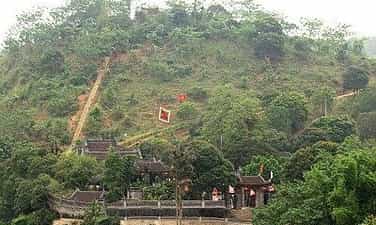
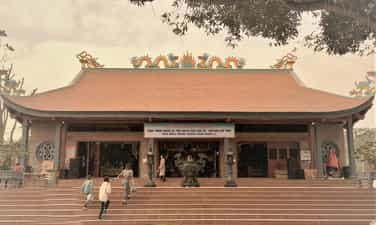
Located in the Bao Ha National Temple historical relic complex of Lao Cai province, Ken Temple (Chieng Ken, Van Ban, Lao Cai) is famous for its solemnity and antiquity with valuable evidence still intact. Ken Temple is located on top of Pu Dinh hill, over 180m high, in the heart of Ken village with a land area of over 10,000m2. According to memories from the elders, due to the advantage of a high point and a wide field of view, during the French colonial period, colonial soldiers chose this place as the "key point" for all four villages: Ken, Chieng. , Bo village, Be village around a radius of 4 km. However, they could not hold the station for long before the struggle movement and the increasingly strong development of the Revolutionary Army (at that time called Viet Minh), the colonialists had to flee and return to a peaceful life. for local people. Since then, the sacredness of the temple has been worshiped by the people, because the more the enemy holds this place, the more they lose. According to ancient legend, Ken Temple worships Mr. Nguyen Hoang Long and the generals of the Nguyen family who were instrumental in repelling the enemy and establishing villages in Van Ban district. People in the area remember his merits and the generals of the Nguyen family worshiped and built a temple here. Because the Temple is located on the highest hill in the village, it is also called Ken communal house. Over time, ups and downs of history and wars have caused Ken Temple to be destroyed many times, sometimes it seemed like there was no trace left. Today the road to the Temple has been opened by local people. Modern means of transportation such as cars and motorbikes can reach the place, very convenient for tourists to visit. With its mysterious sacredness spread by word of mouth and beautiful scenery, Ken Temple is increasingly known and attracts more and more visitors from all over to visit and worship. Every year on the 7th day of the first lunar month, Lao Cai province holds the Ken Temple Ceremony to commemorate the merits of Mr. Nguyen Hoang Long and his followers. SOURCE: Vietnam Tourism
Lao Cai
3600 view
Rating : Provincial level relics
Trinh Tuong Mother Temple
Trinh Tuong Mother Temple is a place to worship the Holy Mother Thuong Ngan - the second Holy Mother in the Three Holy Mother Temples, governing the music palace, that is, governing the mountains and forests, guarding the border. Ms. Tran Thi Thanh, incense burner at Mother Goddess Trinh Tuong temple, said: The temple was built in the early 20th century and was ranked as a provincial historical-cultural relic in 2016. In recent years, Bat Xat district has mobilized many resources to restore and embellish monuments, and at the same time manage festival activities well. From the main temple, which was a small 4-level house as a place of worship, up to now, Trinh Tuong Mother Temple has been expanded with the following items: Main temple house, ceremony house, golden temple, Huu vu house, three-entrance gate, crescent lake… Entering Trinh Tuong Mother Temple, visitors feel a quiet, peaceful space with wafting incense smoke and the sound of birds chirping in the ancient trees. Although it has been through periods of renovation, visitors can still see the remaining ancient architecture on each brick, tiled roof or the gilded and lacquered worship statues with a majestic and magnificent appearance. Every year, on the 10th day of the 3rd lunar month, the Trinh Tuong Mother Temple Festival takes place to pray for a year of good rain, good winds, lush crops, and peace in the country and people. The festival is held solemnly, in accordance with the belief of worshiping Mother Goddess Thuong Ngan; exploiting traditional cultural values, creating cultural activities and folk beliefs that are colorful, attractive and suitable to the actual conditions of the locality. Source “Lao Cai Electronic Newspaper
Lao Cai
3700 view
Rating : Provincial level relics

Temple and mausoleum of General Doan No
The temple worshiping General Doan No is located on a campus of more than 1,000 m2 in Phuong Trung village, Phuong Chieu commune (Hung Yen city). The land here is good, the trees are green in all four seasons. Senior General Doan No was the founder of the country during the Later Le Dynasty. He was a talented general of Le Loi, who had great contributions in the Lam Son uprising against the Ming army in the 15th century. He originated from a fairly ancient clan in Ke Nua village (now in Trieu Son district, Thanh Hoa province). He was born in 1393, the second child of Mr. Doan Quyet - who passed the third exam to become a palace doctor during the Tran dynasty. In the year of At Mui (1415), the Ming enemy massacred the Nong Cong area, killing more than 3,000 people. In Ke Nua alone, only 18 people escaped, including his two brothers. In 1416, Doan No returned to Le Loi, participating in the Lung Nhai oath ceremony and the Lam Son uprising. He was one of Le Loi's first generals. In 1425, Le Loi sent general Doan No along with military officer Tran Nguyen Han to persuade the people, bringing 1,000 troops to attack the South, liberating Tan Binh and Thuan Hoa citadels (belonging to the provinces from Quang Binh to Thua Thien). Hue today) to expand the area, forcing the Ming army to retreat into the citadel. From then on, the Lam Son insurgent army had a solid rear base and advanced to counterattack to the North to liberate Thang Long. After the successful resistance war against the Ming army, when considering his merits and rewards, he was appointed by King Le Thai To as a Lieutenant General, a General of the Left, with the title Dai Tri Tu. Afterwards, he was awarded the title of Tru Quoc Cong Thuong General in charge of Son Nam. He was given a village in Huong Chieu village, now Phuong Chieu commune. He brought his whole family from the capital to Huong Chieu, forming the Doan family in Hung Yen. The temple of General Doan No was built right after his death (1439). In the past, the temple and mausoleum of Senior General Doan No was just a small temple with Dinh script architecture. Over time, the temple was restored and embellished to become larger and more beautiful. Currently, the temple has a Tam-shaped architectural structure including the Pre-Temple, Central Tu and Rear Palace. The altar consists of 5 rooms made of ironwood, built in the ancient style, with four pillars filled with lotus-filled boats and carved flowers and leaves. In the center of the altar room is the great pagoda "Tran Gia Vu Liet" below which there is an incense altar and a 19th century sculpture. On both sides are parallel sentences (Le dynasty, Thai To discovered Nam Son Loi Dai Hien - Founding the country's god Doan outstanding general and hero). For the Trung Tu court, a shrine was placed to worship Doan No's father, Mr. Doan Quyet, and his mother, whose family name was Nguyen. In the most solemn position of the Harem Palace, there is a statue worshiping Senior General Doan No. The items are relatively solid, meeting the spiritual belief needs of Doan family descendants and local people who come to worship and show gratitude and respect to their ancestors. 500m from the temple is the tomb of Senior General Doan No. The mausoleum was built on the land "Figure of a dragon drinking water" (shaped like a dragon drinking water) with the position of Thanh Long on the left and White Tiger on the right. His tomb is located on a high mound, surrounded by fields. The mausoleum has an area of 16 m2 and is built with 2 floors and 8 roofs. The front of the mausoleum embossed the words "Doan No Cong Than". Next to the mausoleum is a post-commission stele recording the life and career of General Doan in the national language so that future generations can pay their respects and commemorate a typical famous general of the Le Dynasty who was worshiped by the whole country. Through many changes in history, up to now, the temple of General Doan No still preserves many valuable artifacts, typically the genealogy book of the Doan family in Phuong Chieu, the genealogy book of the Doan family, a genealogy book of the Doan family. Ordination of the Le Dynasty, great paintings, couplets and statues of Senior General Doan No... Although the number of artifacts is not large, they have made an important contribution to the study of the country's history, the history of famous people and the history of the village. commune and family blood relationships. Besides, some artifacts and worship objects also enrich the traditional art of the nation. Every year, at the beginning of spring, local people and the Doan family hold a festival in mid-January to commemorate General Doan No. With typical and unique values, the temple and the mausoleum of General Doan No were ranked as national historical relics on April 20, 1995. Source: Department of Culture, Sports and Tourism
Hung Yen
4648 view
Rating : National monument.

Nguyen Thien Thuat memorial area
Nguyen Thien Thuat (1844 - 1926), pseudonym Manh Hieu, from Xuan Duc village, Bach Sam district, Duong Hao district (now Xuan Dao village, Xuan Duc commune, My Hao town). Born in a poor Confucian family, in 1870, Nguyen Thien Thuat passed the baccalaureate. In 1874, he was instrumental in suppressing the enemy in Kinh Mon prefecture (Hai Duong) and was appointed as the state regent. In 1876, he passed his bachelor's degree and held the position of governor of the Tu Son government. He worked as an honest, fair, civil and martial mandarin. In the year of the Cat (1879), he held the position of Tan Tuong Quan, and in 1881, he held the position of Huong Hoa Son, Chief Minister of the Office, and Tan Tuong Quan, Deputy Commander of Son Tay province. Therefore, at that time he was called Tan Thuat or Tan Dong (because he was from Eastern province). When the French colonialists invaded Tonkin, Nguyen Thien Thuat twice resisted royal orders, determined to fight the French. The first time, he retreated to Dong Trieu, often contacting Dinh Gia Que - leader of the Bai Say insurgent army, recruiting and developing insurgent forces in the delta. On November 12, 1883, Nguyen Thien Thuat's insurgent army attacked Hai Duong province to surround the enemy, but the force was still weak, so he had to retreat. The second time at the end of 1883, after signing the Harmand treaty, the court continued to make concessions to the French colonialists, dismissed troops in Tonkin and required mandarins to return to the capital to wait for instructions. Nguyen Thien Thuat brought The army went to Hung Hoa (Tuyen Quang) with Nguyen Quang Bich to defend the citadel. In March 1884, Hung Hoa citadel fell, he and a number of generals determined to stay and fight against the French. After Lang Son citadel fell (March 1885), Nguyen Thien Thuat fled to Long Chau (China) to prepare forces to continue fighting. In July 1885, King Ham Nghi issued Can Vuong decree, Nguyen Thien Thuat returned to the country to establish Bai Say base, led the uprising against the French, continuing the career of the Dinh family (at this time Dinh Gia Que had passed away). ). King Ham Nghi conferred on him the title "Bac Ky Hiep Thong Military Mandarin Gia Chan Lieutenant General", the people also called him Mandarin Hiep Thong, and many talented generals followed him. Bai Say was a particularly strategically important area in the Red River Delta at that time. With such a prime location, right from the time the French army invaded the Tonkin provinces (1883), Bai Say was built into a base against the French colonialists of the Dinh Gia Que insurgent army. Since 1885, based on the base area that the Dinh family had previously built, with the strategic vision of a military man, Nguyen Thien Thuat continued to expand the Bai Say base area to almost every government and district. of Hung Yen and Hai Duong provinces, including Khoai Chau, Van Lam, Van Giang, My Hao, Yen My,... With the wise leadership of Nguyen Thien Thuat, the Can Vuong movement on Bai Say land quickly broadcast developed in all aspects, becoming one of the largest anti-French centers at the end of the 19th century in Tonkin. In 1888, Hoang Cao Khai sent troops to suppress the movement, using Dong Khanh's name to bribe and persuade Nguyen Thien Thuat to surrender and promise to restore his title. Nguyen Thien Thuat wrote in this document the four words "Bat khang thu chi" (Refuses to accept instructions). Afterwards, he handed over power to his younger brother, Nguyen Thien Ke, to continue maintaining the uprising, going to China with the policy of asking for aid to strengthen anti-French forces. During the rest of his life in China, Nguyen Thien Thuat often contacted Ton That Thuyet and a number of comrades, including Nguyen Chi Thuong, his second son. Later, Thuong was captured and sent to Con Dao. He, together with Foreign Marquis Cuong De and Phan Boi Chau, went to Dong Kinh to establish the "Vietnam Duy Tan Phuc National Assembly" with the purpose of finding ways to liberate the nation, expand people's knowledge, and create conditions to bring Vietnamese students abroad. studying abroad,... Nguyen Thien Thuat died on May 25, 1926. His grave is located on a hill in Quan Kieu village, on the outskirts of Nanning city, Guangxi province (China). The tombstone is engraved with the words "Vietnam revolution. Late General Nguyen Cong Thien Thuat - Tomb. On January 30, 2005, his remains were moved to be buried in Xuan Duc commune, My Hao district, Hung Yen province. General Nguyen Thien Thuat's memorial area is located on Xuan Nhan land - where the forward guard post of the old Bai Say insurgent army was located, with a total area of 1621.9m2, including many items: gate, memorial house, house. stele, grave of General Nguyen Thien Thuat and relief wall. The Bai Say Uprising (1885 - 1892) was the largest, longest-lasting and most resonant uprising in the Northern Delta region during the "Can Vuong" movement against the French colonialists at the end of the 19th century. The uprising lasted a decade, going through three stages, associated with the names of three leaders: Dinh Gia Que, Nguyen Thien Thuat and Nguyen Thien Ke. But it can be affirmed that Nguyen Thien Thuat is the most typical leader, the soul of the Bai Say uprising. With the above values, Nguyen Thien Thuat Memorial Area, Xuan Duc commune, My Hao town, Hung Yen province has been ranked a national historical relic by the Minister of Culture, Sports and Tourism in Decision No. 3077/Decision - Ministry of Culture, Sports and Tourism dated October 27, 2020./. Source Department of Cultural Heritage.
Hung Yen
4745 view
Rating : National monument.

To Hieu memorial area
To Hieu was born in 1912, the youngest child in a family with a tradition of academics and patriotism. His great-grandfather, Doc Nam To Ngoc Niu, was praised as one of the three exemplary teachers of contemporary Tonkin. His father was Mr. To Y, his mother was Mrs. Ngo Thi Ly - daughter of Mr. Ngo Quang Huy, former Director of Bac Ninh, one of the key leaders of the Bai Say uprising movement at the end of the 19th century. From a young age, To Hieu proved to be intelligent and had great ambition. His father passed away early, and his mother and eldest son, To Tu, had to work hard to raise their five brothers. To Hieu was sent to study at Hai Duong primary school for boys. In 1926, when he was only 14 years old, To Hieu participated in the mourning movement for patriot Phan Chu Trinh and was expelled from school. His eldest brother continued to send him to Hanoi to study. During the period 1927 - 1929, To Hieu and his cousin To Gi were admitted to the Xich Ve Doan organization - a student youth organization led by the Revolutionary Vietnamese Youth Association - the Party's predecessor organization. During this time, To Hieu actively participated in the association's activities such as rallies, banner-raising demonstrations on major international anniversaries, and also had the task of protecting the protest group and other organizations. comrade leader. In 1930, while on a fundraising campaign trip, To Hieu was followed by secret police, arrested and sentenced to 4 years in prison and exiled to Con Dao. It was here that he and his brother To Chan were honored to be admitted to the Indochina Communist Party at the age of 18. To Hieu was trusted by senior communists such as Ton Duc Thang and Ngo Gia Tu, who cared about guiding and honing the bravery of young Party members. In 1934, after completing his prison term, To Hieu was released and placed under house arrest in his hometown of Xuan Cau village. Overcoming the siege and surveillance by French secret police, To Hieu not only participated in leading the patriotic movement, raising people's knowledge, gathering the masses in his homeland, but also sought to coordinate with loyal comrades to restore restore the Northern Region Party Committee. At the end of 1936, at a meeting at comrade To Hieu's rented house on Hang Bot street (Hanoi), including comrades Hoang Van Non, Hoang Quoc Viet, Truong Chinh, To Hieu, Nguyen Van Minh, Luong Khanh Thien, Tran Quy Kien officially restored the Northern Party Committee after years of revolutionary decline and broken Party organizations. At the meeting, To Hieu was elected as a Standing Member of the Party Committee, in charge of propaganda, training workers and directly participating in leading public work and activities in Hanoi (at this time Hanoi did not have a City Council). committee). At the end of 1938, To Hieu was appointed by the Central Committee to be Secretary of Inter-Region B, including the Northern coastal provinces of Hai Duong and Hung Yen; Special Secretary of Hai Phong. In December 1939, To Hieu was arrested by French secret police at the City Party Committee's printing facility. Although his thin body was tormented by tuberculosis when he was exiled in Con Dao prison, and was tortured and bribed, with the steadfast spirit and determination of a communist, he overcame all challenges. fierce challenge. The comrade was sentenced to 5 years in prison and exiled to Son La prison in early 1940. In early 1944, To Hieu's health was almost exhausted, but with an optimistic spirit, To Hieu told his brothers in the cell. : "I know for sure that I will die sooner than others, so I have to take advantage of the time to fight and serve the Party." A few days before he breathed his last, To Hieu asked comrade Hoang Tung to write down a will for the Son La Prison Cell, advising his brothers to stay and maintain their fighting spirit, clearly analyze the world situation and in the country, the inevitable victory of the Revolution. He breathed his last on March 7, 1944 in the mourning of all comrades and compatriots. Revolutionary To Hieu sacrificed his life, but To Hieu's spirit is forever immortal and has become a precious spiritual heritage of the Party and nation, the pride of descendants, as well as people throughout the country. The story of the To Hieu peach tree at Son La prison has entered the pages of books and is considered a symbol of revolutionary optimism. To Hieu Martyrs' Memorial House was built in 2000, at the same time as the construction and renovation of Doc Nam To Thi Tu Duong (the To family church of Doc Nam To Ngoc Nuu). Comrade To Hieu Memorial House The memorial house consists of 3 front rooms and 1 back room, made of four iron wood; The sets are made in the form of a lotus-shaped frame combined with a gong-shaped truss structure, creating a spacious interior space. The main decorative themes are traditional leaf patterns, mainly on the two sets of gables and on the lotus joints on the pillars. The back room is decorated with an altar with a photo and statue of comrade To Hieu. The entire inner sanctum of the church's three compartments is used to display precious artifacts and images about Comrade To Hieu's career and active life, arranged from left to right according to 3 themes: Homeland Xuan Cau and his family, the To family of Xuan Cau village; Biography and revolutionary activities of comrade To Hieu; The feelings of the leaders of the Party, State and people towards comrade To Hieu. To family church of Mr. Doc Nam - To Ngoc Nuu Located on the same site as the Comrade To Hieu Memorial House, the entrance gate is built with bricks, in the traditional style, with a pair of Chinese parallel sentences embossed on both sides of the gate pillars. Their church building is designed and built with wood according to traditional architecture; Northeast direction overlooking Nghia Tru River - an ancient tributary of the Red River. The site of Tu Duong has the most typographic architecture, built in the style of gabled walls, and the roof is covered with yin and yang tiles. The inside of the house is divided into 5 compartments, the door system is made of a table top style, following the upper and lower panels; The structure of the trusses is made of four sets of wood in the style of dou-lotus; Decorative themes mainly focus on the gables and the pillars on the armpits in the two gables with the themes of bamboo/dragon-shaped apricot, fighting cocks and on the husbands, the ends of the armpit beams touch lotus petals, soft leaf pattern. The middle space of the church is where the altar is placed, inside are placed 4 tablets of deceased ancestors of the To family. On the right side hangs the great letter 壽春 (Xuan Tho) given by Mr. Doc Nam's students to celebrate his birthday in the year of the Goat (1871). In the middle of the yard is a peach tree extracted from the To Hieu peach tree in Son La prison donated by the Son La Provincial Party Committee in 1998. With the above values, To Hieu Memorial Area, Nghia Tru commune, Van Giang district, Hung Yen province has been ranked as a National Historical Site by the Minister of Culture, Sports and Tourism in Decision No. 3080 /Decision - Ministry of Culture, Sports and Tourism dated October 27, 2020./. Source Department of Cultural Heritage.
Hung Yen
4401 view
Rating : National monument.